
Furnace Installation in Wenatchee, WA
A new furnace here will run from September through June every year. Tell us about the house, and a licensed contractor who covers Chelan County will get in touch.
Tell us about the job
It takes about a minute.

Ten months of heat, most of it running on electricity
Wenatchee homes need the furnace on from September through June, ten months of the year. Winter nights average 22°F, so a new furnace here is not sized for a short cold snap. It is sized to carry the house for most of the year.
Most homes in this area heat with electricity, and the power does not always stay on. Chelan County has seen 118 winter storms and 29 damaging wind events over the past ten years, and across Washington almost a quarter of households lost power for 24 hours or more in 2024. Any new gas furnace installed today has to reach at least 80 percent AFUE by federal rule, but a standing pilot furnace will still light with no power at all.
- 10 months
- September through June, your furnace is on duty
- 22°F
- the average winter night it heats against
- 80% AFUE
- the federal minimum any new unit must meet
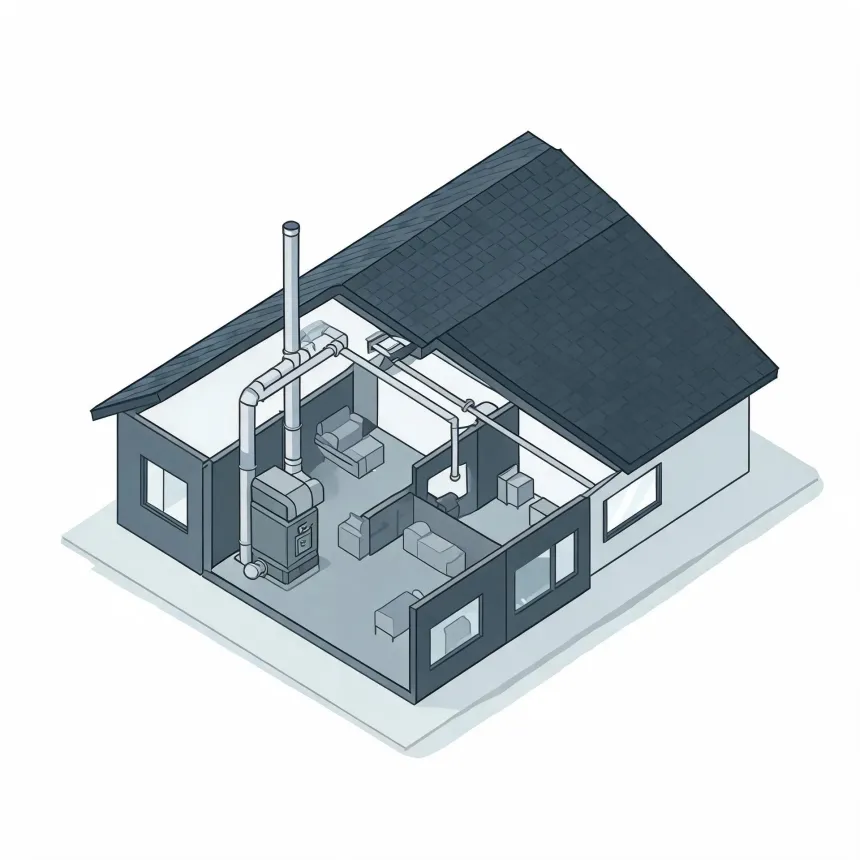
NOAA nClimDiv, 1991–2020 normals
Washington requires contractors to register with the state.
That registration puts the business on file with the state. It does not require a trade exam, so the number on file tells you the contractor is registered, not that they know how to size a furnace or run a flue correctly.
For a furnace installation, the protection that actually checks the work comes from the local building office. In most cities and counties, replacing a furnace needs a permit, and an inspector looks at the work once it's done, including the gas connection and venting, since those are the parts that matter if something's off. That inspection is what stands in for the exam the registration doesn't have.
Source: Washington State Legislature
- What size furnace does my house need?
- The right size comes from a load calculation, not the square footage of your house. A contractor measures your windows, insulation, ceiling height, and how the house is laid out, then runs those numbers to find the heat loss on a cold night. Here that matters more than in mild climates, since winter lows average 22°F and the furnace has to keep up with that for ten months a year. A furnace that's too big will short cycle and wear out faster. One that's too small will run constantly and still leave rooms cold.
- How do I know it's time to replace my furnace?
- If your furnace is breaking down more than once a season, or the repairs are starting to add up, replacing it usually makes more sense than continuing to fix it. Age matters too. Furnaces installed before the 2015 efficiency rule may be running well below 80 percent AFUE, meaning a good share of what you pay for heat is going out the flue. Uneven heating room to room, a furnace that runs long cycles without warming the house, or a yellow flame instead of blue are also signs the unit isn't working the way it should. With heat needed here from September through June, a furnace that's struggling has very little downtime to recover in.
- Is a high-efficiency furnace worth it?
- It depends on how much you heat and what furnace you have now. Since homes here need heat ten months out of the year, a furnace runs far more hours than it would somewhere with a short winter, and every point of AFUE has more chances to matter. High-efficiency furnaces recover more heat from the exhaust before it leaves the house, so less fuel goes out the flue unused. If your current furnace was installed before November 2015, it may already be below the 80 percent AFUE now required, which makes the gap between old and new bigger. A contractor can walk through your specific furnace and usage to say whether the difference is worth it for your house.