Mini Split Installation in Wenatchee, WA
Tell us about the house, and a licensed contractor who covers Chelan County will get in touch.
Tell us about the job
It takes about a minute.
Ten months of heat with almost no cooling load
Your mini-split in Wenatchee earns its keep in winter, not summer. Nights average 22°F from December through February, and homes here need heat from September through June. That is 10 months a year the heat pump has to work, against summer afternoons that only average 72°F, where cooling barely factors in.
A unit that runs on heat most of the year needs to be sized and set up for cold-weather performance, not just rated for it on paper. Any mini-split manufactured from 2023 on has to meet 7.5 HSPF2 for heating and 14.3 SEER2 for cooling under the federal minimum, but in a place that leans this hard on heat, how well it holds output as the temperature drops matters more than the cooling number ever will.
- 10 months
- September through June, your system heats
- 22°F
- the average winter night it heats against
- 72°F
- the average summer afternoon it cools against
Washington requires contractors to register with the state.
Registration puts a contractor's business on file with the Department of Labor and Industries. It is not a license. There is no trade exam behind it, so the state has not tested this contractor's work, just recorded that the business exists.
For a mini-split installation, the protection on this job comes from the local building office. In most cities and counties, installing a mini-split needs a permit, and the work gets inspected once it is done. That inspection, not the registration, is what checks whether the installation itself was done right.
Source: Washington State Legislature
- Is a mini split worth it?
- For most homes here, yes, because heat is running ten months of the year and a mini split covers both heat and cooling with one system. It uses electricity, and most homes in this area already heat that way. Winter nights averaging 22°F are well within what a modern cold-climate mini split is built to handle. Whether it makes sense for your house depends on how it's laid out now, so a contractor should look at the space before you decide.
- How many rooms can a mini split cover?
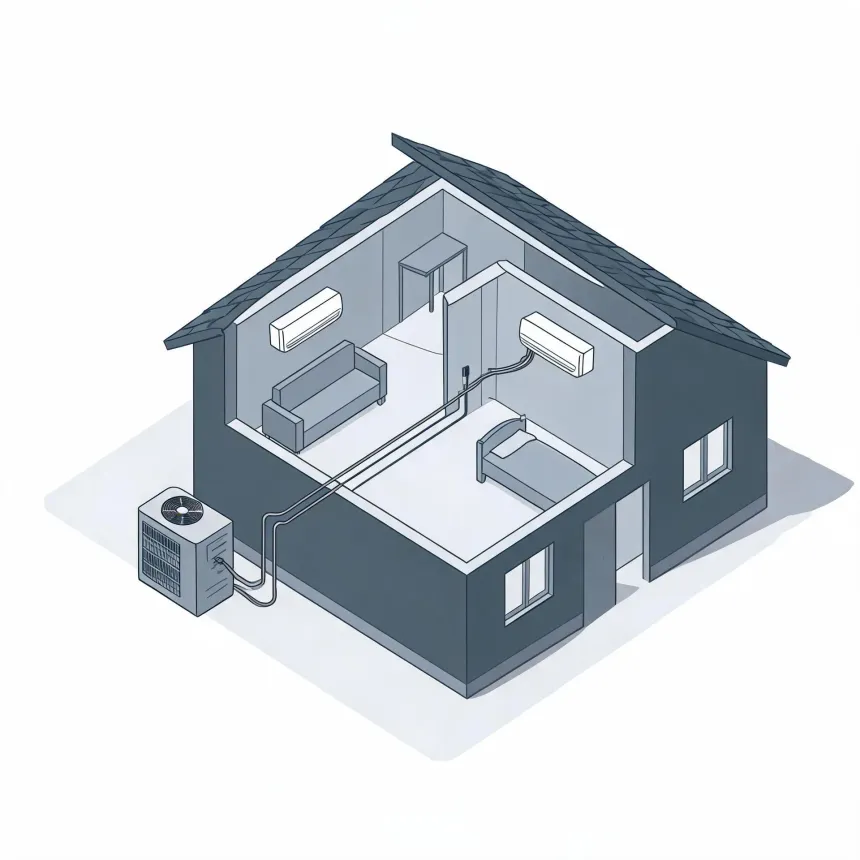
- A single outdoor unit can run one indoor head or several, depending on the system, so the number of rooms it covers depends on which system goes in. A single-zone unit heats and cools one room or open area well. A multi-zone system ties several indoor heads to one outdoor unit and can cover a handful of rooms, each with its own thermostat. How many rooms one setup can carry depends on the size of those rooms and how the house is laid out, so a contractor needs to see the house to size it right.
- Can a mini split heat a whole house?
- It can, if there are enough indoor heads placed where the house needs heat, and each one is sized for the room it serves. A single indoor unit heats the space around it well, but it won't carry rooms down a hallway or behind a closed door. With ten months of heating needed here and winter nights averaging 22°F, a whole-house setup needs a system built for cold climates and heads placed to reach every room. A contractor can lay out how many heads your house needs and where.