
HVAC Installation in Oak Harbor, WA
Tell us about the house, and a licensed contractor who covers Island County will get in touch.
Tell us about the job
It takes about a minute.

Oak Harbor asks a lot more of a heating system than a cooling one
Winter nights here average 35°F from December through February. Homes need heat from September clear through June, ten months of the year. Summers stay mild, with afternoons around 71°F, so the cooling side of a new system has little to do here. The heating side carries the load.
57.9% of homes here heat with electricity. In Washington, 23% of households went at least 24 hours without power in 2024. A new system should be sized for ten months of real heating work, and whatever runs it should keep working if the power does not.
- 10 months
- September through June, your system heats
- 35°F
- the average winter night it heats against
- 71°F
- the average summer afternoon it cools against
Washington requires contractors to register with the state.
Registration puts a contractor's business on file with the Department of Labor and Industries. It is a business record, not a trade exam, and passing one is not part of getting it. The number on their truck says they are registered. It does not say anyone checked their work.
For an installation like this, the check on the work comes from the local building office. In most cities and counties, putting in a new furnace, air conditioner or heat pump needs a permit, and the work gets inspected once it is done. That inspection, not the registration, is what stands between this job and a bad connection.
Source: Washington State Legislature
- When should I replace my HVAC system?
- Replace it when repairs start coming often, or when the equipment is old enough that the next breakdown is a real risk. A furnace here works through ten months of heating a year, September through June, so it puts in more hours than one in a milder place, and that adds up over its life. If you're calling a repair tech more than once a season, or a technician tells you the part failing is tied to the compressor or heat exchanger, replacement usually makes more sense than another repair. A system that's been running most of the year for a long stretch of years is worth having looked at, even if it hasn't broken down yet.
- Should I replace my furnace and air conditioner at the same time?
- If both are old, it's worth considering, but it depends on what your home actually needs. Homes here don't need cooling, so an air conditioner isn't doing the work a furnace is doing through ten months of heat each year. If your furnace is failing and your air conditioner is still in decent shape, there's no reason to replace both. A contractor can look at each piece of equipment on its own and tell you whether pairing the replacement makes sense or whether the furnace should be handled by itself.
- What happens during an HVAC installation?
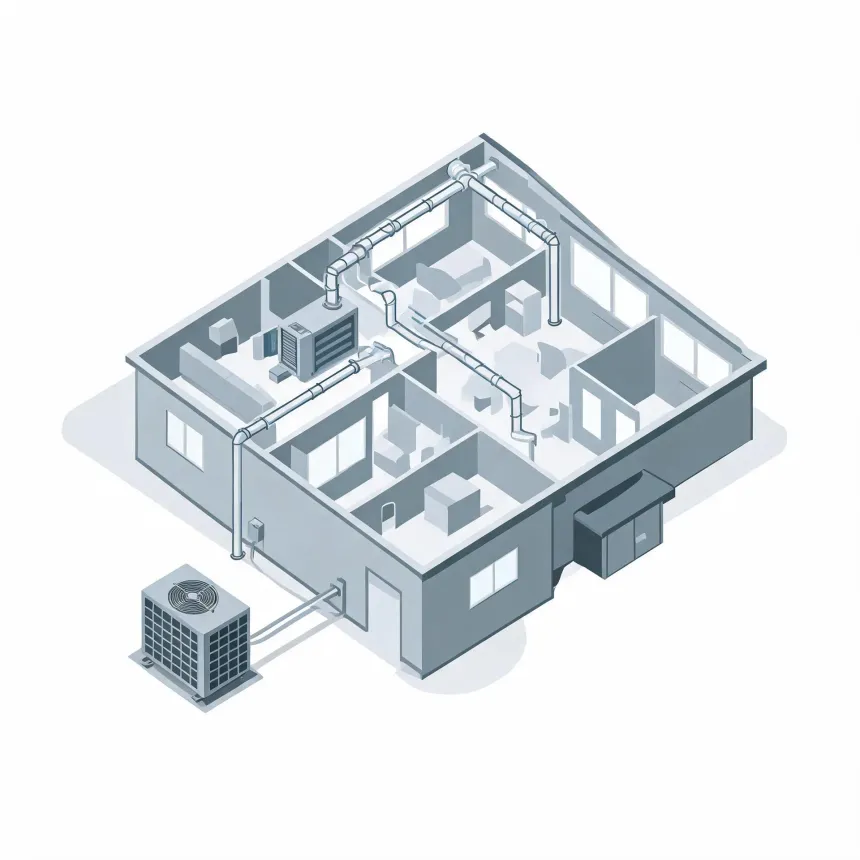
- A contractor removes the old equipment, sets the new unit in place, and connects it to your ductwork, gas or electric line, and thermostat wiring. They'll check that the ducts are sized right for the new equipment and seal up any connections. Most cities and counties require a permit for this work and an inspection once it's done, so expect that as part of the process. After it's running, the contractor tests it through a full cycle to make sure it's heating properly before they leave.