
HVAC Installation in Everett, WA
Tell us about the house, and a licensed contractor who covers Snohomish County will get in touch.
Tell us about the job
It takes about a minute.

Everett asks for ten months of heat a year
Winter nights here average 30°F from December through February, and homes in Snohomish County need heat from September clear through June. That is ten months of run time on a system that gets maybe two months to rest. A furnace or heat pump sized and installed right for this stretch matters more here than in places where the season is short.
More than half the homes here heat with electricity, and close to a quarter of Washington households lost power for at least a day in 2024. A new install is a chance to plan around that, whether that means a furnace that does not depend on the grid staying up or a heat pump paired with backup. Summer afternoons average just 69°F, so the cooling side of the job asks little by comparison. Get the heating right and the rest follows.
- 10 months
- September through June, your system heats
- 30°F
- the average winter night it heats against
- 69°F
- the average summer afternoon it cools against
Washington requires contractors to register with the state.
Registration puts the contractor's business on file with the Department of Labor and Industries. There is no trade exam behind it, so it is not a test of skill the way a license would be. It tells you the business is on record, nothing more.
For an installation, the check on the work comes from the local building office rather than the state. Replacing a furnace, air conditioner or heat pump in most cities and counties needs a permit, and the finished work gets an inspection before it is signed off. That inspection, not the state registration, is what stands between this reader and a bad connection or a system put in wrong.
Source: Washington State Legislature
- When should I replace my HVAC system?
- Replace it when repairs start costing more than they're worth, or when the system is old enough that another breakdown is only a matter of time. Watch for signs like rooms that won't hold temperature, a furnace that short-cycles, or a repair bill on a system that's already had a few. Homes here need heat from September through June, so a furnace that fails means going without heat through cold nights, and that's worth planning for before it happens rather than after. A contractor can look at the age and condition of your system and tell you whether it's worth repairing again or time to replace it.
- Should I replace my furnace and air conditioner at the same time?
- If they're close in age, it usually makes sense to plan for both together. A furnace and air conditioner installed at the same time tend to wear out around the same time, and replacing one while the other is near the end of its life often means paying for a second installation not long after the first. That said, if one system still has years of good life left, there's no reason to replace it early just to match the other. A contractor can look at the age and condition of both and tell you whether it makes sense to pair the work or handle it separately.
- What happens during an HVAC installation?
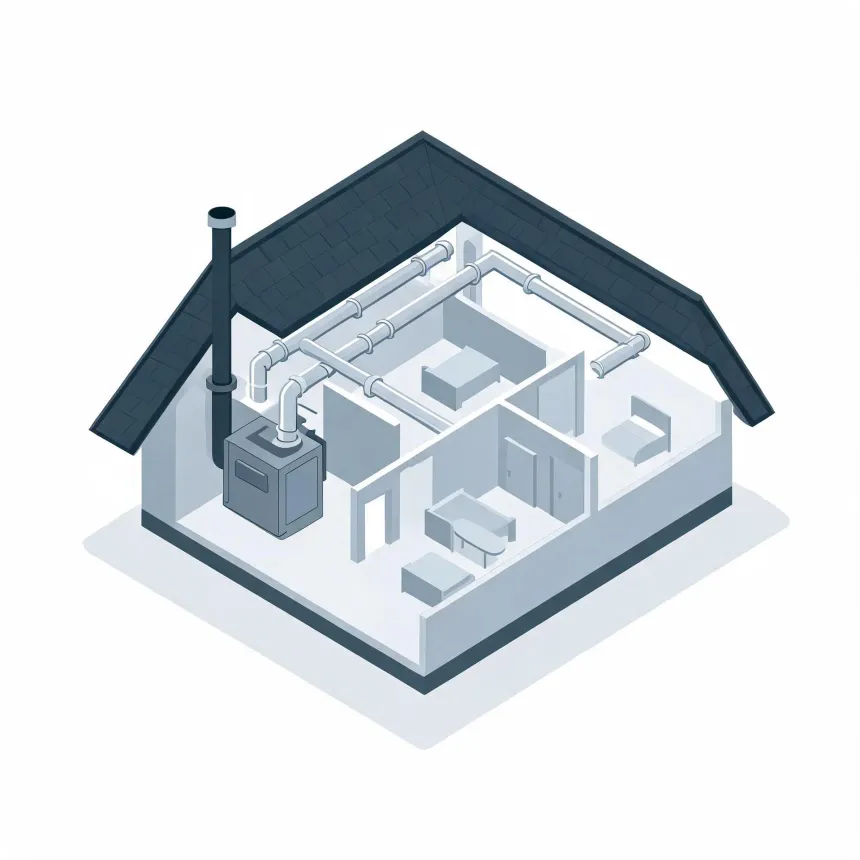
- A contractor removes the old furnace or air conditioner, sets the new equipment in place, and connects it to the ductwork, gas line or electrical circuit, and the venting or refrigerant lines it needs to run. Once it's hooked up, they test it, checking airflow, checking that it cycles on and off correctly, and making sure it's sized right for the ducts already in the house. Replacing a furnace or air conditioner needs a permit from the local building office in most cities and counties, along with an inspection once the work is done, so expect that step to be part of the job rather than an extra.