Mini Split Installation in Lacey, WA
Tell us about the house, and a licensed contractor who covers Thurston County will get in touch.
Tell us about the job
It takes about a minute.
Built for heating, not cooling
Lacey needs heat from September through June, ten months a year, with winter nights averaging 34°F. Summer afternoons only reach about 75°F, so a mini-split here spends almost all its time on the heating side, not the cooling side.
A new unit still has to meet the same federal minimum either way. Any split-system heat pump built after January 1, 2023 must hit at least 14.3 SEER2 for cooling and 7.5 HSPF2 for heating. In a place like this, the heating number is the one doing the work most of the year.
- 10 months
- September through June, your system heats
- 34°F
- the average winter night it heats against
- 75°F
- the average summer afternoon it cools against
Washington requires contractors to register with the state.
Registration means the contractor's business is on file with L&I. There is no trade exam behind it, so it tells you the business is real and on record in this state, not that anyone checked their skill.
For a mini-split, the protection that matters here comes from the local building office. In most cities and counties, an installation like this needs a permit, and an inspection once the work is done. That inspection is what checks the work itself, not the registration number.
Source: Washington State Legislature
- Is a mini split worth it?
- For a lot of homes here, yes. Lacey needs heat from September through June, so a heat pump that's earning its keep ten months a year has a real job to do, not just a few weeks of use. Winter nights average 34°F, and a mini split rated for cold climates will still pull heat out of that air. If your home has no ductwork, a mini split gets you heating and cooling without the cost of adding a duct system. The right call for your house still depends on layout and what you're heating now, which is something a contractor should walk through with you.
- How many rooms can a mini split cover?
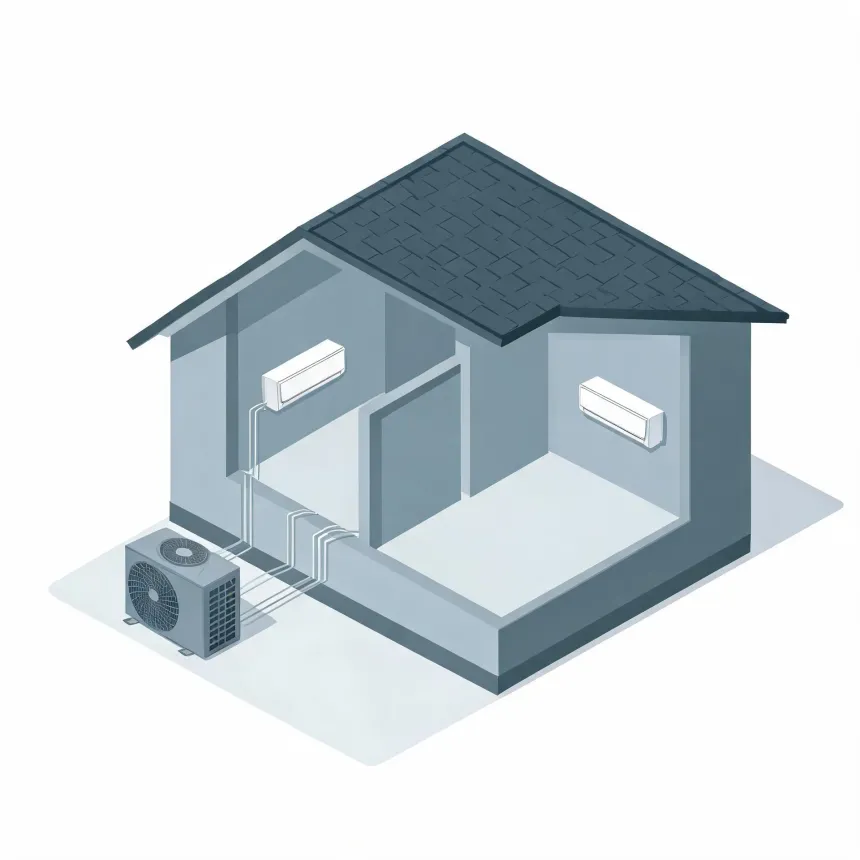
- A single outdoor unit can run one indoor head or several, so one system can cover more than one room. Each indoor head is sized for the room it's in, so a multi-zone setup gives every room its own thermostat and its own output. The more zones you add, the more the outdoor unit has to split its capacity across all of them. A contractor sizing your system will look at square footage and layout room by room, not just count doors down a hallway.
- Can a mini split heat a whole house?
- It can, if it's designed for that from the start. A multi-zone mini split with an indoor head in each main room can heat the whole house the same way a furnace does, just without ducts. What matters is sizing each zone correctly and placing heads where they'll actually reach the space, including rooms with doors that stay closed. Given how many months this area needs heat, that sizing is worth getting right, and a contractor can lay out a system based on your home's actual floor plan.