Mini Split Installation in Centralia, WA
Tell us about the house, and a licensed contractor who covers Lewis County will get in touch.
Tell us about the job
It takes about a minute.
Ten months of heating a year, and almost no cooling
In Centralia, a mini-split spends most of its life in heating mode. Winter nights average 31°F from December through February, and homes here need heat from September clear through June. Summer only asks for cooling that stays mild, with afternoons averaging 72°F, so the compressor is doing light work most of the year and heavy work for ten months straight.
That makes the heating side of the unit the part that matters most. Any mini-split installed new has to meet 7.5 HSPF2 for heating and 14.3 SEER2 for cooling under the federal minimum that took effect in 2023. With most homes here on electric heat, picking a unit that holds its output as the temperature drops is what keeps the house warm through a long, mild, wet winter rather than just an efficient one on paper.
- 10 months
- September through June, your system heats
- 31°F
- the average winter night it heats against
- 72°F
- the average summer afternoon it cools against
Washington requires contractors to register with the state.
The registration puts the contractor's business on file with the Department of Labor and Industries. There is no trade exam behind it, so the number tells you the business is on record in Washington, not that anyone checked how they install a mini-split.
For this job, the check that matters is local. In most cities and counties, a mini-split installation needs a permit from the building office, and an inspector looks at the work once it is done. That permit and inspection are what stand behind the installation here, not the state registration.
Source: Washington State Legislature
- Is a mini split worth it?
- For a home here, yes, because you need heat most of the year and a mini split handles that without ductwork. It pulls heat from outside air even when it's cold out, so it keeps working through a 31°F night in January. A contractor can tell you whether it fits your specific rooms and how many you'd need.
- How many rooms can a mini split cover?
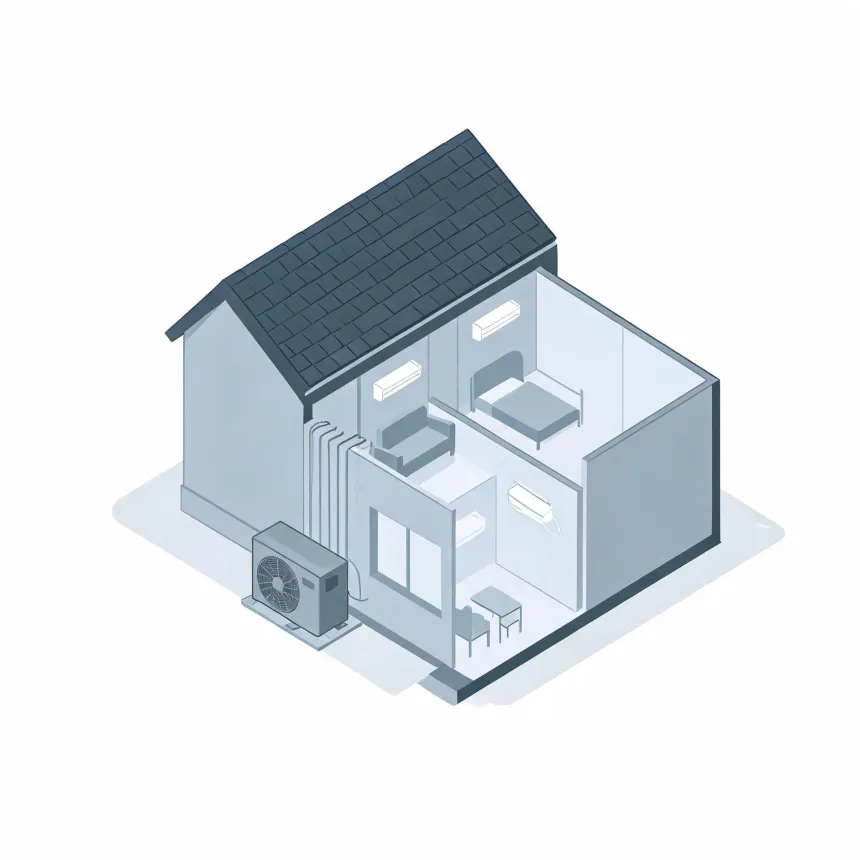
- It depends on how many indoor heads the system has. A single-zone system covers just the room it's in, which works well for an addition or a room that never gets warm enough. A multi-zone system runs several indoor heads off one outdoor unit, each on its own thermostat, so it can cover as many rooms as it has heads for. A contractor sizes the system to your home's layout and how many zones you actually need.
- Can a mini split heat a whole house?
- Yes, with a multi-zone system sized to cover every room you need heated. Each indoor head warms the space it's installed in, so the number of heads and where they go decide how complete the coverage is. With winter nights here averaging 31°F, the system has to be sized for that cold, not just for a mild day. A contractor can work out the layout and capacity your house needs room by room.