Mini Split Installation in Pullman, WA
A new system here will heat from September through May and cool from July through August every year. Tell us about the house, and a licensed contractor who covers Whitman County will get in touch.
Tell us about the job
It takes about a minute.
Pullman asks a mini-split to run almost all year
Nine months of heat, September through May, then two months of cooling in July and August. Eleven months out of the year, your mini-split is the thing keeping the house right. Winter nights average 27°F here, cold enough that the heat pump side is doing real work, not just topping off a furnace. Summer afternoons average 82°F, so the cooling side isn't asked for much, but it still has to be sized and installed to handle both jobs well.
Any mini-split installed new has to meet the federal minimum for split-system heat pumps, 14.3 SEER2 for cooling and 7.5 HSPF2 for heating. In a place that leans on the unit for heat most months of the year, that rating is not a technicality. It is most of what the house will run on from September to May.
- 9 months
- September through May, your system heats
- 2 months
- July through August, it cools
- 27°F
- the average winter night it heats against
- 82°F
- the average summer afternoon it cools against
NOAA nClimDiv, 1991–2020 normals
Washington requires contractors to register with the state.
Registration puts the contractor's business on file with the Department of Labor and Industries. There is no trade exam behind it and no state license. It tells you the business is on record, not that anyone checked their work.
For a mini-split installation, the protection here comes from the permit and inspection your local building office requires for this kind of job. Most cities and counties in Washington call for a permit before the work starts and an inspection once it is done, and that inspection is what checks the installation, not the registration.
Source: Washington State Legislature
- Is a mini split worth it?
- For most homes here it is. Pullman needs heat from September through May, and a mini split heats and cools with the same system, so it covers nearly the whole year. Winter nights average 27°F, and a mini split is built to keep producing heat at temperatures like that. A contractor can tell you whether it should replace what you have or work alongside it.
- How many rooms can a mini split cover?
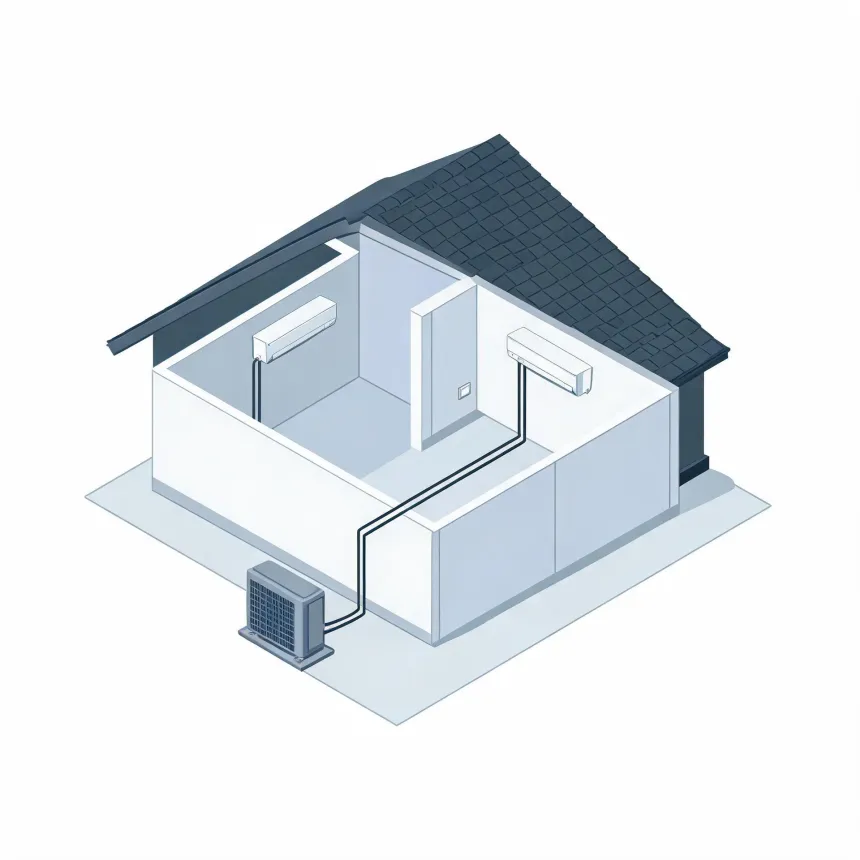
- That depends on the system. A single-zone mini split heats and cools one room or open area. A multi-zone system connects several indoor heads to one outdoor unit, each with its own thermostat, so different rooms can be set to different temperatures. How many zones a house needs comes down to its layout, which a contractor sizes room by room.
- Can a mini split heat a whole house?
- Yes, if it has enough indoor units placed and sized for the house. A multi-zone system can put one head in each room or living area, and together they heat the whole home. Pullman winters average 27°F at night, so the system has to be sized for those lows, not just for a mild day. A contractor can work out how many zones and how much capacity the house needs to stay warm through the winter.