A gray outdoor heat pump unit with a circular fan grille sits on a concrete pad beside a dark wood-clad house, next to a gravel bed with ornamental grasses and a stepping-stone path.

A pro who works on heat pumps

Does a heat pump handle humidity in Washington

Washington summers don't carry the heavy, sticky air some other places get, so a heat pump isn't fighting the same battle. What you're really asking is whether yours can keep the inside of your house from feeling damp on the warm days you do get, and whether it does that well enough to skip a separate dehumidifier. That depends on how your system is sized and set up, which is worth getting a straight answer on before you decide anything.

Get matched

A heat pump handles humidity in Washington just fine, because every time it runs its cooling cycle, it's pulling moisture out of the air along with the heat. The cycle works the same way an air conditioner does: warm, humid air moves across a cold coil, and the moisture collects there and drains away. Washington summers don't push that system hard, since the air isn't thick with moisture to begin with, so the coil isn't working against much. Where this matters more is sizing. A heat pump that's too big for the house cools the air fast and shuts off before it's run long enough to pull real moisture out, which can leave a room feeling cool but damp. One sized correctly for your house runs longer, steadier cycles, and that's what keeps the air dry as well as cool. If your house still feels sticky indoors on a warm day, that points to sizing or airflow, not the equipment itself.

An outdoor air conditioning condenser unit on a concrete pad beside a dark horizontal-siding wall and a brick wall, with flowering shrubs and grass nearby.

You're out in the side yard in March, coiled hose still looped on its hook from last fall, and you catch sight of the unit sitting against the fence. Rust has crept along the base, a thin orange line where the metal meets the pad. It still runs fine, still clicks on when you test the thermostat, but you crouch down and look closer at the corners. Washington damp works on a cabinet slowly, through the wet months, not the warm ones. You straighten up, make a mental note to ask someone about it before the weather turns, and head back inside to finish what you were doing before you noticed it.


Right-Sized vs Oversized Heat Pump

Oversized system

  • A heat pump sized too large for your house cools the air fast, then shuts off before it's pulled much moisture out of it.
  • Short cycles mean the coil barely gets cold enough, long enough, to do the moisture-removal part of its job.
  • You end up with a house that reads cool on the thermostat but still feels clammy, especially in rooms away from the unit.
  • Sizing comes from a load calculation on your actual house, not a guess based on square footage alone.
  • A system that short-cycles also wears its parts faster, since the compressor is starting and stopping more than it should.

Properly sized system

  • A correctly sized heat pump runs longer cycles, which gives the coil time to wring moisture out of the air as it cools it.
  • Longer runtime at a lower output matches how Washington summers actually behave, since the heat is real but the air isn't thick with moisture to begin with.
  • The house feels dry and even from room to room, not just cool near the thermostat.
  • Installers who do a proper load calculation account for your home's size, windows, and layout before picking equipment.
  • Steadier cycling also means less wear on the compressor over the years it runs.
A gray outdoor condenser unit on a concrete pad beside a white horizontal-siding house, with refrigerant lines and conduit running to a wall-mounted disconnect box, bare soil in front and a green shrub at left.

Working the way it should

This is a heat pump pulling moisture out of the air the way it's supposed to. The coil stays cold enough, long enough, during each run. The lines and the disconnect are clean, the pad is level, and the unit cycles on its own schedule without strain.

An outdoor air conditioner condenser unit on a concrete pad beside a house with horizontal lap siding, with a shrub to the left, bare dirt in front, and conduit and a metal disconnect box on the wall.

Something's off

A unit can look fine sitting there and still not be removing moisture the way it should. If the air inside feels damp even with the system running, or it's cycling on and off fast, something in how it was sized or installed may be working against you.

Does your house feel damp even with the AC running

You turn the thermostat down and the room cools, but the air still feels heavy. Bedsheets feel damp at night. A window fogs on the inside. The bathroom mirror takes longer to clear after a shower than it used to. None of that is really about temperature. It means the system is cooling the air without pulling the moisture out of it, usually because it's cycling on and off too fast to run a full dehumidifying cycle. Left alone, that damp air gives mold and mildew a place to start, along the window frames, in closets, behind furniture pushed against an outside wall. It's worth paying attention to before it becomes a bigger problem than a sticky room.

A woman with long wavy brown hair in a grey ribbed sweater sits on a couch indoors, looking toward a window, with a potted palm-like plant and fireplace behind her.
A woman with long brown hair wearing a green V-neck top and beige cardigan sits on a light sofa, looking off to the side, with a dining table, lamp and framed picture in the background.
A woman with long dark hair in a cream knit sweater sits on a beige sofa indoors, looking toward a bright window with a houseplant and framed picture in the background.
A woman with long dark hair in a green knit sweater sits on a couch indoors, smiling and looking toward a window with a blurred room behind her.
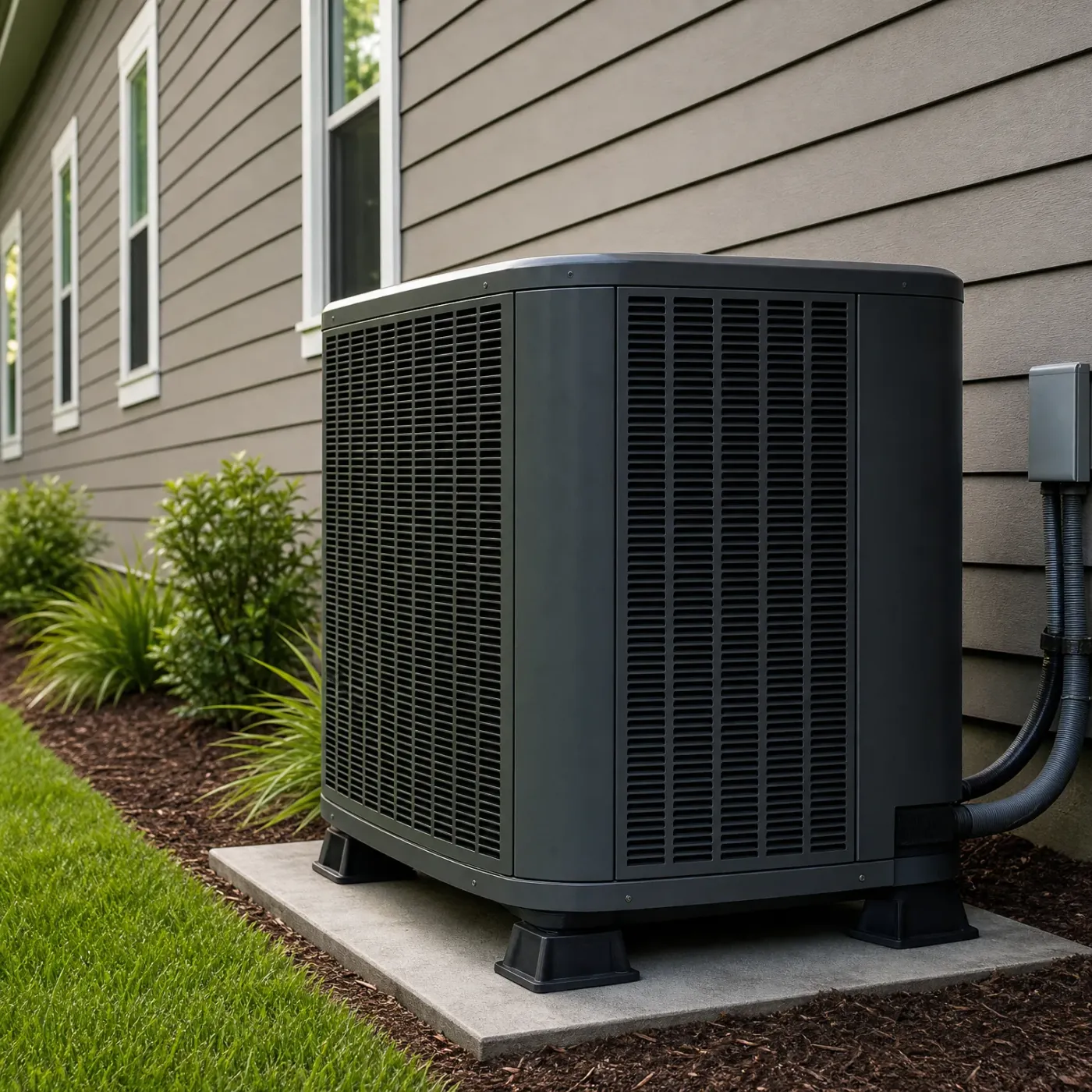
A dark gray outdoor condenser unit on a concrete pad beside a house with horizontal lap siding, with mulch beds, shrubs, and lawn nearby and conduit running to a wall-mounted box.

Get your heat pump to the right pro

Send the form and the search for an installer is over.

Get in touch with a local installer about a new heat pump.

Find a heat pump pro

Asking costs nothing, and the choice to hire stays yours.

A gray outdoor condenser unit on a concrete pad beside a beige vinyl-sided house, with a wall-mounted disconnect box, flexible conduit, mulch bed, shrubs and a concrete walkway in front.
A heat pump that's clean, level, and sized right will cycle long enough to pull the moisture out of the air before it shuts off.
An outdoor air conditioning condenser unit on a concrete pad beside a house with horizontal siding above a brick foundation, with a flexible conduit running to a wall-mounted disconnect box.
Dust caked on the coil and a unit crowded against the wall can't move enough air to get the moisture-removal part of the job done.
A two-story gray horizontal-siding house with multiple gables, a covered front porch with white columns and railing, and a dark front door, fronted by a patchy green and brown lawn under a clear blue sky.

Washington's summer air averages a 53°F dew point across June, July and August, a figure from NOAA climate data for the areas where most people here live. That's dry enough that your heat pump isn't working against heavy air to begin with. On a dry afternoon like that, the coil pulls out what little moisture there is in the first few minutes of a run, so most of what you feel afterward is just the temperature dropping. The air doesn't turn heavy or damp the way it does in muggier places, even if the unit short cycles on a mild day.

NASA POWER T2MDEW county cells weighted by homes

A gray outdoor air conditioning condenser unit on a concrete pad beside a house with light vinyl siding, with a gray electrical disconnect box and conduit on the wall to the right.
Before you get your heat pump installation
A gray outdoor condenser unit on a concrete pad beside a house with horizontal lap siding, a conduit and disconnect box on the wall, a shrub with white flowers at right and evergreen foliage at left.
After you get your heat pump installation
A beige outdoor air conditioning condenser unit on a concrete pad beside a house with horizontal vinyl siding, with refrigerant lines and a disconnect box on the wall, surrounded by dark mulch and a green shrub at left.

Running clean

This is a heat pump doing its job without a fight. The conduit from the disconnect box runs straight down to the unit, the pad is level, and nothing crowds the cabinet. Air moves through it freely, so the coil gets cold enough, long enough, to wring the moisture out before the cycle ends.

An outdoor air conditioner condenser unit on a concrete pad beside a house with beige horizontal siding, with conduit running from an electrical box on the wall.

Struggling to keep up

Same setup, same kind of unit, but something's off. If the pad has settled or the coil behind the housing is caked with dust, the unit can't pull enough air across it. Short cycles come and go, the room cools, and the air inside still feels heavy.

A woman in a cream cardigan and jeans stands with one hand raised facing an open front door of a gray horizontal-siding house, with a black lantern wall light, a potted shrub with yellow flowers, and a stone-faced porch column.

So the answer is yes, with conditions

A heat pump in Washington handles humidity fine. The air here doesn't push hard against it the way it does in muggier places, so the machine isn't the question. What matters is whether it's sized right for your house, sitting level, and clean enough to move air the way it's built to. Get those right and it'll pull the moisture out of the air every time it runs, same as it's supposed to.

If your unit's been struggling, crowded against a fence, caked in dust, cycling on and off too fast to do the job, that's not a Washington problem. That's a this-unit problem, and it's fixable. A contractor matched to your situation can look at what you've got, the sizing, the placement, the wear, and tell you plainly what it needs. You won't have to figure out which of those it is on your own.

Interior corner of a room with a window and sheer curtain at left, a gray upholstered sofa with a cushion at right, and a round wooden table holding stacked books and a round vase with an olive branch.
At dusk, a dark board-and-batten house with a standing-seam metal roof and lit entry walkway of stone pavers, with two large outdoor heat pump units on a stone-walled pad at right and trees and hills in the background.

Heat Pump Installation

The right pro for this job

New system or replacementHeat PumpWashington
Step 1 of 2

What ZIP code is the job in?

  • A cream chunky cable-knit throw draped over a beige upholstered armchair beside a bright window, with a wooden side table holding a book and a vase of leafy branches at left.
    • Say what's going on with your heat pump, and a pro who works on them reaches out.
    • A local pro who knows heat pumps gets your details and gets in touch.
  • Living room corner with a gray sofa holding beige pillows and a knit throw, a round wooden coffee table with a dark planter and shallow bowl, a jute rug, a floor lamp, a framed landscape print on the wall, and a window showing trees.
    • One request ends the search for a heat pump installer.
    • Once you send the form, finding a pro is off your list.
  • A living room corner with a cream sofa and cushion, knit throw, wooden coffee table holding a shallow bowl and dark ceramic vase with green foliage, a floor lamp, potted plant in a woven basket, and linen curtains at a window.
    • Skip collecting and comparing quotes for the new heat pump.
    • Skip the round of in-home estimates for a new heat pump.
  • A round reclaimed-wood coffee table with a black metal base sits on a woven rug in front of a cream sofa with cushions, with a lit built-in fireplace and a tall indoor tree in the background.
    • One installer gets your project, so there's no bidding war over it.
    • Only one pro gets your request, so you hear from one company.