Profile view of a bearded man wearing a dark baseball cap and a dark gray T-shirt against a plain off-white background.

What to do when the heat pump goes out in Washington

RepairHeat PumpWashington
Step 1 of 2

What ZIP code is the job in?

First check the thermostat and the breaker panel. A heat pump that won't run at all is often just a tripped breaker or a thermostat set wrong, and both take a minute to rule out. If the outdoor unit is caked in ice, that's a sign something is wrong with the system itself, not just cold weather, since a working heat pump defrosts itself on a cycle through the winter. If the unit runs but the house stays cold, or you hear it clicking on and off fast, don't wait on it. Most homes in Washington heat with electricity, so when the heat pump is down, there's often no backup warming the house behind it. A unit that keeps running while broken can also drive the power bill up fast, even with electricity priced the way it is here. The sooner a contractor looks at it, the sooner you know if it's a quick fix or something bigger, and you can stop guessing at what's wrong on your own.

A bearded man in a plaid flannel shirt sits indoors looking out a window at snow-covered trees, with a steaming mug on the sill and wooden kitchen shelves behind him.
A bearded man in a navy T-shirt sits on a light-colored couch indoors, smiling while looking down at a laptop screen in the foreground, with a framed picture and a potted plant blurred behind him.

Air that feels cool at the vent doesn't mean the system is broken. A heat pump moves heat rather than burning fuel to make it, so the air coming out is warm compared to outside, not hot like a furnace. In cold weather, frost forms on the outdoor coil and the system runs a defrost cycle to clear it, briefly reversing and sending heat outside instead of in. The outdoor fan stops, steam rises off the unit, and it looks like something has gone wrong when it hasn't. The problem shows up when that cycle can't keep up. If frost keeps building faster than defrost clears it, look at the reversing valve or the sensor that controls the cycle. If the unit turns on and off every few minutes, that's usually low refrigerant or a compressor on its way out. And if the auxiliary heat is running for long stretches instead of short bursts during a cold snap, the heat pump underneath it isn't pulling its weight.

How a heat pump actually fails

  • A heat pump moving heat indoors in winter can look like it's blowing cool air even when it's working right, since it rarely gets as hot as a furnace.
  • Outdoor coils build up frost in cold weather, so the unit runs a defrost cycle every so often, reversing briefly and sending heat outside to melt it off.
  • During defrost the outdoor fan stops and steam may rise off the unit, which looks alarming but is the system clearing itself, not failing.
  • If frost builds up faster than the defrost cycle clears it, the reversing valve or a sensor controlling that cycle is likely the problem.
  • A heat pump that short cycles, turning on and off every few minutes, is often low on refrigerant or has a failing compressor.
  • Auxiliary heat kicking on for long stretches points to the heat pump itself not keeping up, not just cold weather doing its job.
An outdoor air conditioning condenser unit with dusty coils sits on a concrete pad against light horizontal siding, with an electrical disconnect box and refrigerant lines on the wall and a shrub and mulch at left.
Before you get your heat pump repair
A gray outdoor heat pump unit on a concrete pad beside a house with horizontal lap siding, with a conduit running to a wall-mounted disconnect box and a green shrub to the left.
After you get your heat pump repair

Why heat pumps run on electricity here

Washington homes mostly heat with electricity, and a heat pump is built to use that power efficiently by moving heat rather than generating it. That's why a breaker trip or a bad connection shuts the whole system down at once, instead of leaving you with a weaker flame or less heat the way a gas furnace might. It also means a heat pump pulls more current at startup than it does running steady, so a breaker that's marginal can hold during the day and trip when the compressor kicks on at night. If it trips more than once after you reset it, that's the unit telling you not to keep resetting it.

What a repair actually corrects

A heat pump that's low on refrigerant will run longer to reach the same temperature, and the outdoor unit may ice up well before the defrost cycle is due to clear it. A technician checks the charge, the reversing valve that switches the system between heating and cooling, and the defrost control board, since any one of those can make the system run constantly without warming the house. Fixing the actual cause means the unit stops working overtime to do the same job. Since power here is cheap, the bill impact of a struggling heat pump is smaller than it would be elsewhere, but the strain on the equipment itself is the same regardless of what electricity costs.

A woman in a cream cowl-neck sweater sits by a window with snow outside, in a dimly lit living room with a sofa, lit lamp, mirror, candles and a fireplace.
A woman in a gray turtleneck sweater sits beside a large window looking out at snow-covered evergreen trees, in a dimly lit living room with a lit fireplace, lamps, couch and houseplant.
A woman in a cream turtleneck sweater stands beside a large window with snow-covered ground and bare trees outside, in a dimly lit living room with lamps, a sofa and framed art.
A woman in a grey cowl-neck sweater stands indoors near a window, looking out at falling snow, with a lamp, framed picture and couch in the warmly lit room behind her.
A single-story gray horizontal-siding house with multiple front-facing gables, white-trimmed windows, a dark front door, and a concrete walkway crossing a partly dry lawn under a clear blue sky.

Summer air in Washington averages a 53°F dew point across June, July and August, according to NOAA climate data. That's dry air, and a heat pump running air conditioning in dry air doesn't work as hard as one in a muggy climate, so the coil and compressor see less strain pulling moisture out of the house. If yours is short-cycling, freezing up, or not cooling evenly anyway, that points to a real problem with the refrigerant charge, the coil, or the fan, not the weather asking too much of it. Once you send in the details, you're done chasing down who can look at it. A contractor who handles heat pumps in your area gets your information and takes it from there.

NASA POWER T2MDEW county cells weighted by homes

The right pro for this job

A heat pump that's down in the middle of winter is a bigger problem here than a broken AC would be in July, since most houses in Washington count on it for heat, not just comfort. Electricity is the whole system, and that's also why these homes keep a lot of their heat on a single breaker and a single pump. When that pump quits, there's no backup furnace quietly picking up the slack. Figuring out whether the problem is a stuck reversing valve, a failed defrost board, or something electrical takes a license and a meter, not guesswork. The sooner someone qualified looks at it, the sooner the house stops relying on space heaters. Send the request and let a contractor who works on these systems take it from here.

A gray outdoor condenser unit on a concrete pad beside a house with horizontal lap siding, with a wall-mounted disconnect box, conduit and insulated refrigerant lines, a shrub at left and gravel at right.

Running the way it should

The unit sits quiet on its pad, cycling on and off without you noticing. No ice on the coil, no odd noise from the fan, no short cycling where it shuts off a minute after starting. It's keeping the house at the temperature you set and holding it there.

An outdoor air conditioning condenser unit on a concrete pad beside a house with horizontal lap siding, with a green shrub to the left and a wide concrete slab in the foreground.

Something's off

The unit outside is running but the house isn't warming up, or it's running nonstop and never catching up. Maybe you hear a click and nothing starts, or the fan spins but you don't feel heat at the vents. Any of that is worth a call before it gets worse.

Power costs 13.17 cents per kilowatt-hour statewide

At 13.17 cents a kilowatt-hour, running your heat pump costs less here than it would in most other states. That's worth knowing when something's off with it. A repair that gets it back to normal keeps your power bill where you expect it instead of climbing while you wait.

EIA-861 2025 statewide residential average

Getting your heat pump back on track

  • A heat pump that won't start, won't switch modes, or runs nonstop usually traces back to one fixable part, not a worn-out system.
  • Checking the thermostat and breaker first rules out the simplest causes before anything else gets looked at.
  • Ice on the outdoor coil, warm air that feels cool, or short cycling are signs worth having a contractor look at rather than waiting out.
  • Washington's cheap electricity means a repair pays off fast by keeping the power bill from climbing while the unit struggles.
  • Sending the form hands the search for a contractor off your plate, and you get matched with one who works on heat pumps in your area.
  • Getting it fixed now, while it's a small problem, keeps a Washington winter from turning into a house with no heat.

Most heat pump trouble comes down to one part not doing its job, not the whole system failing. A tripped breaker, a thermostat set wrong, a frosted coil, or a unit that won't switch out of one mode: these are things a contractor sees and fixes regularly. None of them mean you're due for a new system. Catching it early is what keeps a small issue small. A unit that's struggling still pulls power, and at Washington's rates that adds up faster than people expect, even before the comfort problem gets worse. Letting it run while something's wrong costs you twice, once in the bill and once in the repair that gets harder the longer it waits. Winter here isn't the time to find out your heat pump can't keep up. Once you send the form, the job of finding the right contractor isn't yours anymore. You'll be matched with someone who works on heat pumps in your area, and they'll reach out to you directly. No more sorting through listings or guessing who's reliable. You checked the thermostat and the breaker. You know what the ice and the short cycling mean now. The next step isn't figuring out who to call. It's letting someone who already knows heat pumps take it from here, while yours is still a quick fix instead of a bigger one.

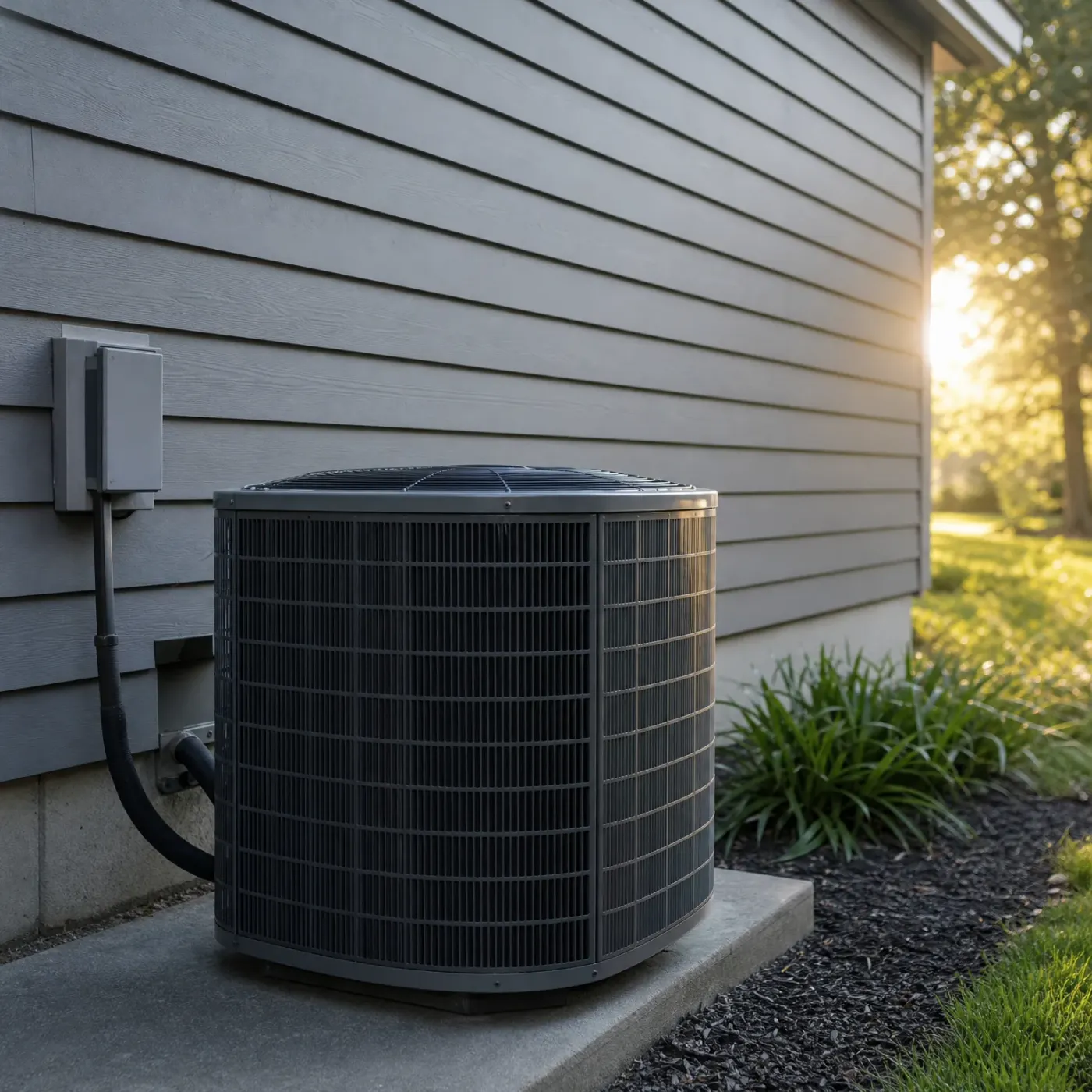
An outdoor air conditioner condenser unit on a concrete pad beside a gray horizontal-lap-sided house, with an electrical disconnect box and refrigerant line on the wall, grass, shrubs and a tree with low sun behind.

Matched to your heat pump job

Hand off my repair

Get the heat pump repair search off your mind today.

Asking costs nothing, and the choice to hire stays yours.