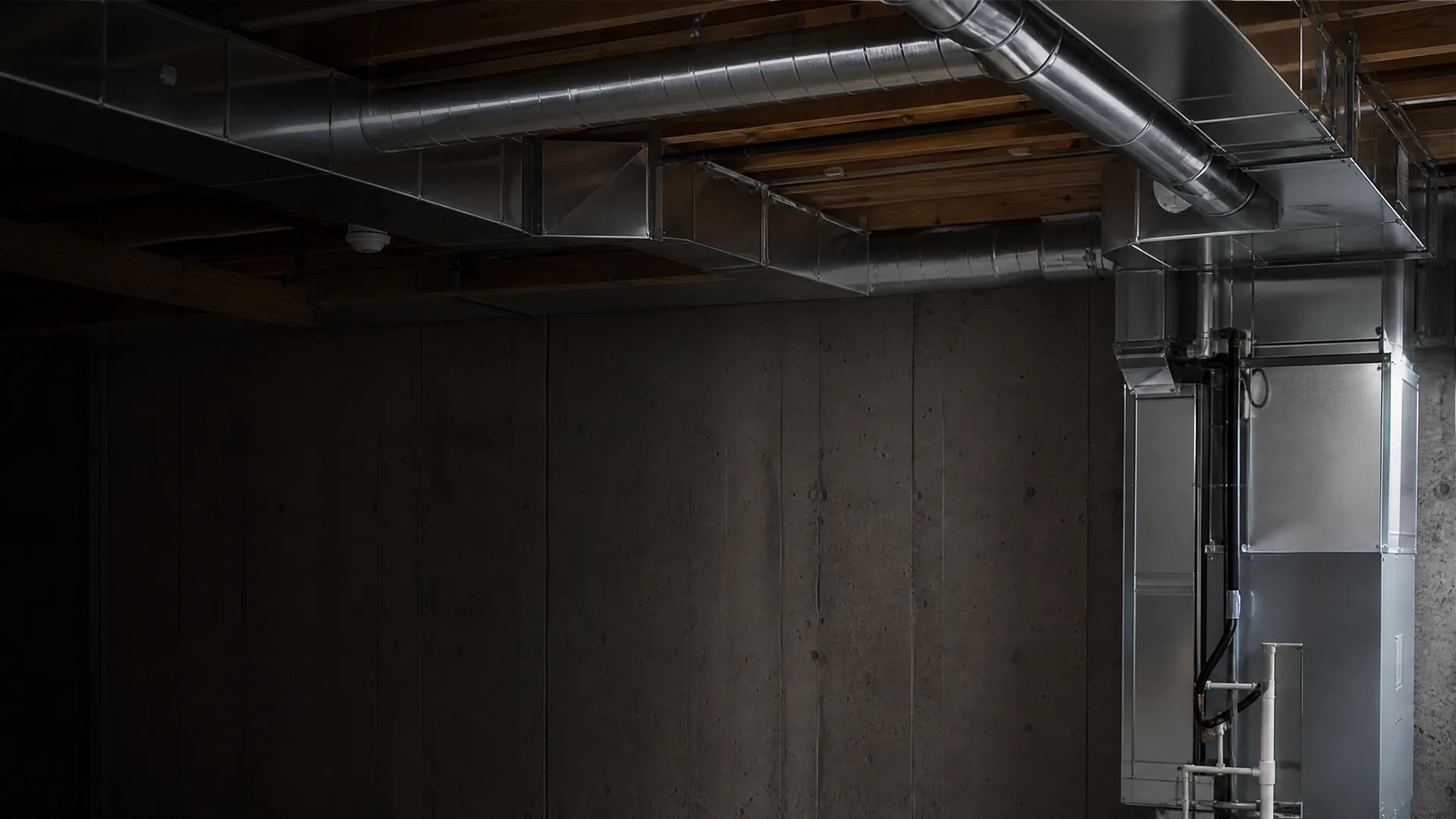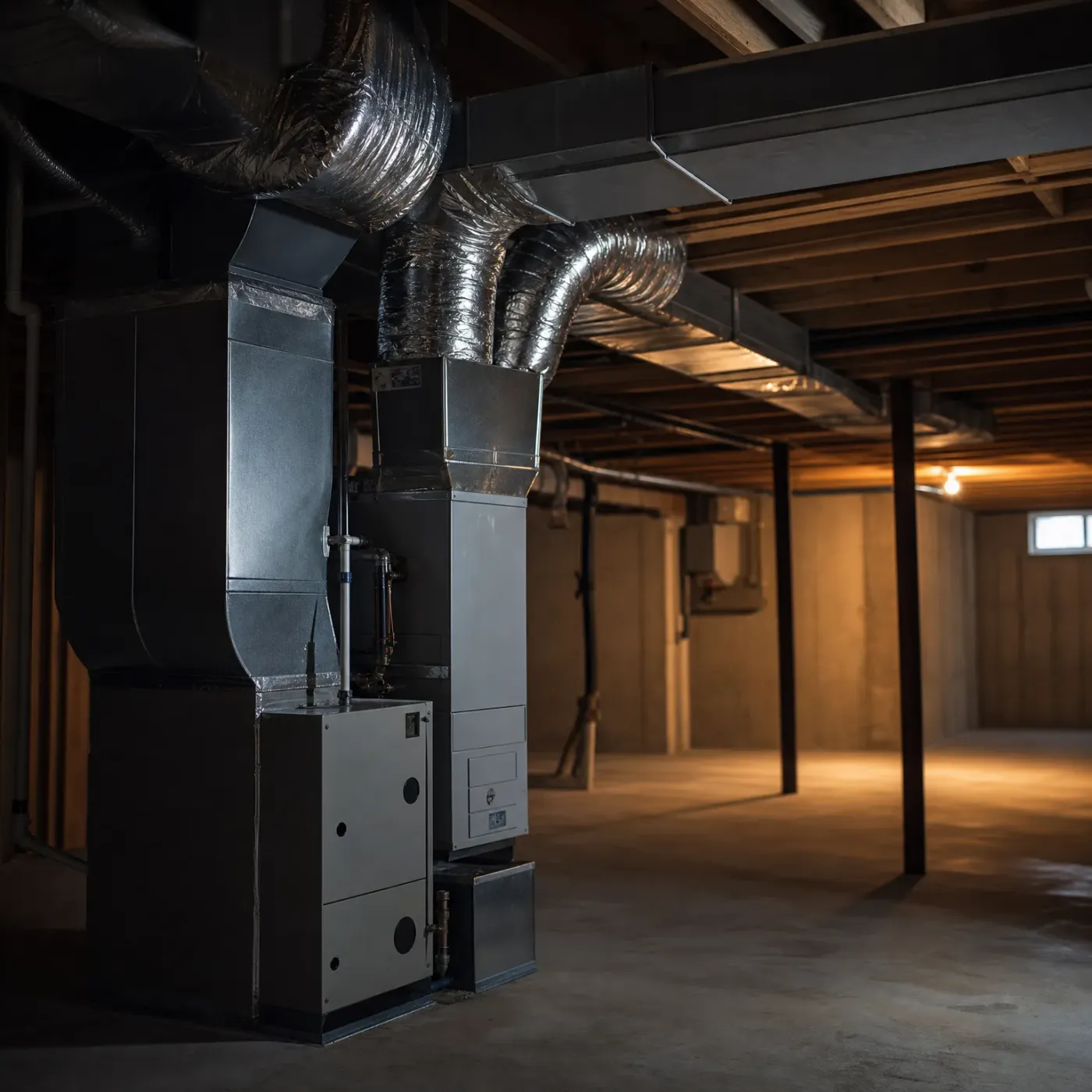
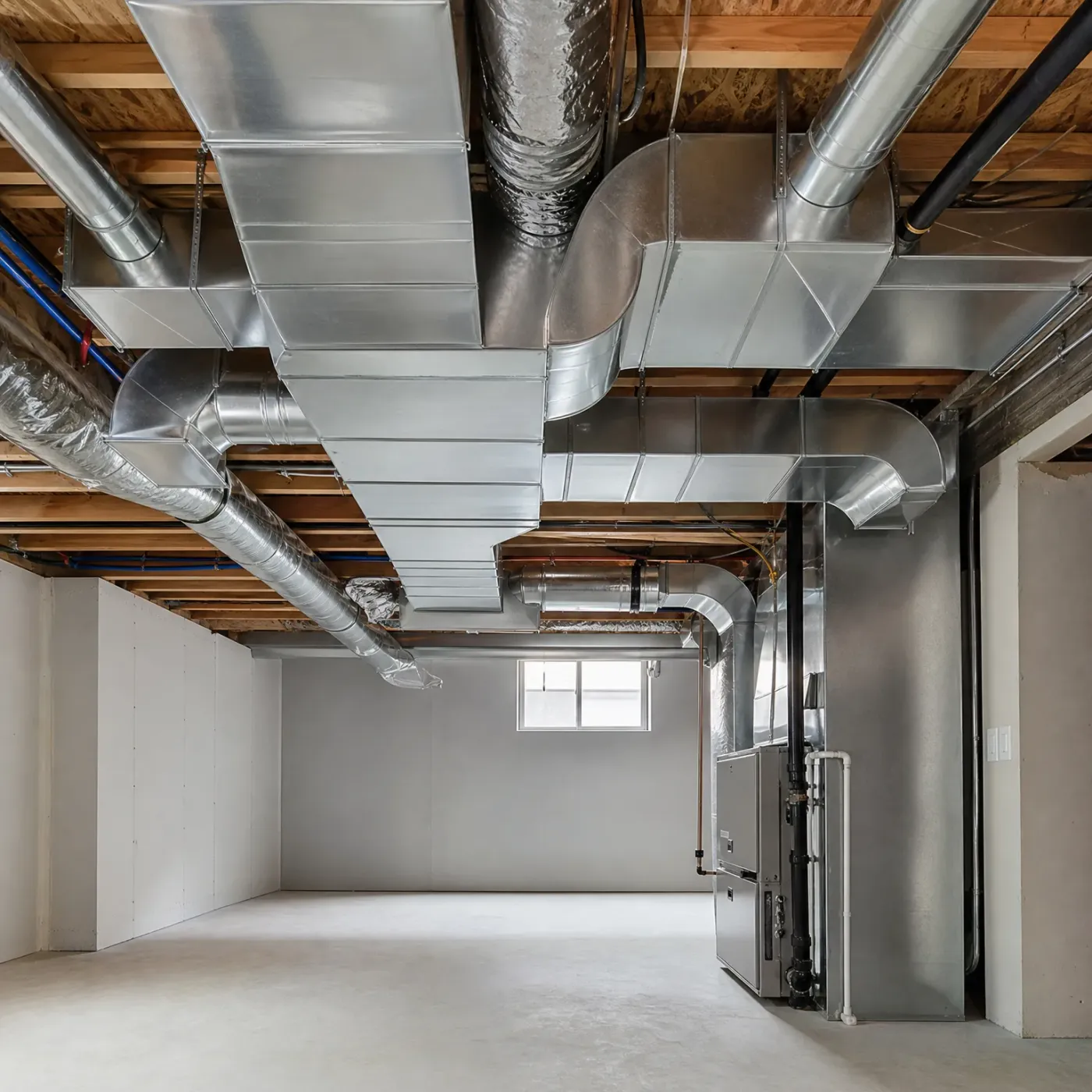
Unfinished basement with concrete floor and walls, exposed wood joists, steel support columns, and two furnace-type units connected to sheet-metal and flexible insulated ducts.

Done looking for a duct system pro

Does duct cleaning help allergies in Washington

Duct cleaning gets brought up a lot for allergies, but whether it actually helps depends on what's in your ducts and what's triggering you in the first place. This page gets into when cleaning makes a real difference and when it won't touch the problem. Skip the search-and-compare work and send the form once you're ready.

Hand it off

Cleaning the ducts can help if what's irritating you is actually sitting in them: dust, pet dander, or debris that gets stirred up every time the system kicks on. In homes heating with electricity, the air handler runs often enough through a Washington winter to keep recirculating whatever is built up in there. If your symptoms track with the system running, cleaning can cut that down. But duct cleaning won't help allergies caused by pollen coming in through open windows, a humid bathroom growing mold, or a pet that sleeps in your bedroom. It also won't fix a moisture problem inside the ducts that keeps bringing contaminants back. Before paying for a cleaning, it's worth figuring out whether the ducts are actually the source. A contractor who inspects the system first can tell you whether cleaning will make a real difference or whether the money is better spent elsewhere.

Unfinished basement with exposed wood joists, galvanized sheet-metal ductwork, insulated flex ducts, piping, a small window, and a furnace or air handler against a gray wall.

Ducts that are just moving air

This is what most duct systems look like: metal and flex runs feeding the furnace, nothing visibly wrong. If your allergies flare here, the ducts may not be the reason. The dust or dander could be coming from the room itself, not what's traveling through the vents.
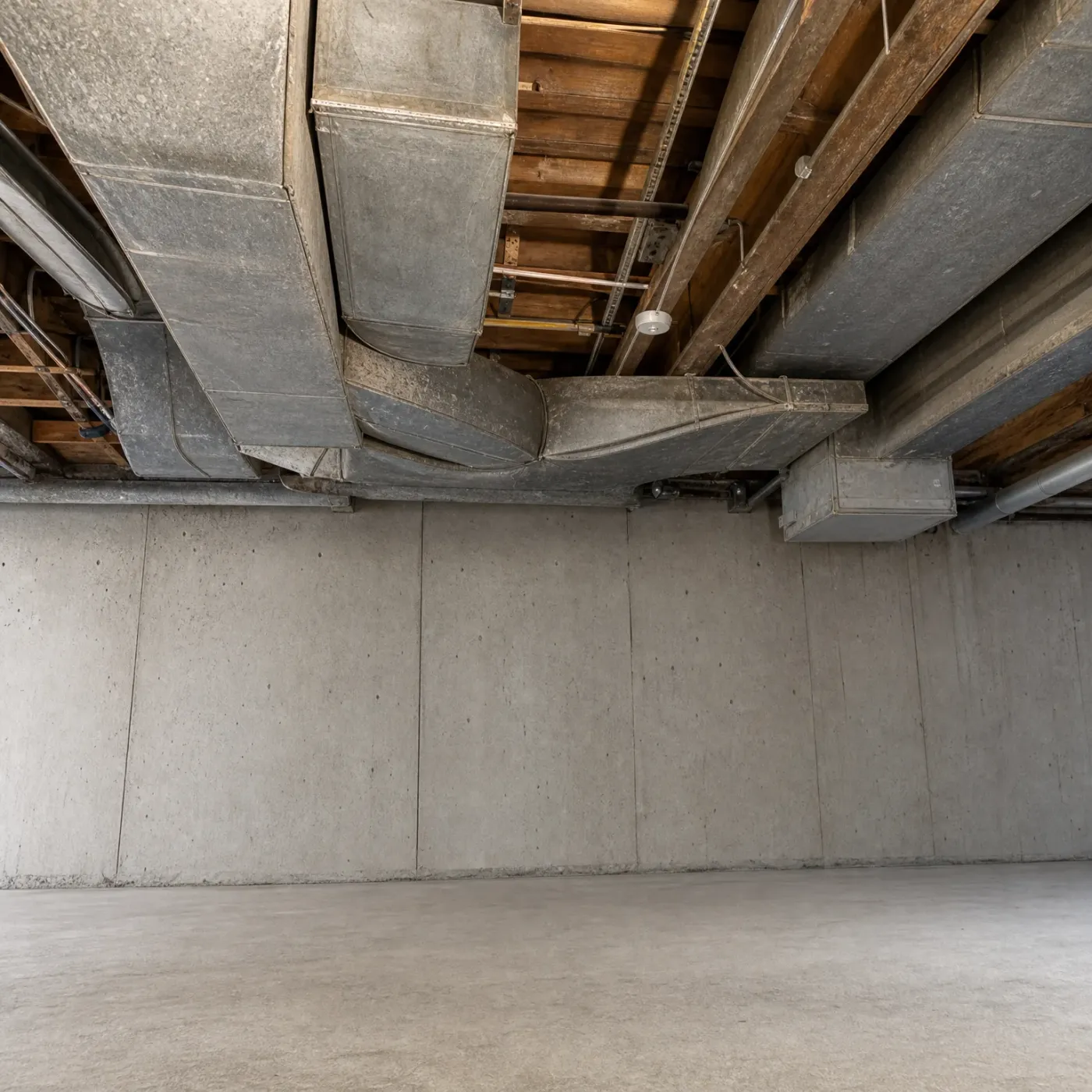

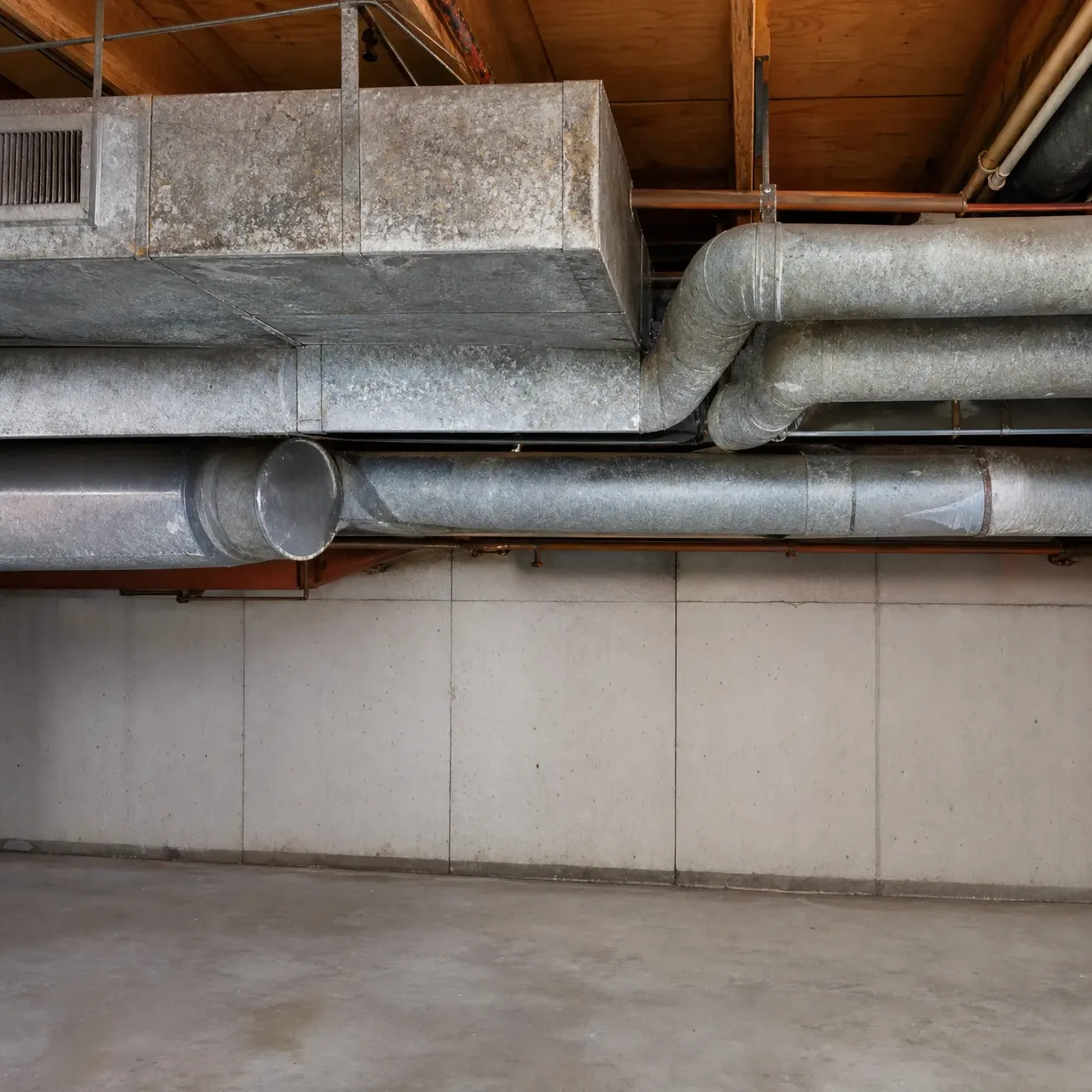
Empty basement room with bare concrete walls and floor, and an exposed ceiling of wooden joists with large galvanized sheet-metal ductwork and pipes.

Ducts holding onto the problem

Runs like these can collect dust and debris along the seams and low spots over the years. Every time the electric air handler kicks on, that gets pushed into the rooms you breathe in. This is the case where cleaning actually changes what you're reacting to.

A smiling man in a dark green sweater sits at a wooden table with a light gray mug in a kitchen with white tile backsplash, pendant lights, and an adjoining living room visible.
A smiling man in a dark gray sweater stands indoors looking to the side, with a kitchen counter holding a ceramic mug and open wooden shelves behind him and a living area in the background.
A smiling man in a dark blue button-up shirt stands at a white kitchen island, with open shelving, a gas range, a potted plant and a window in the background.
A smiling man with dark wavy hair and a beard, wearing a dark green knit sweater, sits in an open-plan living room and kitchen with a brown sofa, large windows, and a counter holding a mug and a wooden bowl.

Your air handler doesn't just heat the air, it pushes it through the same metal and flex runs every single cycle. Anything loose in those runs rides along with it, out the vents and into the room you're sitting in. That's the mechanism behind the idea that cleaning helps allergies: it's pulling settled dust and debris out of the ductwork itself, not off your couch or your carpet.

Where that buildup comes from matters too. Heavy dust inside a duct run is usually a sign the filter wasn't catching what it should have, letting particles pass through and settle instead. A quick cleaning handles what's already accumulated, but it won't stop the next round of dust or dander from building up again once the system's back running.

Mold or signs of rodents inside a duct is a different situation entirely, and it needs a look before anyone runs a cleaning tool through it. And if a camera inspection shows the ducts are basically clean, that's useful information too. It means whatever's triggering you is probably coming from somewhere else in the house.

How duct buildup actually reaches you

  • An electric air handler moves air through the same duct run every time it cycles on, so whatever is loose in there gets carried into the rooms you breathe in.
  • Duct cleaning removes settled dust and debris from the metal and flex runs themselves, not whatever is sitting on your carpet or furniture.
  • A heavy buildup inside the ducts usually traces back to a dirty filter that let particles pass through instead of catching them.
  • Cleaning clears what is already inside the ducts but does nothing to stop new dust or dander from entering the system afterward.
  • Mold or rodent debris in a duct run is a different problem than ordinary dust, and it calls for inspection before cleaning starts.
  • A duct system that looks clean on camera inspection usually means the irritant is coming from somewhere else in the house.
Unfinished basement with concrete walls and floor, a steel beam on posts, and exposed wooden joists with sheet-metal ductwork and piping overhead.
Ductwork like this is just doing its job, carrying air with nothing built up inside to stir loose.
Unfinished basement with bare concrete walls and floor, and galvanized sheet-metal HVAC ducts, pipes and wiring running along the wood-joist ceiling.
Runs packed with dust or debris get thrown into every room the air reaches, cycle after cycle.
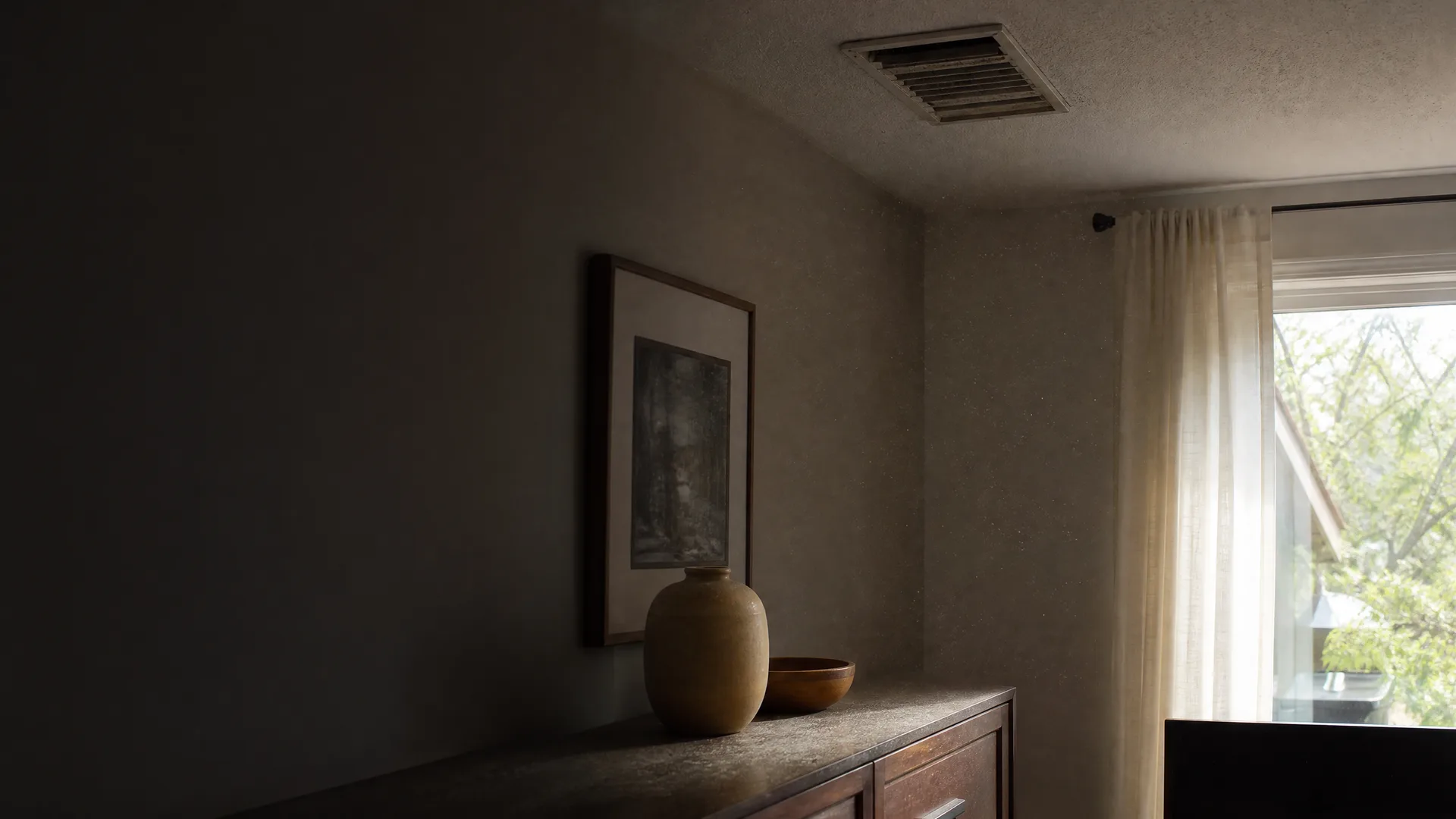
Dim room corner with a framed picture on a textured wall above a counter holding a tall ceramic vase and a shallow wooden bowl, with a sheer curtain beside a window and a ceiling air vent overhead.

Saturday afternoon, early spring, sun coming through the living room window at an angle that shows everything. You're on the couch and you notice the ceiling vent grille above you has a gray fringe along its slats. Same with the side table underneath it, a fine layer that wasn't there last week, or maybe it was and the light just wasn't right to see it. You run a finger along the table edge and it comes back dark. The air handler clicks on somewhere in the house, and a minute later your eyes start up again, the same itch you've been blaming on the cat.

It's off your list after this

Explain the job once and skip repeating it on every call.

Asking costs nothing, and the choice to hire stays yours.

What a filter alone misses

A filter catches what passes through it, but it only pulls dust out of the air stream itself. Anything already settled along the sides of a duct run stays put until the air moving through is fast or turbulent enough to lift it back out. That's the dust riding on top of the filter, not stopped by it. If your filter is clean and changed on schedule and you're still reacting, the problem may be what's sitting in the runs rather than what's getting through them.

Where the dander actually comes from

Pet dander is small enough to work its way past a lot of filtration and settle into duct runs the same way dust does. Once it's in there, every cycle of the air handler moves some of it back into the rooms the ducts feed, even rooms the pet never enters. A reaction that shows up in a bedroom at the far end of the house, away from where the pet sleeps, points toward the ductwork carrying it rather than the room itself generating it.

A bearded man in a dark blue T-shirt sits on a gray couch, smiling and looking down to his left, with a bookshelf and a bright window behind him.
A bearded man in a plaid flannel shirt stands indoors beside a wood-framed, frost-covered window, looking outside, with a steaming brown mug on the sill and a wooden cabinet behind him.

Your allergies ease up once you leave the house, or they're worse in one room than the rest, or they track with the season outside. That points to something other than the ducts.

Your allergies are steady year round, worse right after the air handler kicks on, and no better in rooms you keep closed up. That points to the ducts themselves.

Basement interior with galvanized rectangular and round sheet-metal ductwork and copper piping running below a wood-joist ceiling, above a concrete wall and bare concrete floor.
Before you get your ductwork cleaning
Unfinished basement with bare concrete walls and floor, exposed wood joists, and large sheet-metal HVAC ducts and pipes running along the ceiling.
After you get your ductwork cleaning

Power costs 13.17 cents per kilowatt-hour statewide

At 13.17 cents a kilowatt-hour, running the air handler more often to push dust out of your ducts costs little. If a cleaning cuts down what's triggering your allergies, you're not paying much to find out whether it worked.

EIA-861 2025 statewide residential average

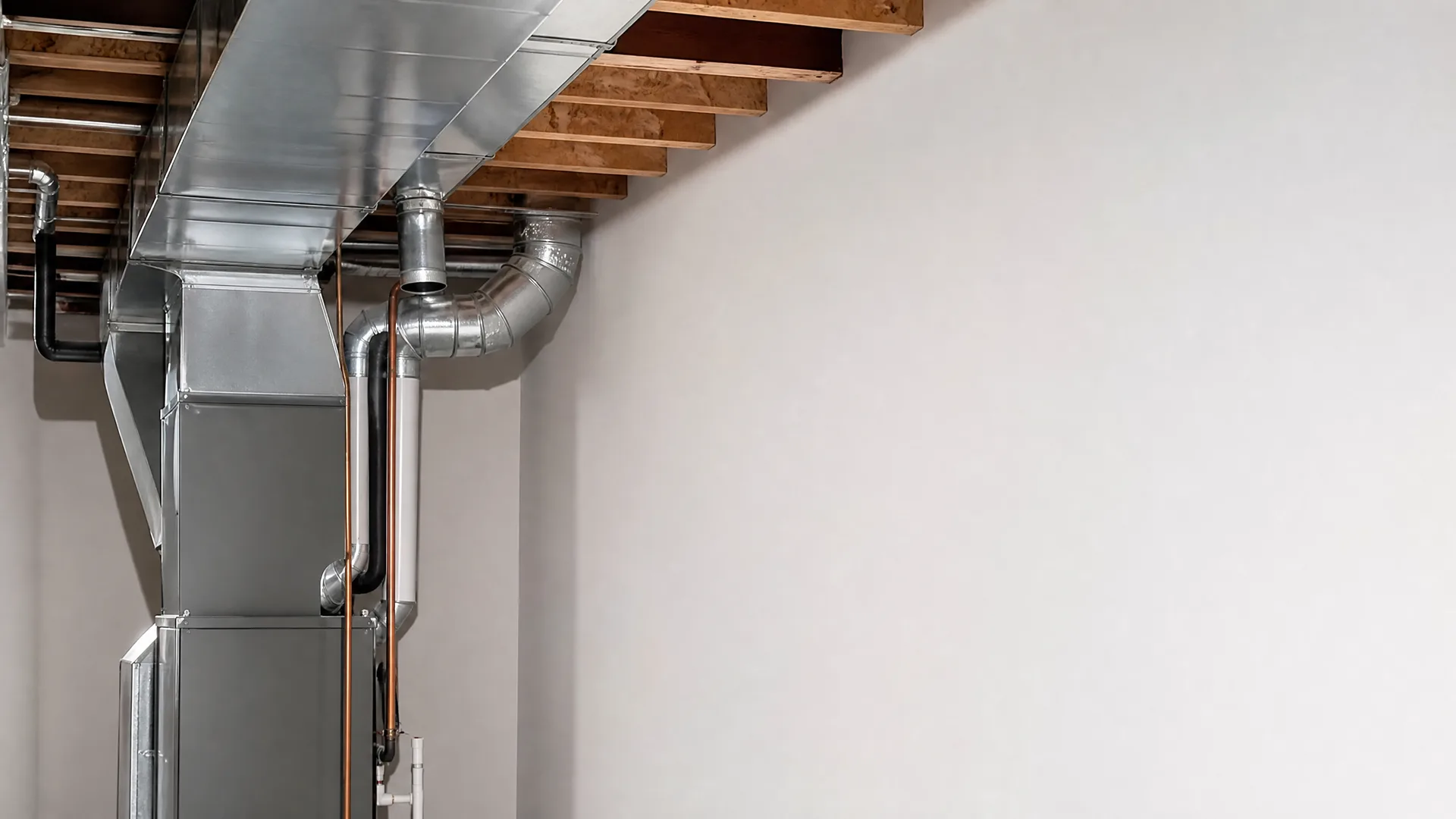
Basement interior showing a furnace with sheet-metal ductwork, a round flue pipe and copper lines running beneath exposed wooden floor joists next to a plain light-colored wall.

When cleaning clears things up

Someone with dust and dander built up along the duct runs gets a real break after a cleaning. The sneezing that starts within minutes of the air handler kicking on, the grime on the vent grilles, the flare-ups that hit every room the air reaches, those point to the ducts themselves. Once the buildup is gone, the air handler is moving clean air instead of stirring up what settled in there months ago. That's the case where cleaning does what you're hoping it does.

Interior corner of a building with a large blank white wall beside an unfinished ceiling showing wood joists, galvanized sheet-metal ductwork, and white and copper pipes.

When it won't change much

If your allergies follow the pollen count outside, or ease up the moment you leave the house, cleaning the ducts won't touch that. The trigger isn't sitting in your ductwork, so pulling dust out of the metal and flex runs doesn't remove it. Someone in that position could have the cleanest ducts in Washington and still wake up congested every April. Knowing which case you're in before you book anything saves you from paying for work that was never going to fix what's bothering you.

A closed laptop and a ceramic mug of dark coffee sit on a wooden table, with a blurred kitchen counter, potted plant, wooden utensils and cutting boards, and a large window in the background.

Whether cleaning helps comes down to what's actually in your ducts

If your allergies track with the air handler kicking on, or the vent grilles have that gray fringe along the slats, cleaning the ducts should ease it. If your allergies ease up away from the house or follow the season outside, the ducts probably aren't the cause, and cleaning won't touch it. The gray areas in between are worth checking before you spend on a cleaning that won't fix what's bothering you.

You don't have to figure out which case you're in by yourself, or spend an afternoon calling around to find someone who'll come look. Once you send the form, you're done hunting for a contractor, explaining the vent grille and the sneezing to three different companies, and sorting through quotes to see who actually knows duct work. Someone qualified takes it from there.

A light-colored ceramic vase holding green leafy branches sits on a round wooden table, with a wooden-framed armchair draped in a cream throw, a tripod floor lamp, and sheer curtains blurred in the background.
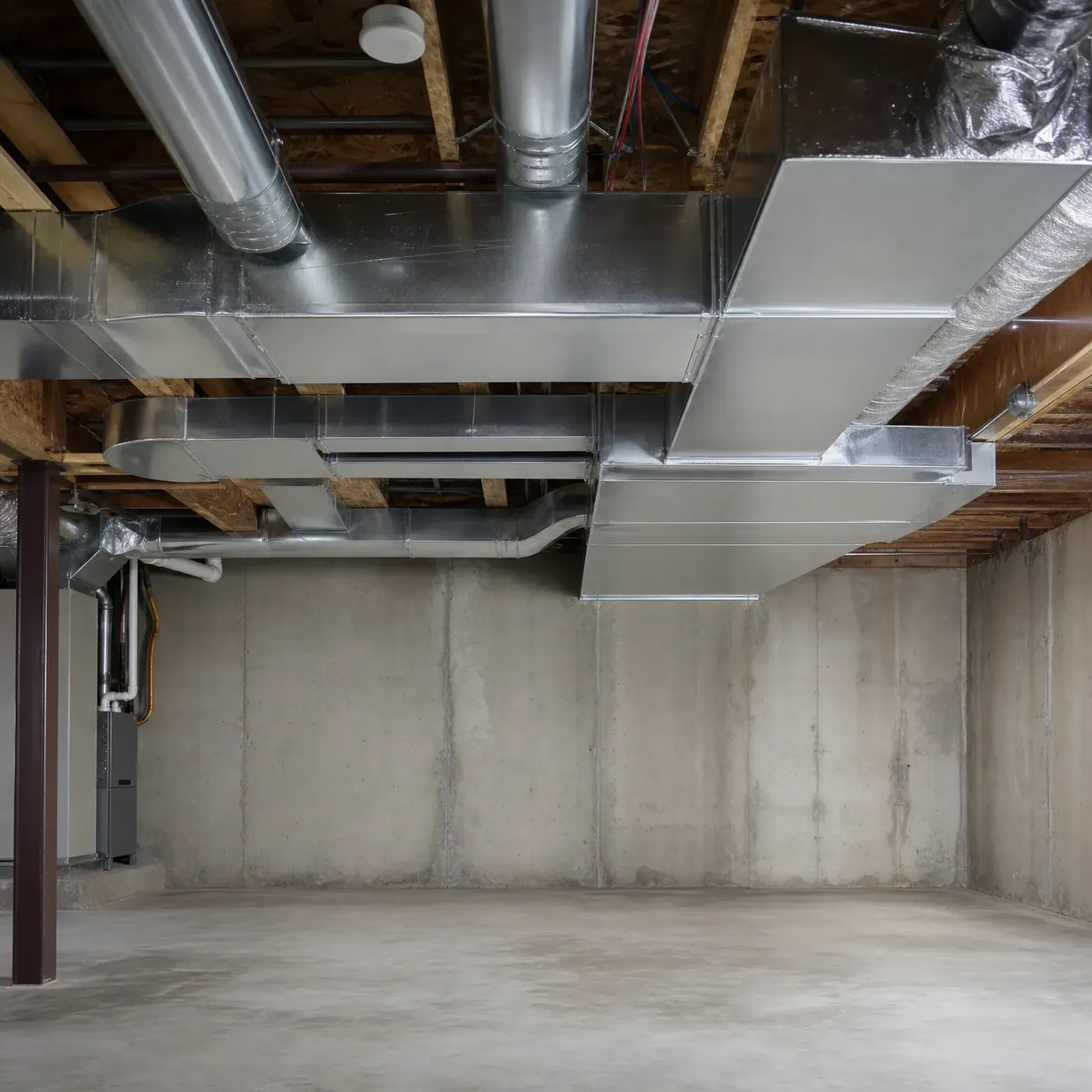
Unfinished basement with poured concrete walls, exposed wooden joists, and galvanized sheet-metal supply ducts and round pipes running along the ceiling to a furnace unit at right.

Stop chasing a duct system pro

Skip searching for a duct system pro and answer a few questions instead.

Duct and vent cleaningDucts or ventsWashington
Step 1 of 2

What ZIP code is the job in?