





Signs your air ducts need cleaning in Washington

Send it once and finding someone is no longer on you.

I'm done searching

Dust building up around your vents, a musty smell when the air kicks on, or rooms that stay stuffy even with the system running are the usual signs your ducts need cleaning. Most homes in Washington heat with electric furnaces or heat pumps, and those systems move the same indoor air over and over through the same ducts, so dust, pet hair and debris inside them just keep recirculating instead of clearing out. If your register covers are gray with buildup or you can see dust kicked up when air starts blowing, that's debris already loose in the system, not just sitting on a surface you could wipe down. Left alone, it keeps moving through the air you breathe and can make your system work harder to push air through. Since summers here stay mild, your ducts likely see more steady use from heating than from AC, which gives dust more months to settle before anyone notices.

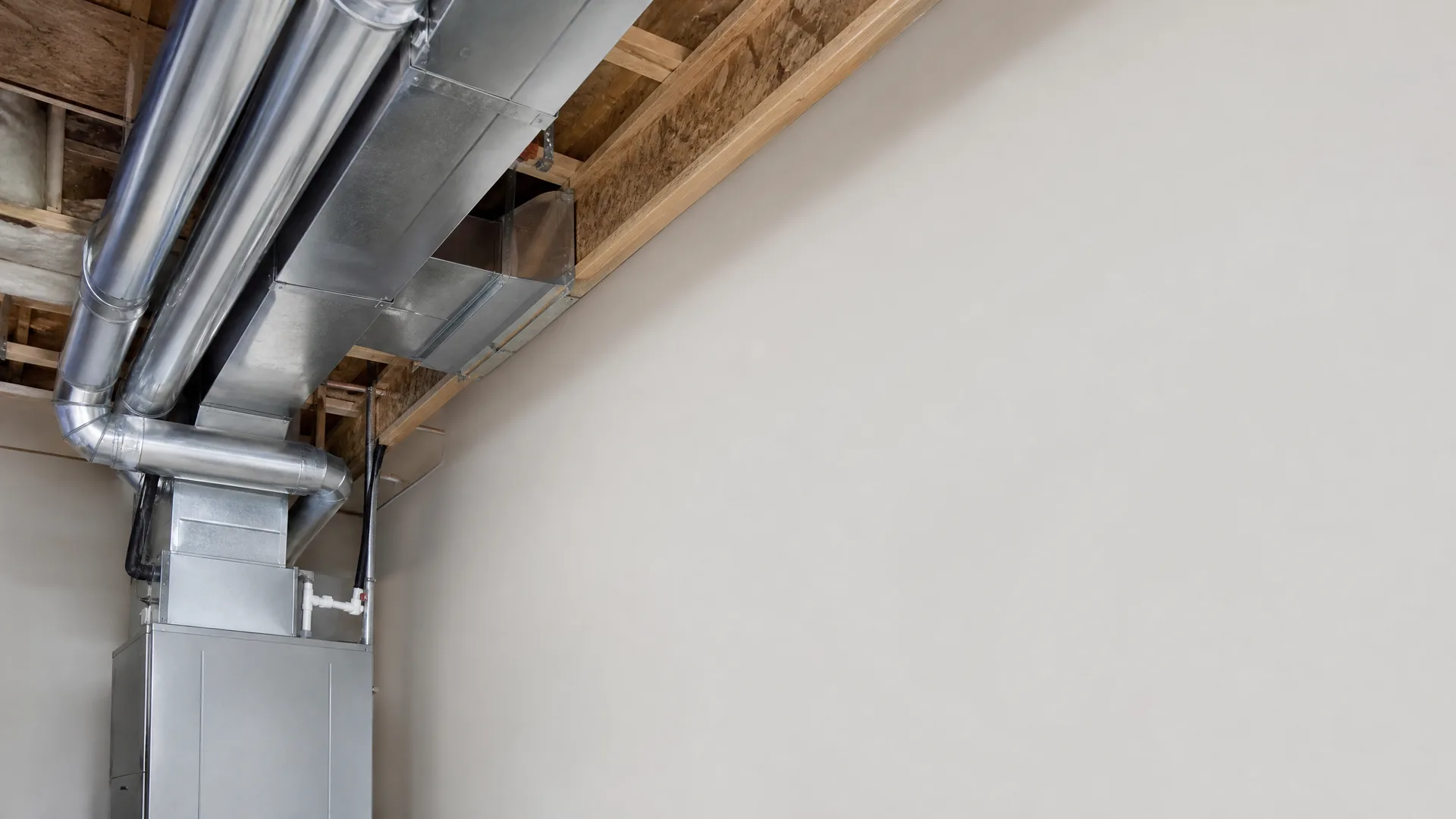
Galvanized sheet-metal ductwork and round pipes running along an exposed wood-joist ceiling with insulation, above a furnace unit beside a blank painted wall.

Why electric systems show it fast

Electric furnaces and heat pumps push air through the same ducts day after day without a flame to warn you something's off. Dust and debris sitting in the trunk line get pulled through the blower and back out into your rooms every time the system runs. Since most homes here heat this way, that air is moving constantly from fall through spring, so buildup inside the ducts ends up circulating through the house more often than it would with a furnace that cycles less.

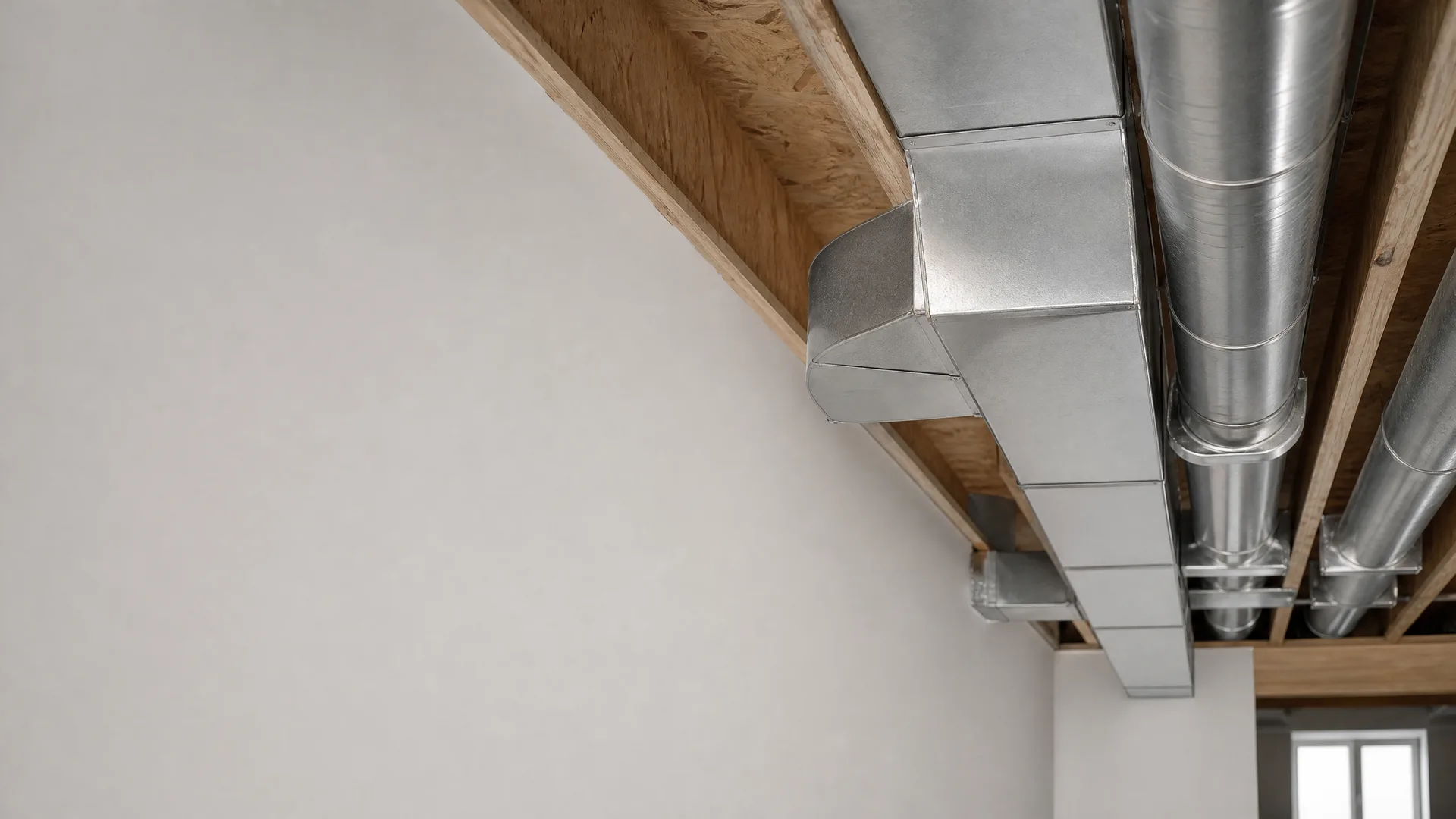
Galvanized rectangular and round sheet-metal ductwork mounted beneath an exposed wooden joist and OSB ceiling, next to a plain white wall and a window at lower right.

Check your return vent cover

Pull the return vent cover off and look at the inside edge of the duct a few inches back. A thin layer of gray dust is normal. A thick, felt-like coating, or clumps you can see from arm's length, means air has been carrying that material past the filter for a while. This is the one part of the system you can inspect yourself without tools, and it tells you more about what's moving through your ducts than looking at the vent grille ever will.

How do I know if it's actually my ducts and not something else?

How do I know if it's actually my ducts and not something else?

Check the vent covers before you call anyone about the ducts

Pull a vent cover off and look inside with a flashlight. If you see a gray buildup coating the first foot or two of metal, that's duct dust, and it's coming from further back in the line, not just that one room. A musty smell that only shows up when the heat pump or furnace is running points the same way, since the air is picking it up on its way through. If instead you're seeing dust settle fast on furniture right after you dust it, or one specific room stays stuffy no matter what, that can be a filter that needs changing or a vent that's partly closed, and a duct cleaning won't touch either one.

  1. Dust and debris settle in the trunk line and branch runs first

  2. The blower pulls that debris loose every time it cycles on

  3. Loose particles ride the airflow out through your room vents

  4. A camera inspection confirms buildup before any cleaning starts

Does your house feel like this right now

Walk through your house and check a few things. Is there a gray film on the TV screen or the windowsills a day or two after you dusted. Does one bedroom stay warm in summer or cold in winter no matter what the thermostat says. Does the air coming out of the vents smell a little off when the heat pump first kicks on. Does anyone in the house wake up stuffy or start sneezing once the system has been running a while. Any one of these on its own might be nothing. A few of them together usually mean buildup in the ducts is getting pulled loose and blown through the house, and the system has to work harder to move that same air, which shows up on your electric bill even with power as cheap as it is here.

Basement ceiling with galvanized sheet metal rectangular ducts and round pipes running between wooden joists above a bare concrete wall and floor.
Before you get your ductwork cleaning
Unfinished basement with bare concrete walls and floor, showing exposed wood floor joists overhead with sheet-metal rectangular ductwork, insulated flexible ducts, and pipes.
After you get your ductwork cleaning

Let someone else find the pro

If you've gone through the signs above and your vents, your vent covers, or a room that never feels right are telling you the same thing, there's not much to gain by living with it through another Washington winter. Electric furnaces and heat pumps don't let up once they're dirty, they just keep pushing the same dust through the same rooms every time the blower cycles. Finding a contractor to deal with that is usually the part people put off, not because the job is hard but because nobody wants five companies calling about it. This goes to one licensed contractor near you, someone who works on ducts and electric systems in Washington homes all the time and knows what buildup like this usually means before they even get there. Send the request and that search is off your plate.

Unfinished basement with galvanized sheet-metal ductwork and pipes beneath wood joists, a gray furnace unit at left, insulated plastic-covered walls over a concrete foundation, and a bare concrete floor.

Clean duct system

This is what a duct system looks like when it's doing its job. Metal trunk lines run tight to the joists, the furnace sits clear in the corner, and air moves through without picking up anything extra. No dust rings at the seams, no buildup sitting in the runs.


Empty concrete-walled basement room with galvanized rectangular and round HVAC ducts and pipes running along the exposed wood-joist ceiling.

Ducts that need attention

Same kind of metal ductwork, same run of joists overhead, but this is where dust and debris collect before the blower pushes them back into your rooms. Nothing about it looks dramatic from across the basement, which is why it gets missed until the vents and the air start showing it.

Power costs 13.17 cents per kilowatt-hour statewide

At 13.17 cents a kilowatt-hour, your electric furnace or heat pump is already working through what power it uses. Clogged ducts make the blower run longer to push the same air through your house, and that runtime is what shows up on the bill.

EIA-861 2025 statewide residential average

You keep cleaning and the dust comes back in a day, because it's riding in on air that's already passed through dirty ducts. No amount of wiping the sills fixes that.

You get the ducts cleaned and the dust that settles is just what the room makes on its own. A quick wipe every week or two keeps up with it, the way it should.

A smiling bearded man in a green t-shirt sits on a gray sofa, looking down toward a device at the bottom of the frame, with a bookshelf and a green plant blurred behind him.
A bearded man in a plaid flannel shirt stands indoors looking out a window at snow-covered conifers, with a ceramic mug on the wooden sill and wooden cabinets behind him.

What the signs add up to

  • Dust around vents, a musty smell on startup, and rooms that stay stuffy point back to the ducts.
  • A flashlight check on a vent cover tells you fast whether buildup inside matches dust on the outside.
  • The blower moves the same air through the same trunk line all day, so anything sitting in there keeps recirculating.
  • A camera inspection confirms what's actually in the ducts before any cleaning starts.
  • A clean system runs air through without adding anything to it, and the dust you see is just what the room makes on its own.
  • Longer blower runtime to push air through clogged ducts is runtime that shows up on your electric bill.

Everything here points to one place. Dust that returns right after you clean it, a musty smell when the furnace or heat pump kicks on, a room that never quite matches the thermostat setting, a vent cover with buildup inside it that matches what's landing on your windowsills. None of these are separate problems. They're the same problem showing up in different rooms of the house. Your blower runs the same air through the same trunk line all day, every day, and whatever is sitting in that line gets carried along with it, out through the vents and into the rooms you live in. That's why wiping the sills again doesn't hold. The dust isn't coming from nowhere. It's riding in on air that already passed through ducts that need attention. A flashlight on a vent cover will tell you if what you're seeing matches what's inside, and a camera inspection can confirm it before anyone cleans anything. Once the ducts are actually clean, the air moving through them stops adding to the problem. What settles after that is just what the room produces on its own, which is a lot less. There's also the part you feel in the electric bill. A blower working harder to push air through clogged ducts runs longer than it should, and in Washington, where electric furnaces and heat pumps do most of the heating, that runtime adds up. The signs were never random. They were the system telling you where to look.

A smiling man in a dark green shirt over a white t-shirt sits at a kitchen counter with a dark mug, looking off to the side, with shelves, plants and a bright living area behind him.
A man in a gray long-sleeve waffle-knit shirt smiles and looks off to the side in a kitchen with open shelving, a refrigerator, a wooden sideboard with a potted plant, and a glass door to the right.
A man in a dark green ribbed sweater stands smiling and looking off to the side beside a stone kitchen counter with a ceramic mug, with a dining table, pendant lights, and large windows in the background.
A bearded man in a gray long-sleeve shirt stands smiling and looking off-camera beside a kitchen counter with a white mug, with a living room, fireplace and wall-mounted television behind him.

Ductwork Cleaning

One request and it's handed off

The pro who reaches out is licensed in Washington.

A black-framed smartphone standing upright against a plain light gray background, its screen filled with solid green.
Duct and vent cleaningDucts or ventsWashington
Step 1 of 2

What ZIP code is the job in?





