
Vent clear, flap moving
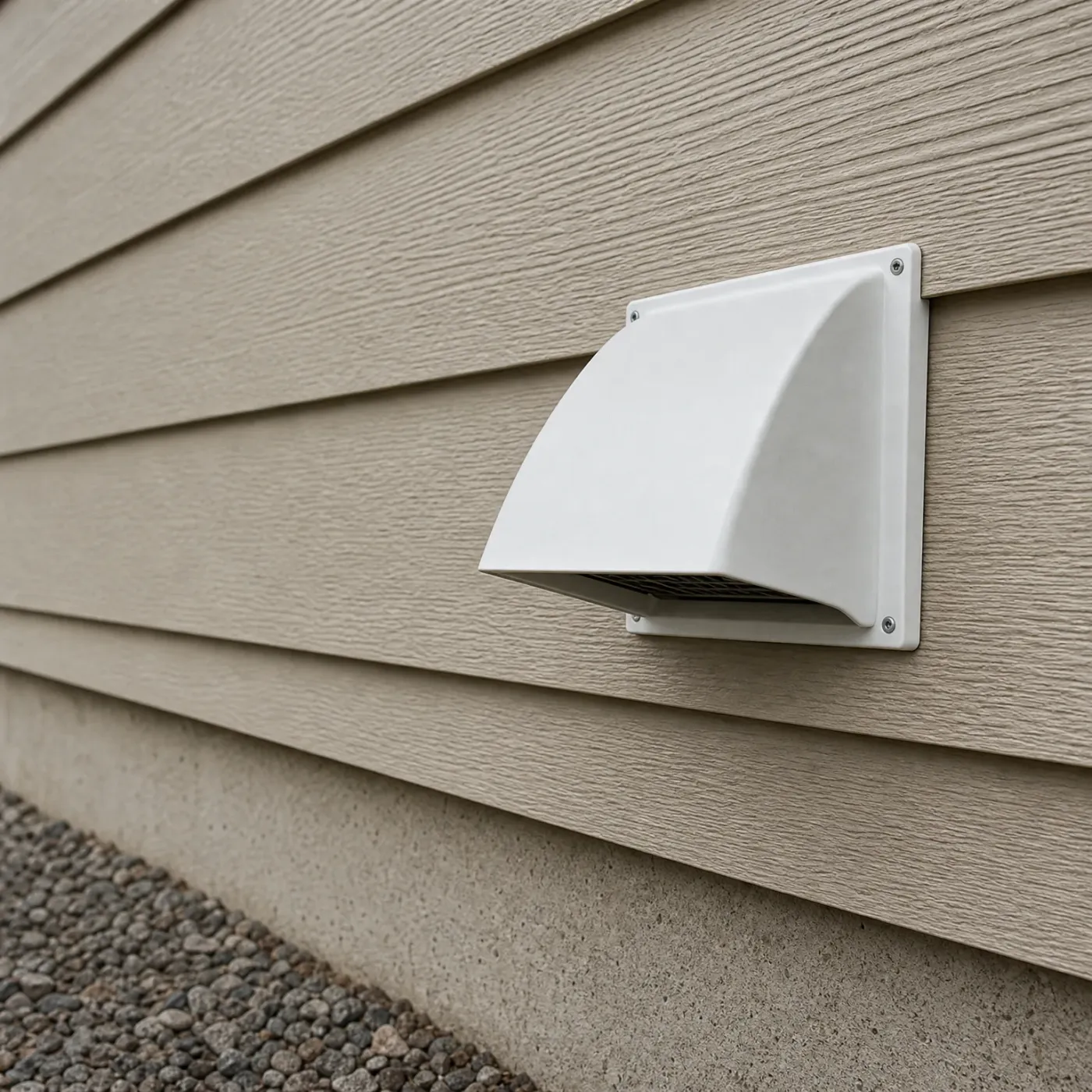
The hood sits flush on the siding and the flap hangs loose, ready to swing open the moment the dryer starts. Air pushes straight out with no resistance. This is what a vent cleaned on schedule looks like from the outside.
Clean your dryer vent once a year. That holds whether you run the dryer twice a week or every day, because lint builds up inside the duct no matter how light the load. The mild summers here don't change that, and electric dryers throw off just as much lint as gas ones since the lint comes from the clothes, not the heat source. If your vent run is long, has several bends, or ends in a hood outside that you haven't checked in a while, lean toward the shorter end of that yearly mark. A clogged vent makes the dryer run hotter and longer to dry the same load, and a hot dryer running long is how vent fires start. If you notice clothes taking two cycles to dry, or the outside vent hood barely moves air when the dryer is on, that's lint talking, and it means the vent needs attention sooner than your next scheduled cleaning.


Air moving through a duct slows down at every bend, and lint drops out right there, the same way sand settles where a river curves. A straight shot to the outside wall collects less than a duct with two or three turns in it. The material matters too. Rigid metal keeps its shape for years, but flexible foil or plastic ducting sags over time, and lint gathers in that low spot instead of blowing through. Outside, the hood has a damper that should swing open while the dryer runs and close again once it stops. If lint has packed in around it, the damper barely moves, and you can check this yourself by watching it during a cycle. A duct that's mostly clear pushes a strong, steady stream of air out that hood. One that's partly blocked lets out a weak puff, and you'll notice it other ways too: clothes coming out hot to the touch, or needing a second cycle to finish drying. Both point to air that isn't making it through the way it should.


One form replaces the calls you'd make to find a dryer vent pro.
Your dryer vent cleaning request goes to a local pro who does this work.
Sending the form costs nothing.
A load that used to take forty minutes now runs an hour or longer, sometimes needing a second cycle just to finish drying. The top of the dryer feels hot to the touch, and the laundry room warms up while it runs. Clothes come out hotter than they should be, and towels smell faintly scorched instead of clean. You might notice less lint in the trap than usual, or the trap fills up fast even though you empty it every load. Any of these means air isn't moving through the vent the way it should. Left alone, a blocked vent makes the dryer work harder for worse results, and it's a known cause of house fires.

The hood sits flush on the siding and the flap hangs loose, ready to swing open the moment the dryer starts. Air pushes straight out with no resistance. This is what a vent cleaned on schedule looks like from the outside.

The flap is pinned open by lint matted across the hood, so it can't close between loads anymore. Moist air has nowhere to go but back toward the duct. From the outside, this is the clearest sign a vent is past due for cleaning.
Most homes here run an electric dryer, and at 13.17 cents a kilowatt-hour that machine is working against a clogged vent on your bill, not just your gas line. A packed duct makes the heating element run longer to get clothes dry, and that extra time is what you're paying for each cycle.
EIA-861 2025 statewide residential average
Once a year is the answer, and nothing about your house changes it. A dryer running twice a week or every day of the week leaves the same lint behind, because it's the air moving through the duct that drops it, not the number of loads. The mild summers here don't slow that down and an electric dryer puts out just as much lint as a gas one, so neither one buys you a longer stretch between cleanings. Watch the duct itself. Bends and joints catch lint first, since that's where the moving air slows and loses its grip on what it's carrying, so a straighter run with fewer turns tends to stay clear longer than one that twists through the wall. A rigid metal duct holds up over the years better than foil or plastic, which sag in the middle and give lint somewhere to settle. Between cleanings, let the dryer tell you if something's off. A load that used to take forty minutes stretching toward an hour, or the top of the machine running hot, means the vent needs a look now rather than waiting for the yearly date. Outside, the hood flap should swing loose with every gust, moving freely because air is passing straight through behind it. A year is the schedule. What the dryer and the hood are doing in between is how you know if that schedule still holds.




A dryer vent pro near you
Skip calling around for someone who cleans dryer vents.
