
1 duct, several feet
The vent runs from the back of your dryer to a hood outside. Lint collects along that whole run, not just at the trap.
After you send the request, you're done searching.
Let a pro reach outClean your dryer vent once a year. Lint builds up inside the duct every time you run a load, and once it packs in tight, the dryer has to push air through a narrower and narrower space. You'll notice the clothes take longer to dry, or the top of the dryer feels hot to the touch. A clogged vent also traps heat where it shouldn't collect, and that's how dryer fires start. Once a year clears it before it gets that far. If you run bigger loads often, or your vent run is long with a few bends in it, check it closer to every six months. A straight, short shot to the outside wall can go the full year without trouble. Either way, the duct is the part to pay attention to, not just the lint trap you empty after every load.
2.39 people per household on average
King County households run 2.39 people on average, so most homes here do several loads a week, and that's several more chances for lint to pack into the duct between cleanings.
Half the homes here were built by 1983
Half the homes in King County were built by 1983 or earlier. An older house is more likely to have a longer duct run or extra bends, both of which trap lint faster than a short straight shot.
Power here costs 15.52 cents per kilowatt-hour
Power here runs 15.52 cents per kilowatt-hour, close to the national rate. A clogged vent makes the dryer run longer to finish a load, so a blocked duct still shows up on the bill.
ACS 2020-2024 · EIA-861 2025
The lint trap catches most of the lint from each load, but not all of it. What gets past it travels down the duct behind the machine, and that duct is where the real buildup happens. It isn't a short hop either. On most houses the run goes from the back of the dryer through several feet of duct before it reaches a hood on the outside wall, and every foot of that run is a place lint can settle.
The material matters. Rigid metal duct has a smooth inside wall, so lint tends to slide along and out. Flexible foil or plastic duct has ridges, and lint catches on those ridges instead of passing through. If your home has the flexible kind, the vent is working harder than it looks.
Bends matter too. A straight shot from dryer to hood gives lint nowhere to stop. A run with two or three turns gives it two or three chances to pile up, so that kind of vent clogs faster and needs attention sooner.
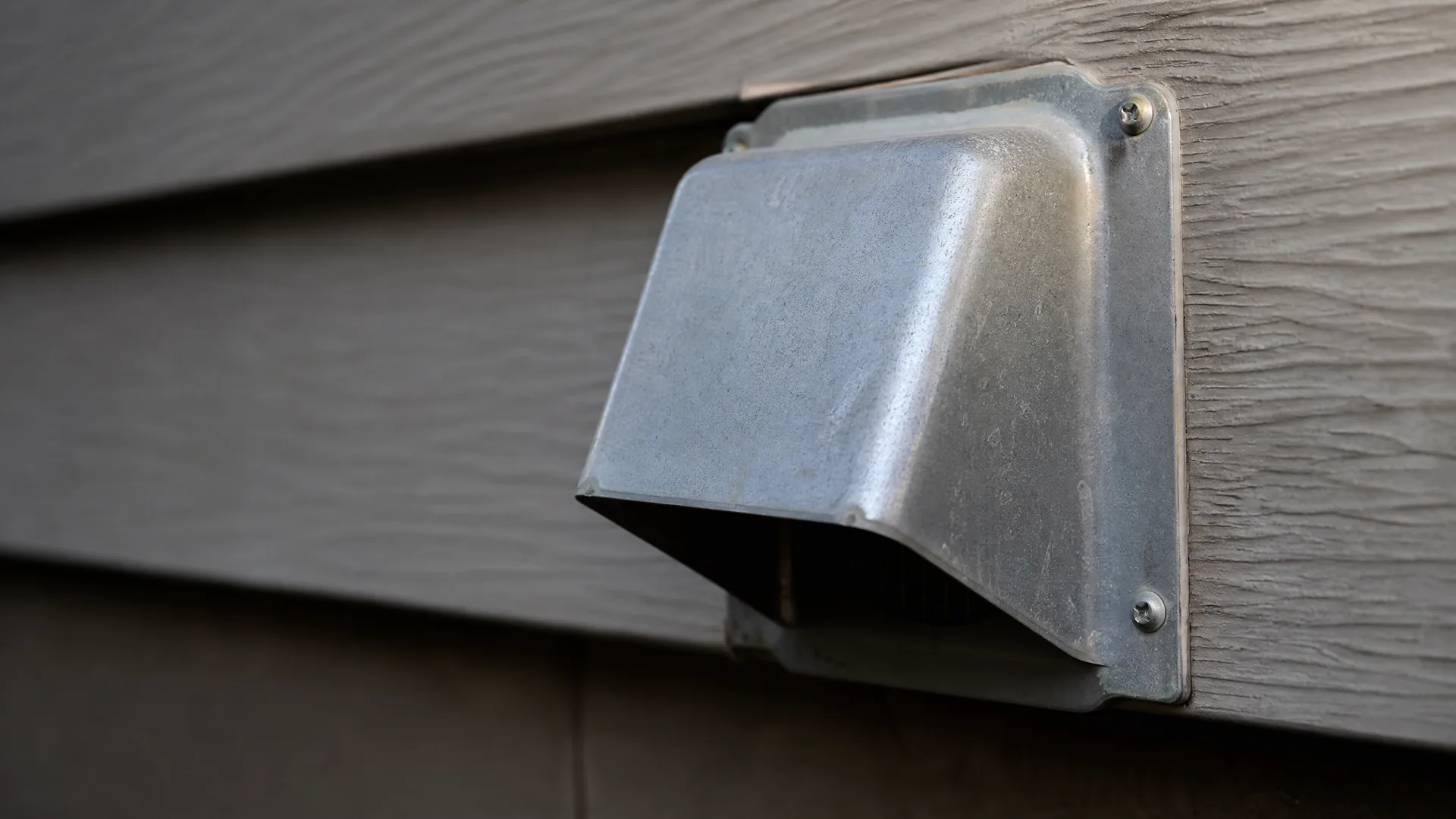
Check the hood on the outside wall. It has a flap, and that flap should swing open while the dryer runs and swing shut once it stops. A flap that stays shut, or stays open, usually means something is already blocking the airflow behind it.


The vent runs from the back of your dryer to a hood outside. Lint collects along that whole run, not just at the trap.
A blocked vent makes the dryer run hotter and longer to dry the same load, which wears the heating element and motor.
That's usually the first thing you notice. The dryer runs a full cycle and the clothes still come out damp, so you run it again. You might feel the outside of the machine getting hotter than usual, or notice the laundry room warming up while it runs. Check the vent hood on the outside wall. If the flap barely opens when the dryer is going, or you don't feel much air coming out, lint has packed into the duct somewhere between the machine and the wall. Left alone, the dryer keeps working harder to push air through that narrow space, and the heating element has to stay on longer to finish the same load. That's wear on a part that's expensive to replace, and a vent packed with lint burns if it gets hot enough.

Air moves straight out through the hood with every load. The duct behind it stays open, so the dryer runs its normal cycle and shuts off on time. This is what a vent looks like right after it's been cleaned, or when it hasn't carried enough loads yet to pack with lint.

Lint has built up across the hood and the screen behind it, leaving only a narrow gap for air to escape. The dryer has to force air through that gap, so loads run longer and the machine works harder. Left alone, the buildup only gets thicker.




Answer a few questions about the dryer vent cleaning and skip the search.
Sending the form costs nothing.

If the hood sits a few feet from the dryer, air has less duct to push through and less lint has a chance to settle before it clears the hood. A short, straight run can go longer between cleanings than a run that bends twice to reach an outside wall. You'll still want to check it once a year, but a short run is less likely to surprise you between checks.

Some houses in King County have the dryer in a basement or interior laundry room, with duct running 15 or 20 feet to reach outside. Every foot of that run is a place lint can catch, especially at a bend or a joint. A long run clogs sooner than a short one, and once it's packed partway, you won't know until the dryer starts taking two cycles to do what used to take one.

Air pushes the flap open and out in a steady stream. The screws at the corners stay flush against the siding, and the duct behind the hood stays open along its full run. This is what lets the dryer shut off on time.

Lint has packed the opening so tight the flap barely moves, and gray residue has run down onto the foundation below. Air that can't escape here backs up the whole duct, and the dryer works harder to push a load through.
You noticed your dryer takes longer to dry a load than it used to, and when you looked up where the vent runs, it doesn't go straight out the back wall. It turns a corner or two before it reaches the hood outside. You're wondering if those turns are the reason the duct clogs, and whether a bent run means you need to clean it more than once a year.
Air moves fastest in a straight line. Every time the duct turns, the air has to change direction, and it loses speed doing it. Lint that would have ridden straight through a flat run drops out of the airflow right at that bend and sticks to the inside wall of the duct. Over enough loads, that spot builds up faster than the straight sections do, even though the whole duct is carrying the same lint. A run with two or three bends between the dryer and the hood will clog at those bends well before the rest of the duct is anywhere near full. If your vent has to turn more than once to reach the outside wall, it's worth having it checked rather than waiting out the full year.


At 2.39 people, your household is still doing wash most days of the week, and every load pushes more lint into the duct behind the dryer. A family that size rarely goes a week without a load running, so the once-a-year cleaning has real work to catch up on by the time it's due.
ACS 2020-2024
Lint sheds off wet clothes with every load you run.
Air pulls loose lint back through the duct toward the hood.
Lint catches on seams, screws, and bends along the way.
The layer thickens with each load until airflow slows down.

Clean your dryer vent once a year. That's the whole answer. With 2.39 people in the average King County household and loads running most days of the week, lint has steady work to pack into that duct, and a yearly cleaning is what keeps the air moving the way it's supposed to, from the back of the dryer out through the hood.
You don't have to track down who does this kind of work, call around to see who's available, explain the vent and the symptoms more than once, or sit with a stack of quotes trying to sort out who to trust. Send the form and that part is handled. You'll still want the cleaning itself done on schedule, but finding the person to do it stops being something you have to manage.

Let someone else find the pro