
HVAC Installation in Bellingham, WA
Tell us about the house, and a licensed contractor who covers Whatcom County will get in touch.
Tell us about the job
It takes about a minute.

A system that runs all year and barely sees summer
Winter nights in Whatcom County average 27°F from December through February. Homes here need heat every month of the year. Summer afternoons average just 68°F, so a new system spends most of its life heating, not cooling. A furnace or heat pump going in here needs to be sized and installed for steady winter work, not for a cooling load that barely shows up.
Nearly half the homes in the area heat with electricity. In 2024, close to a quarter of Washington households lost power for 24 hours or more. If the new system runs on electricity, it is worth asking how it comes back on after an outage.
- 27°F
- the average winter night it heats against
- 68°F
- the average summer afternoon it cools against
Washington requires contractors to register with the state.
That registration means the contractor's business is on file with the Department of Labor and Industries. It is a record, not a credential. Nobody tested their work to get on that list, and registration does not tell you whether they know how to size a heat pump or set up a furnace correctly.
For this job, the check that actually looks at the work comes from the local building office. Replacing a furnace, air conditioner or heat pump needs a permit in most cities and counties here, and an inspector looks at the finished installation once the work is done.
Source: Washington State Legislature
- When should I replace my HVAC system?
- Once repairs start happening every year, or the system can't keep the house warm on the coldest nights, it's time to replace it rather than fix it again. A furnace or heat pump working hard to keep up when it's 27°F outside is already under more strain than one in a milder climate, so age matters more here. If yours is old enough that parts are getting hard to find, that's also a sign to stop patching it.
- Should I replace my furnace and air conditioner at the same time?
- If they're original to the house and close in age, replacing them together usually makes sense, since a contractor is already on site and the two are often sized to work as a pair. That said, homes in Bellingham need heat all year and cooling isn't part of the picture here, so many houses only have a furnace or heat pump to begin with. A contractor can look at what's actually installed and tell you whether there's an air conditioner to consider at all.
- What happens during an HVAC installation?
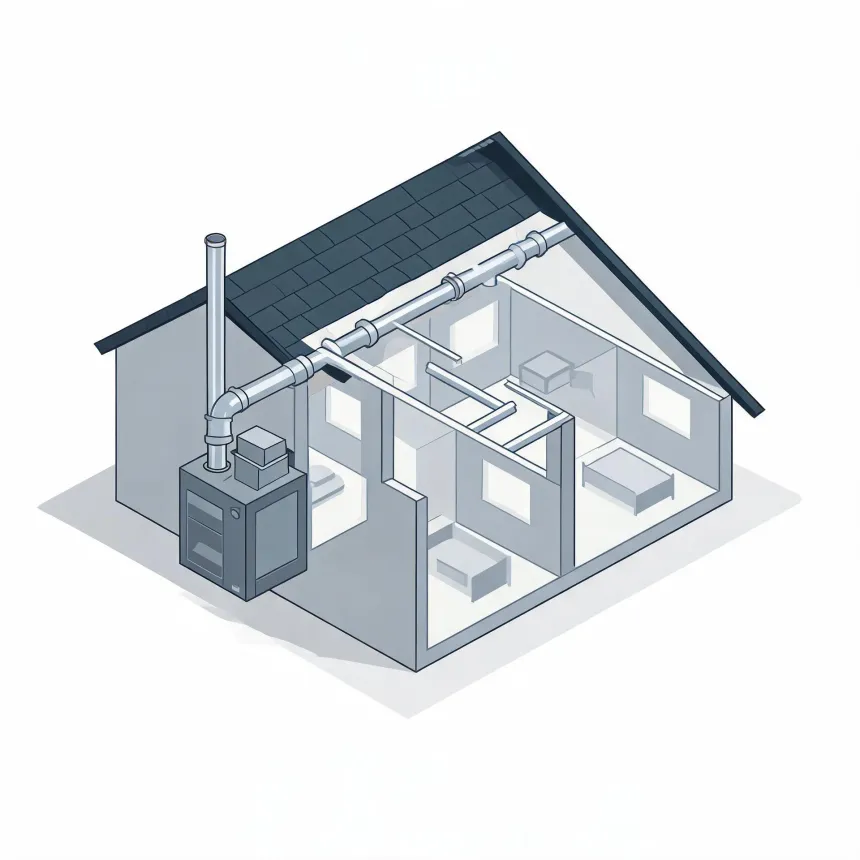
- A contractor removes the old equipment, sets the new furnace, heat pump, or air conditioner in place, and connects it to the ductwork, gas line or electrical circuit, and venting it needs. They test it for correct airflow, pressure and temperature rise before calling the job done. In most places, including here, this work needs a permit from the local building office and an inspection once it's finished, so expect that step as part of the process.