Mini Split Installation in Bellingham, WA
Tell us about the house, and a licensed contractor who covers Whatcom County will get in touch.
Tell us about the job
It takes about a minute.
A mini-split here works year round
Bellingham doesn't get much of a summer. Afternoons average 68°F, so a mini-split earns its keep on the heating side, not the cooling side. Winter nights average 27°F from December through February, and this system needs to hold that job all 12 months, not just a few.
Any mini-split installed new has to meet the federal minimum for a split-system heat pump, 14.3 SEER2 for cooling and 7.5 HSPF2 for heating. That heating number matters more here than the cooling one. Almost half of homes in the area already heat with electricity, and a mini-split that's sized and installed right is what keeps a 27°F night from becoming a cold house.
- 27°F
- the average winter night it heats against
- 68°F
- the average summer afternoon it cools against
Washington requires contractors to register with the state.
That registration means the contractor's business is on file with the state and carries the bond and insurance L&I requires. Nobody tested their mini-split installation work to get that number. It tells you the business is real and registered, not that the state checked their skill.
For this job, the protection comes from elsewhere. In most cities and counties, installing a mini-split needs a permit from the local building office, with an inspection once the work is done. That inspection is what checks the line set, the electrical connection, and the mounting, the parts of the job that go wrong when someone rushes.
Source: Washington State Legislature
- Is a mini split worth it?
- For most homes here, yes, because heat is needed all twelve months and a mini split handles that without ductwork. Winter nights average 27°F, so the unit has to keep working through real cold, not just take the edge off. It heats and cools from the same system, and since afternoons here stay mild at 68°F in summer, the heating side is what actually earns its keep most of the year. Whether it is worth it for your house depends on the layout, so a contractor should look at the rooms you want covered before you decide.
- How many rooms can a mini split cover?
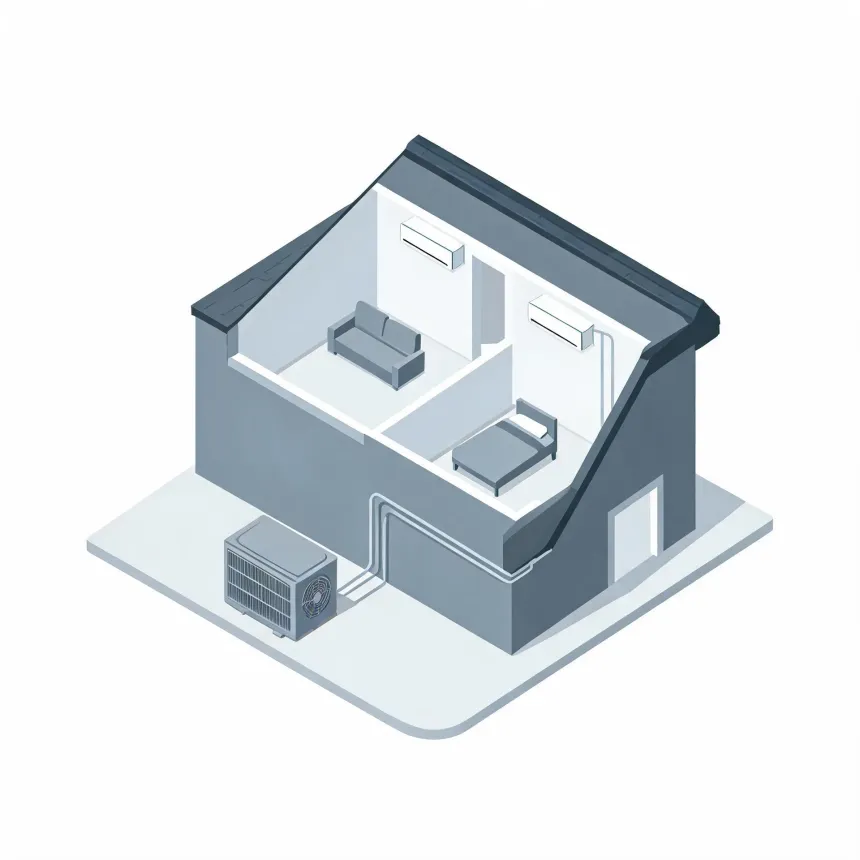
- A single outdoor unit can run one indoor head or several, depending on the system. Each indoor head is sized for the room it serves, so a single-zone system covers one room or an open area well but will not reach closed-off rooms down a hallway. If you need several rooms covered, a multi-zone system with one head per room is the way to do it, and a contractor can work out how many zones your house needs and where each head should go.
- Can a mini split heat a whole house?
- It can, but only if it is sized and placed to reach every room, which usually means a multi-zone system with a head in each main living space. A single indoor head heats the room it is in and whatever space is open to it, not the rooms behind closed doors. Since homes here need heat all year, that coverage matters more than it would somewhere with a short winter. A contractor can walk the house and tell you how many zones it would take to heat all of it.