



Is duct cleaning worth it in Everett, WA

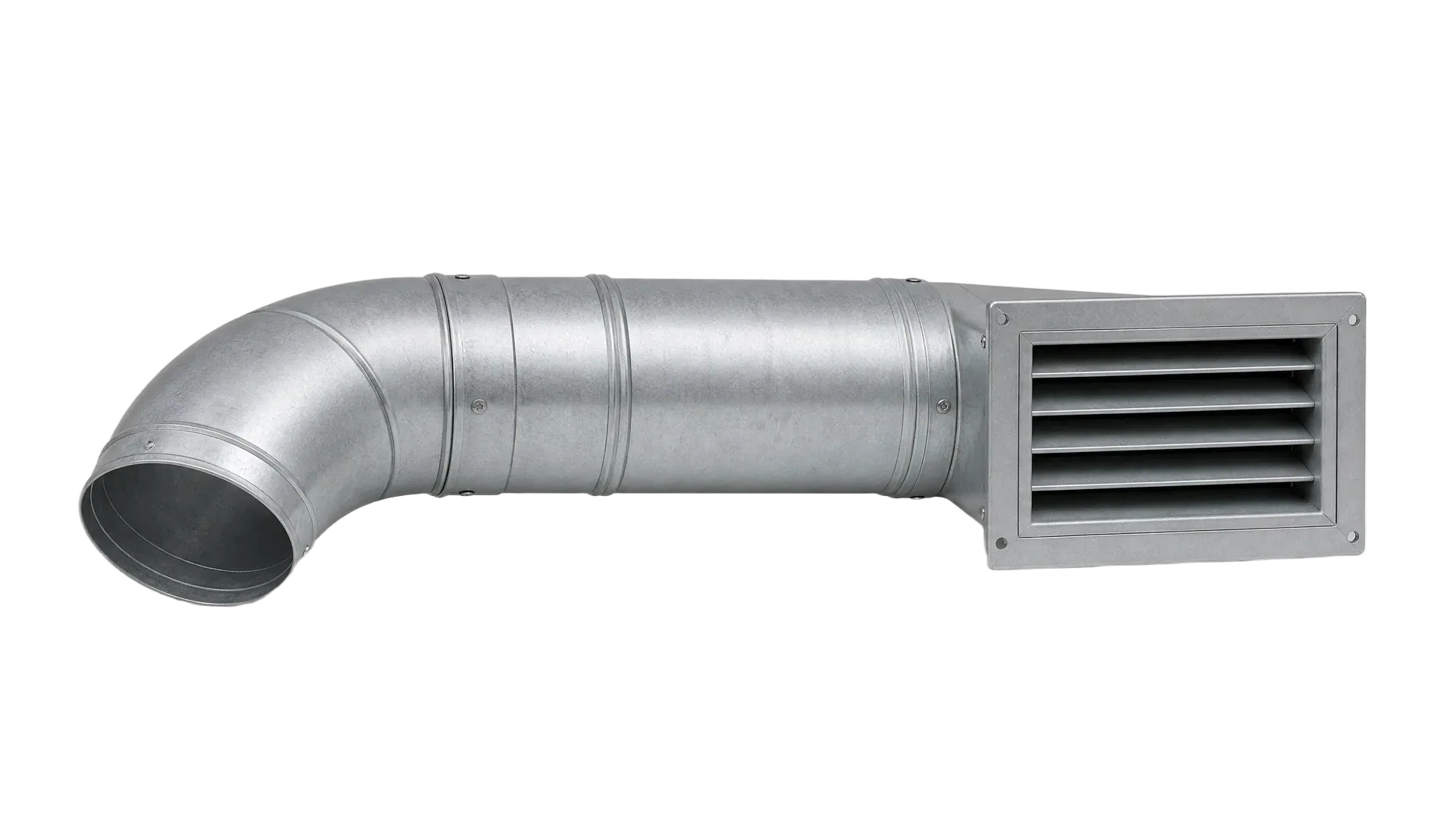
A galvanized metal round duct with a 90-degree elbow connected to a rectangular louvered vent grille, shown against a plain gray background.
Start one form

For most homes in Everett, duct cleaning is worth doing on a schedule, not something to chase at the first sign of dust. If no one in the house has allergies, the ducts haven't been opened up for repair work, and you don't see dust blowing back out of the vents, cleaning won't change much day to day. It matters more when a heat pump or furnace has been running on the same ductwork for years without anyone looking inside, because dust and pet hair build up on the coil and blower wheel and make the system work harder to push air through the house. It also matters if the home had any work done on the attic or crawlspace, since that's when debris gets into the supply lines. If you're planning to swap out your furnace or heat pump anyway, having the ducts cleaned first means the new equipment isn't pulling air through months of buildup from day one.

Does duct cleaning actually matter for your house

  • Half the homes here were built by 1990

    Half the houses in Snohomish County went up in 1990 or earlier, so if yours is one of them, the ducts are old enough that nobody alive remembers what's settled in there.

  • Heat runs September through June

    Heat runs September through June here, so whatever is sitting in your ducts gets pushed through the house most months of the year, not just a few.

  • Power here costs 12.70 cents per kilowatt-hour

    At 12.70 cents a kilowatt-hour, power here is cheap, so clogged ducts aren't costing you much on the bill. The case for cleaning them is air, not dollars.

ACS 2020-2024 · NOAA nClimDiv 1991-2020 · EIA-861 2025

When cleaning is worth doing

If you're adding a new furnace or heat pump, have the ducts cleaned first. A contractor working on a system full of years of dust is starting the job already behind, and that dust ends up moving through a brand new blower. The same goes after any remodel that opened up a wall or ceiling near the ductwork. Drywall dust settles into the runs and doesn't come back out on its own. If you've noticed a smell when the heat kicks on, or you can see dust gathered at the vent covers themselves, those are signs worth acting on rather than waiting out. Finding a local contractor for this isn't something you do often, so there's no reason to already have one lined up. A licensed Everett contractor who services ducts regularly can look at yours, tell you what's actually in there, and clean them without you having to call around and compare bids from a handful of companies.

When it can wait

If none of that applies to your house, there's no set interval where ducts need cleaning on their own. Dust in a vent cover is normal and doesn't mean the whole system is dirty. Electric heat, which most houses in Snohomish County run on, doesn't produce the soot or combustion byproducts that build up with a gas or oil furnace, so there's less reason for buildup in the first place. A system that's been sealed since it was installed, with no remodeling nearby and no one in the house bothered by dust, is probably fine as it is. Spending money on cleaning in that case isn't doing anything the air quality in your home needs. Save the call for when one of the real triggers shows up: new equipment going in, construction dust, a smell, or visible buildup at the registers.

A smiling woman with long brown hair in a cream sweater sits at a stone counter with a glass of red wine, with a dimly lit living room, beamed ceiling and glass doors behind her.
A woman with shoulder-length dark wavy hair in a beige sweater laughs while looking off to the side, seated at a white marble counter with a glass of red wine, in a dimly lit home interior with a kitchen and sofa in the background.
A smiling woman with long dark hair in a black sweater sits at a white marble counter with a glass of red wine, in a dimly lit kitchen and living area with pendant lights, a potted plant, and flowers.
A smiling woman with long brown hair in a light knit sweater sits at a stone-topped counter with a glass of white wine, with a dimly lit living room, sofa, fireplace and round mirror behind her.

What actually lives in a duct

A duct system isn't just a dust catcher. It picks up construction debris when a house is built, drywall grit from any remodel since, and whatever a rodent or bird left behind if a vent was ever open to the outside. On an electric furnace, that debris sits right at the coil and blower, the two parts doing the most work to move your heat through the house. None of it shows up by looking in a vent with a flashlight. The only way to know what's actually built up is to have someone pull it out and show you.
Why electric heat doesn't hide it

A gas furnace burns fuel and some of that smell covers for a dirty duct system. Electric heat doesn't produce any smell at all, so a musty or burning dust odor when the heat kicks on in October is the duct system telling you something, not the furnace. With heat running nine months of the year here, that air is moving through the same ducts constantly. A system that's never been cleaned is pushing whatever's built up through the house on a near daily basis for most of the year.

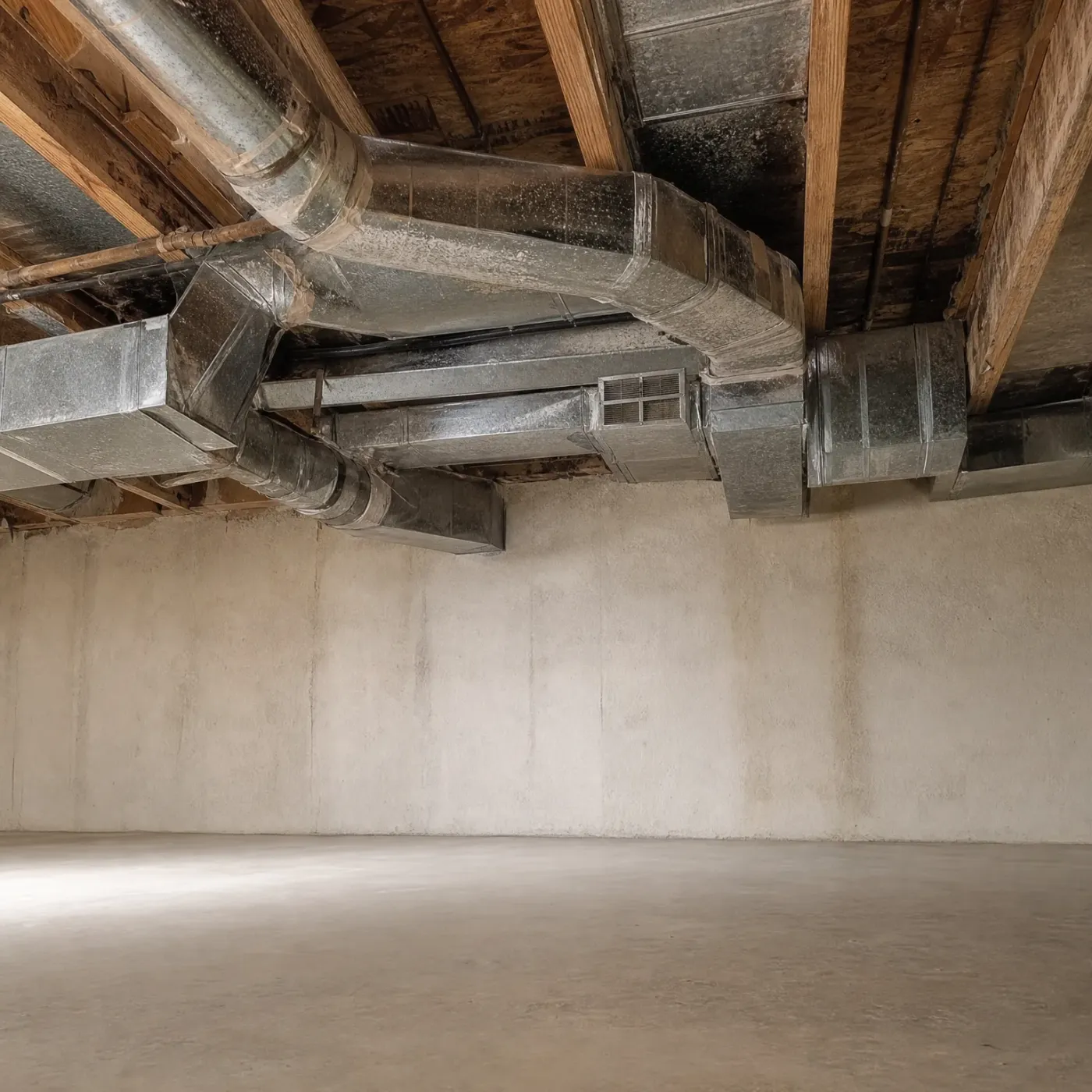
An empty basement room with bare concrete walls and floor, with galvanized sheet-metal HVAC ductwork and a vent grille running along the wooden joist ceiling.
Before you get your ductwork cleaning
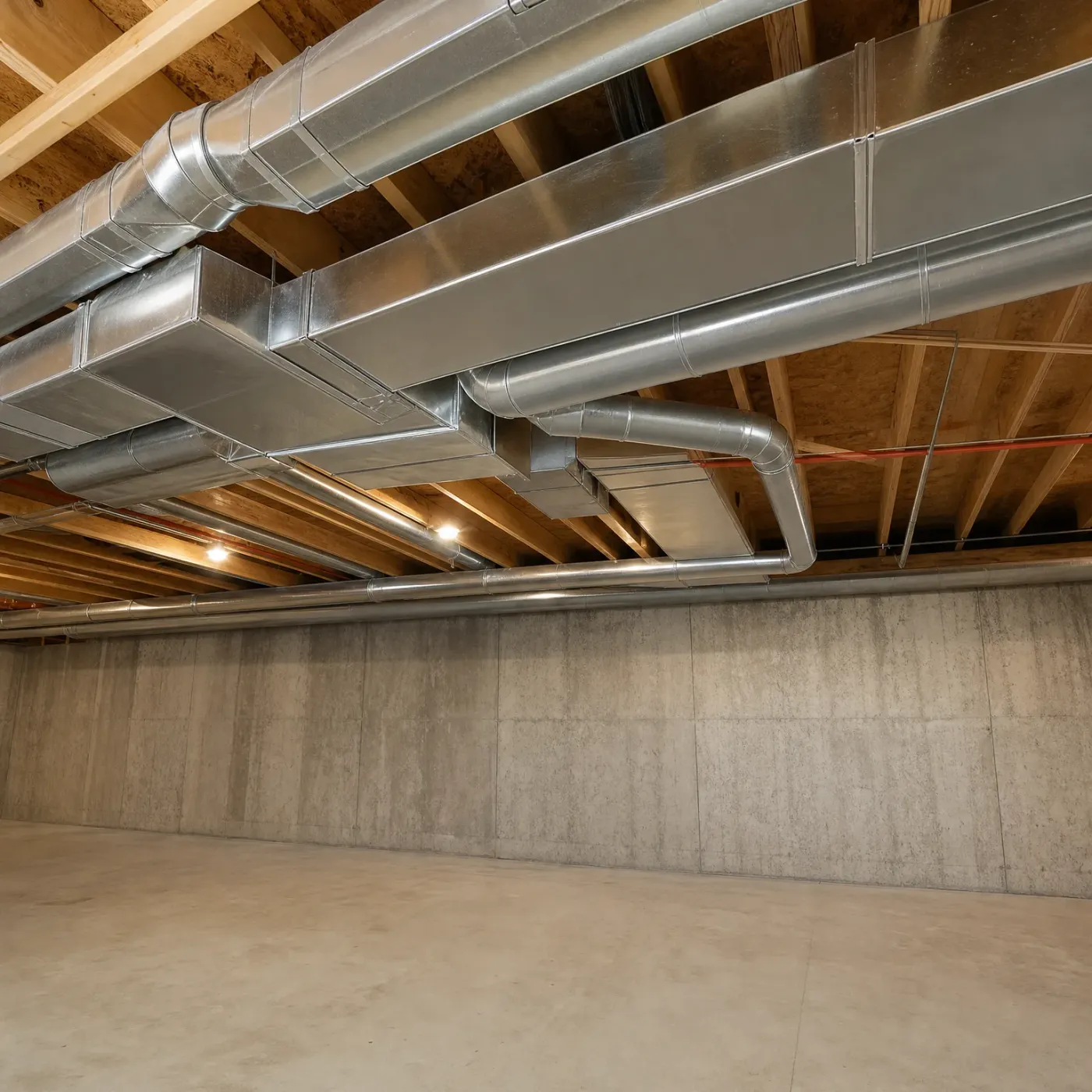
Unfinished basement with bare concrete floor and walls, showing galvanized sheet-metal HVAC ducts, pipes and recessed lights beneath a wood-joist ceiling.
After you get your ductwork cleaning
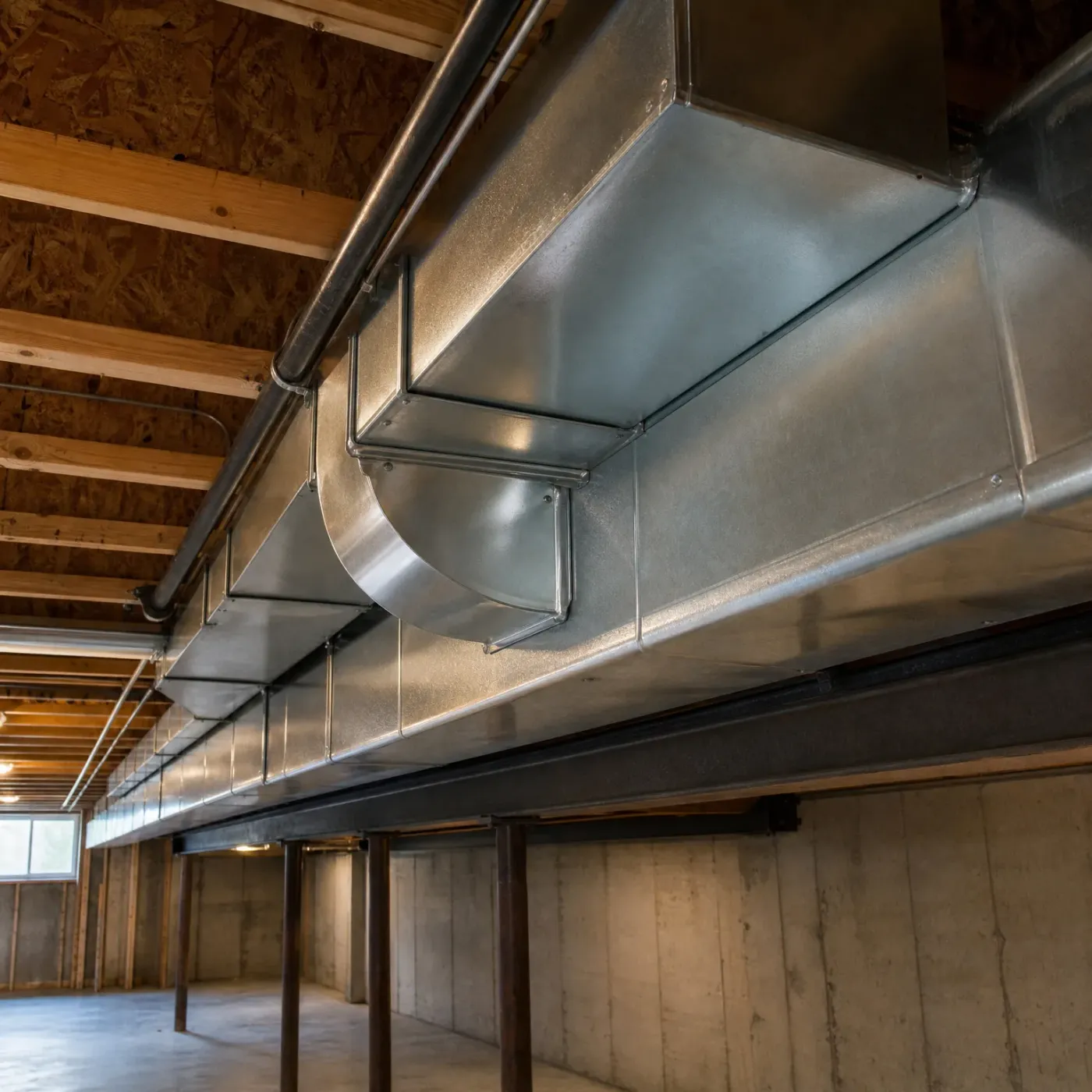
Galvanized sheet metal HVAC trunk ducts and branch takeoffs running below a wood-joist ceiling in an unfinished basement with concrete walls, steel support columns and a concrete floor.

No calling every shop in Snohomish County

The pro who gets in touch is licensed in Washington and works in Snohomish County.

Explain the job once and skip repeating it on every call.

Get a licensed local pro

There's no charge for the request.

Clean Now or Leave It Alone

Worth cleaning now

  • A contractor is about to tie a new furnace or heat pump into the existing ducts, and dust in those ducts will move through the new blower from day one.
  • Someone in the house has allergies or breathing trouble that gets worse indoors, and nobody has ever had the ducts checked.
  • A vent was open to the outside at some point, or there's reason to think a rodent or bird got into the system.
  • Dust visibly blows back out of the registers when the furnace or heat pump kicks on.
  • The ducts were opened up for a repair, a remodel, or any work that could have let drywall grit or debris into them.
  • The house is one of the many in Snohomish County built in 1990 or earlier and the ducts have never been cleaned that anyone knows of.

Fine to leave alone

  • The ducts were cleaned on a normal schedule already and it isn't due again yet.
  • No one in the house has allergies or respiratory symptoms that track with time spent indoors.
  • The ducts haven't been opened for any repair or remodel work since the last cleaning.
  • There's no sign of dust blowing out of the vents when the system runs.
  • The house is newer and the ducts have no history of pests, moisture, or construction debris getting into them.
  • Heat runs September through June here, so a system working hard most of the year but showing none of the above signs is doing fine as is.
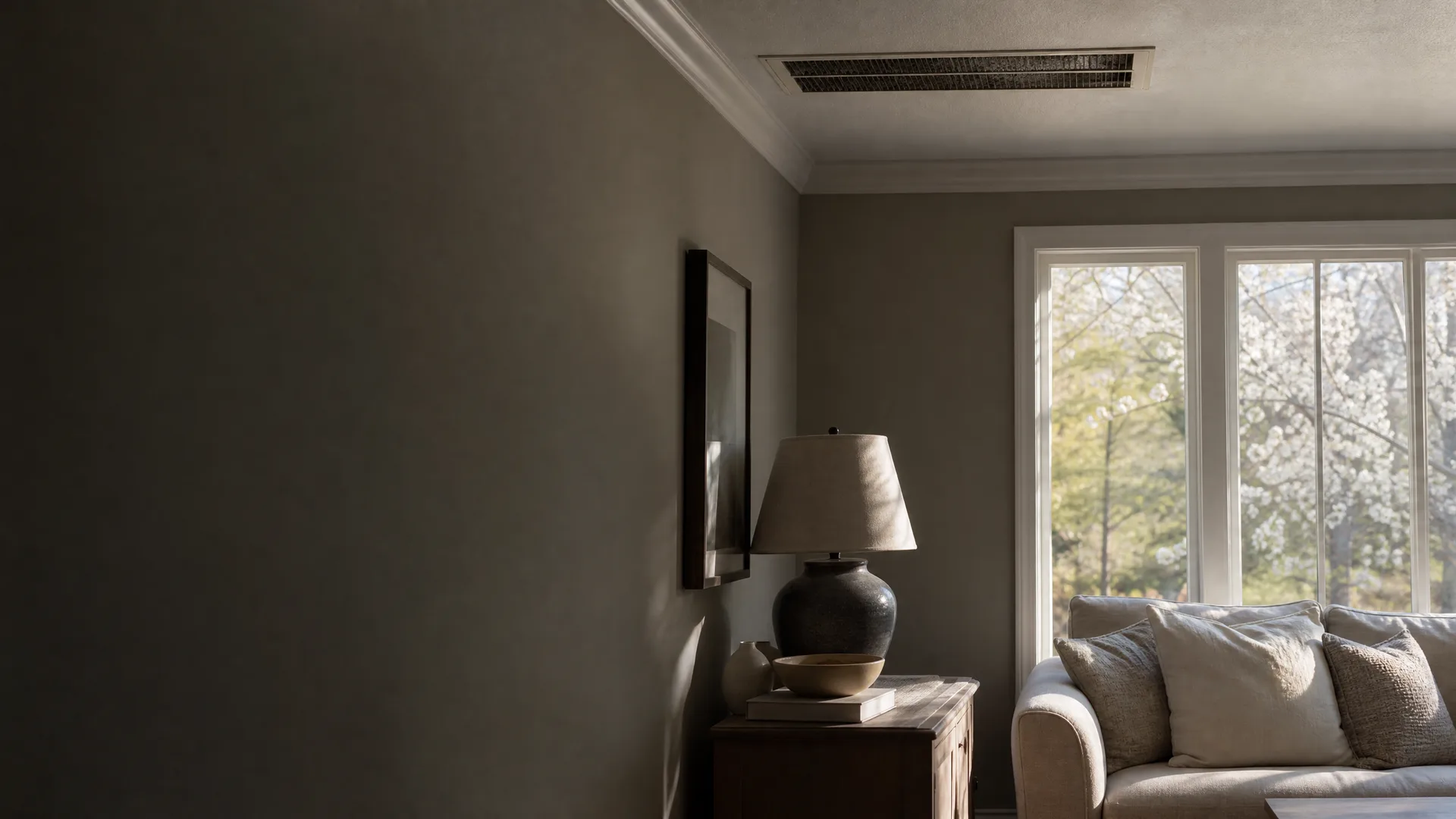
A dimly lit living room corner with a gray wall, framed picture, a table lamp on a wooden side table, a beige sofa with pillows, a ceiling vent, and windows showing flowering trees outside.

The heat pump kicks on for the first time since April. You're on the couch reading, late afternoon sun coming through the window, and you notice it: a gray smear across the ceiling vent grille, and a thin film on the end table underneath it that wasn't there last week. You run a finger along the grille and it comes back dark. The couch arm has the same dust, just lighter, like it's been settling there all spring without anyone catching it. You didn't smell anything, didn't hear anything different. The system just came on after sitting idle, and it pushed out whatever had been sitting in the ducts since last fall.

How does a duct cleaning actually get done?

You're picturing a van showing up and someone running a shop vac through the vents, and wondering if that's really going to do anything. Before you have a contractor out, it helps to know what the job actually involves, because the method matters more than the name. A real duct cleaning follows a specific sequence, and each step does something the one before it didn't.

A vacuum collection system, then an agitation tool run through every run

A contractor hooks a negative air machine to the duct system first, usually at the main trunk, so the whole system is under vacuum before anything else happens. Then a brush or an air whip goes into each duct run, one at a time, knocking loose what's stuck to the walls so the vacuum pulls it out instead of pushing it further down the line. The supply registers and return grilles come off and get cleaned separately. On a system with a heat pump or furnace, the blower compartment and coil get checked too, since dust collects there as much as anywhere in the ducts.

A smiling man with curly graying hair and a dark knit sweater sits at a candlelit dinner table with a glass of red wine, a water glass and a bowl of salad in the foreground, in a dimly lit room with a lamp, framed picture and window behind him.
A woman in a cream knit sweater reclines on a gray sofa with her eyes closed and a slight smile, covered by a fleece blanket with a closed book on her lap, a lit table lamp and potted plants behind her.
  1. Every supply and return vent cover comes off first.

  2. A vacuum connects to the trunk line to pull negative pressure.

  3. A rotating brush or air whip knocks debris loose in each branch.

  4. Loosened dust and grit get pulled into the vacuum, not your rooms.

Half the homes here were built by 1990

If your house went up in 1990 or earlier, the ducts running through it have never been swapped out, only maybe cleaned. Decades of grit and whatever got in during any remodel are still sitting in those runs, waiting on the blower to stir them up.

ACS 2020-2024

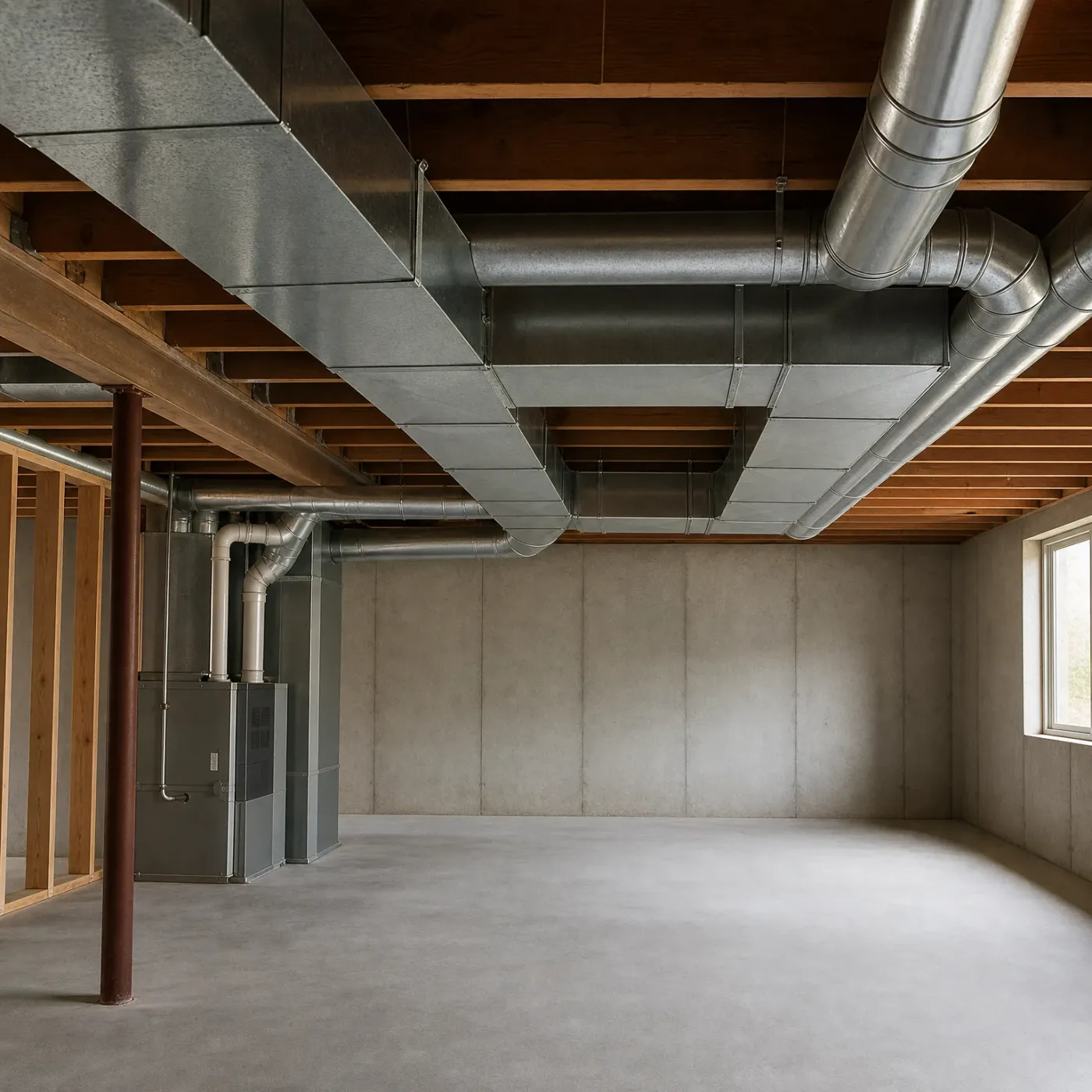
Unfinished basement with concrete floor and walls, exposed wood joists, galvanized sheet-metal ductwork, a furnace unit, a steel support column, and a small window.

Ducts doing their job

This is what a clean run looks like. Metal trunk lines and the round spiral duct carry air from the furnace to each room without adding anything to it. Air comes out the vent the same as it went in.

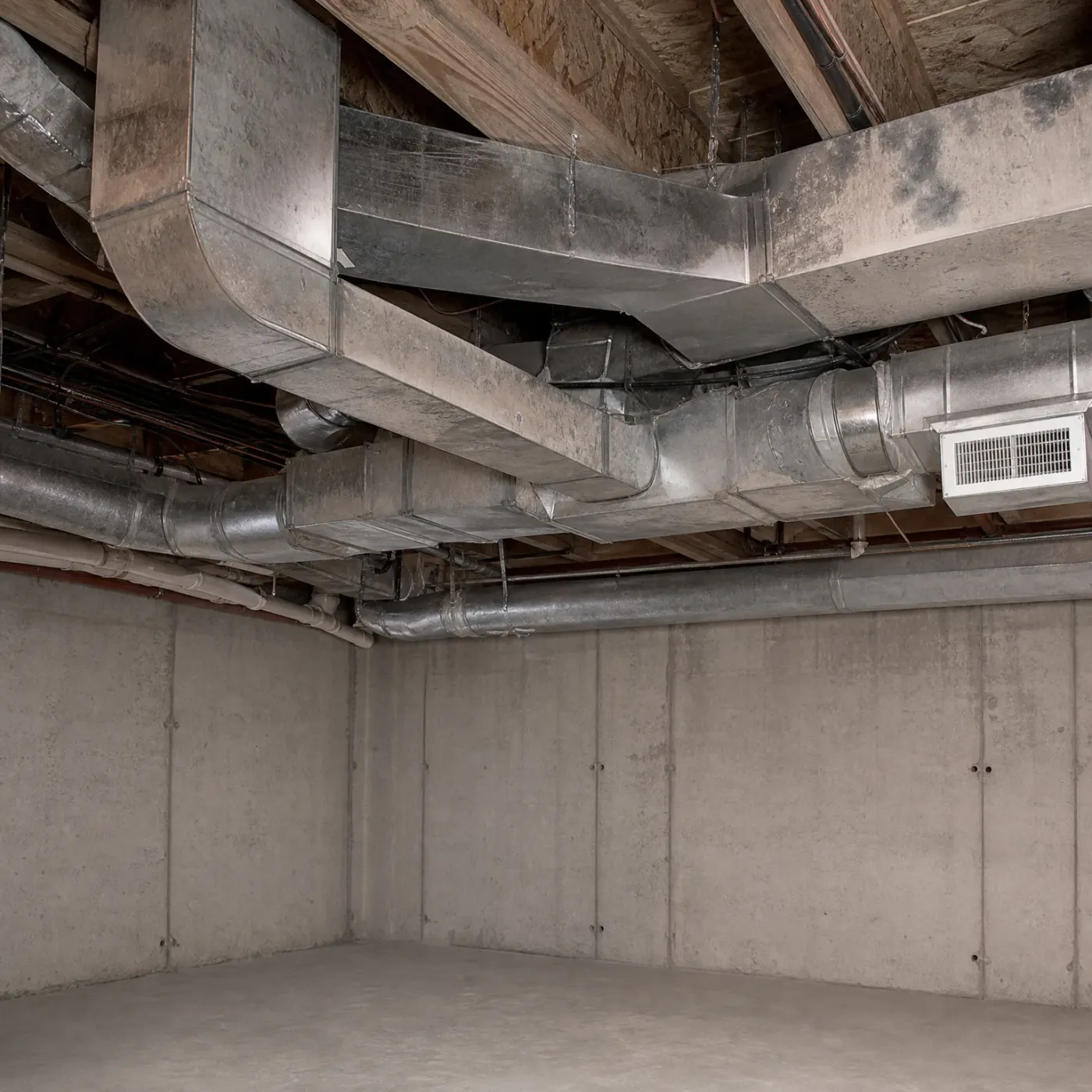
Empty unfinished basement with bare concrete walls and floor, showing exposed wooden joists, galvanized sheet-metal ductwork, pipes, and a white vent grille overhead.

Ducts overdue for a look

Small-diameter runs like this collect grit along the bottom where airflow never reaches it. Over years that layer builds up past the one vent grille it eventually has to pass through on its way into the room.

A closed laptop and a ceramic mug on a wooden table in front of a kitchen with green cabinets, marble counter, black pot, cutting board, wooden bowl, and a white vase with greenery.

Where that leaves you

So is it worth it. For most houses in Everett, yes, on a schedule rather than in a panic, and sooner than that if your ducts are tied into a new furnace or heat pump, or someone in the house is struggling to breathe easy indoors. If your house went up before 1990 and nobody's touched the ducts since, that's reason enough on its own.

What changes once you decide to go ahead is the part that has nothing to do with your ducts. You're not hunting down names, calling three companies to compare what they quote, or explaining the same vent-cover-to-blower layout of your house three separate times. You get matched with one licensed contractor local to Snohomish County, someone who deals with this same grit and buildup in houses like yours every year and knows what to check first. One call, one crew, no pile of quotes to sort through.

A mug and a small round vase sit on a wooden windowsill beside sheer and heavier curtains, with blurred autumn trees seen through the rain-speckled window and a sofa with cushions and a throw in the foreground.
A dark-clad house with large windows beside a gravel driveway lined with in-ground path lights, ornamental grasses and hydrangeas, with distant hills and an orange sunset sky.

Ductwork Cleaning

Explain it one time

Duct and vent cleaningDucts or ventsSnohomish County, WA
Step 1 of 2

What ZIP code is the job in?

  • A dimly lit living room corner with a beige upholstered sofa holding a dark green cushion and a chunky knit throw, beside a wooden sideboard with a lit ceramic table lamp, a small potted plant, and a wooden bowl, with a framed artwork on the wall and a mug on a book in the foreground.
    • Get matched with a Snohomish County pro who cleans ducts.
    • Get matched with a pro who works on ducts in Snohomish County.
  • A round wooden coffee table holding a round stone vase of green foliage, a lit candle in a glass container, and a small dark bowl, with a beige sofa, cushions and knit throw behind and a window at left.
    • Send it once and finding someone is no longer on you.
    • Send the form and finding a duct cleaner is handled.
  • Sunlit living room with a wooden coffee table holding a ceramic vase of leafy branches and a carved wooden tray with two stacked books, in front of a beige sofa with tan and green cushions and a potted plant near a window.
    • One form replaces the calls you'd make to find a duct system pro.
    • Skip calling around for someone who cleans ducts.
  • Interior corner with a lit ceramic table lamp and wooden bowl on a wood sideboard, a framed picture and branch-filled vase behind, a knit throw over an upholstered chair, and a lit candle in a glass holder, stoneware mug and round planter of green foliage on a wooden table in the foreground.
    • Your request goes to one pro, not a list of companies.
    • The pro who reaches out is licensed in Washington.