













Signs your ducts need cleaning in Everett, WA

Get matched with someone who does this kind of work in Snohomish County.

Find my pro

A few signs tell you your ducts need cleaning. Dust that settles back on furniture within a day or two of cleaning, even though your filter is new. A musty smell when the heat pump kicks on, especially after the system has sat idle. More dust around the supply vents than anywhere else in the room. Registers that look gray or dark inside when you shine a light in. Family members with allergies doing worse indoors than out. Ducts collect dust, pet hair and debris over years, and in a system that runs most of the year, cold months on heat and warm months on cooling, that buildup gets pushed through the house every time the blower comes on. It doesn't usually mean mold or a hidden leak, though both are reasons to check. Mostly it means the duct run is overdue for a clean-out. If more than one of these matches what you're seeing, it's worth having someone look at the actual ductwork, not just swap the filter again.

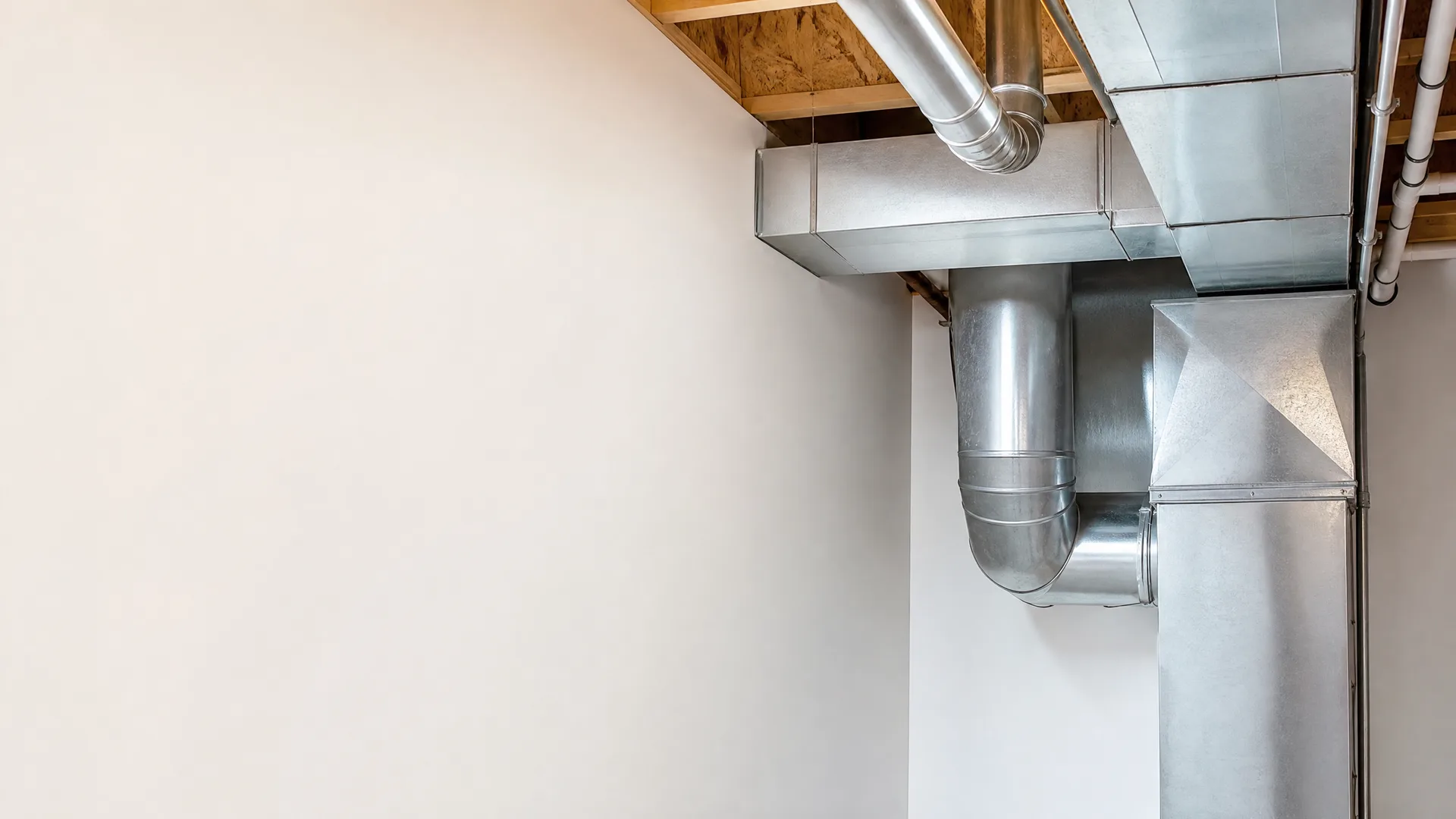
Galvanized sheet-metal ductwork and pipes running along an unfinished basement ceiling beside a plain beige wall, with a gray equipment cabinet below.

Why dust keeps coming back

Ducts hold onto fine dust and pet hair along their inside walls. Every time the heat pump cycles on, moving air stirs some of that loose material and pushes it out through the supply vents into the room. A new filter only catches what passes through it going forward. It does nothing about what's already settled further back in the duct run, which is why the dust reappears so fast.

Galvanized sheet metal rectangular and round HVAC ducts running along a ceiling and down a white interior wall, with exposed wood joists and subfloor above.

What the musty smell means

That smell usually means moisture has settled somewhere in the duct system, often in a run that sits unused for stretches then kicks back on. Damp air trapped against dust and debris starts to turn, and the smell rides the airflow straight into the room. A heat pump pulling air through a line like that will carry the odor to every vent it feeds, not just the one closest to the problem.

A man with a duffel bag walks up a concrete path toward a white board-and-batten house where a woman stands in the open wooden front door, flanked by potted plants and black lanterns.

What this looks like in your house

If you're wiping down the same shelf every few days, that's not a housekeeping problem. It's the duct system feeding the room faster than you can keep up with it. Check the supply vents in whatever room you spend the most time in. A dark smudge around the edge of the vent cover means air is dragging dust across it every time the heat pump runs.

Snohomish County homes run electric heat most of the year, which means the system cycles on and off constantly through the cold months, pulling air through the ducts again and again. Every cycle moves whatever is sitting in there. If a room still feels dusty or smells off no matter how often you clean, the fix isn't more cleaning on your end. A contractor who looks at your specific ducts can tell you whether they need clearing out, and reaching one shouldn't be another thing on your list.

Interior corner of a living room with a beige upholstered armchair holding a textured pillow and throw, a eucalyptus arrangement in a ceramic vase on a wooden table in the foreground, a blurred glass-front cabinet behind, and a potted plant on a sunlit window sill.

Does your duct system's age and use add up to a cleaning?

  • Half the homes here were built by 1990

    Half the homes in Snohomish County were built by 1990, half after. Older ductwork has had decades to collect dust and pet hair along its walls.

  • Heat runs September through June

    Heat runs about ten months a year here, September through June. That's most of the year pushing air through the same ducts, stirring up whatever is settled inside.

  • Power here costs 12.70 cents per kilowatt-hour

    Electricity here runs 12.70 cents per kilowatt-hour, cheap enough that most homes lean on their heat pump often, which means more cycles moving dust through the vents.

ACS 2020-2024 · NOAA nClimDiv 1991-2020 · EIA-861 2025

  1. Loose dust and hair get pulled off the duct walls

  2. The heat pump cycles on and air moves through the ducts

  3. That airflow carries loose material out through the supply vents

  4. It settles on furniture and floors faster than a filter can catch it

Clean Your Ducts or Hold Off

Clean the ducts

  • A contractor can reach dust and pet hair packed along the duct walls that a filter was never able to catch.
  • Once that loose material is gone, the heat pump has less to push out through the supply vents every time it cycles on.
  • You stop wiping down the same shelf every few days because the dust feeding the room has been pulled out at the source.
  • A musty smell that shows up when the system kicks on usually settles once what's sitting in the ducts is removed.
  • This matters most if your ductwork has sat there since 1990 or earlier, since it's had decades to collect material.
  • It addresses what's already built up, not what gets added to the ducts going forward.

Skip it for now

  • If your filter is catching most of the dust and your home stays clean between changes, there may be nothing built up to remove.
  • Newer ductwork has had less time to collect dust and pet hair along its walls than a system installed decades ago.
  • Skipping it means whatever is already loose in the ducts keeps getting pushed out through the vents all winter.
  • A musty smell or dust that resettles fast is a sign something is already built up, and waiting doesn't clear it.
  • With heat running about ten months a year here, September through June, any loose material keeps cycling through the house that whole stretch.
  • It's a reasonable call only if the signs, the smell, the fast-returning dust, aren't showing up in your home.
A woman in a cream cowl-neck sweater stands in a lamp-lit room looking out a window at a snow-covered yard with shrubs and bare trees at dusk.
A woman in a gray turtleneck sweater stands near a large window in a lamp-lit living room, looking out at falling snow and snow-covered conifers.
A woman in a chunky knit sweater stands by a large window looking out at snow-covered ground, with a dimly lit living room containing a gray sofa, framed artwork, shelves and table lamps behind her.
A woman in a gray turtleneck sweater stands in a dimly lit living room with a lamp and bookshelves, looking out a multi-pane window at falling snow.

Get matched with a duct system pro in Snohomish County

You've seen what's driving it. Ducts that have gone years without a cleaning hold onto dust and pet hair along their walls, and a heat pump running most of the year keeps stirring that material loose and out through the supply vents. A new filter doesn't reach what's already coated on the inside of the ductwork. If you're resetting the same shelf every few days or catching that musty smell when the system kicks on, that's the duct system telling you what it needs. Finding a contractor who handles duct cleaning and working out when they can look at your system is its own task, on top of everything else a house asks of you. Hand that part off. Once the request is sent, you're not the one tracking down who's available or explaining the problem from scratch. That's off your plate, and the dust stops winning.

A filter change fixes a dirty filter. It does nothing for the dust and pet hair already packed along the inside walls of your ducts, which a filter sitting in its slot was never positioned to catch.

A duct cleaning reaches that material directly. Once it's out, the heat pump has less to push through the supply vents every time it cycles on, and that shows up as less dust landing back on your furniture.

A man with graying hair and a beard in a plaid flannel shirt stands indoors looking out a frosted window at snow-covered trees, with a ceramic mug on the sill.
A smiling man with short dark curly hair and stubble, wearing a navy T-shirt, sits on a beige sofa looking down toward a dark object in the foreground, with a living room, round mirror, lamp and bright window behind him.

A contractor doesn't just stick a hose in one vent and call it done. Each supply vent gets sealed off first, then the main trunk line opens up and a vacuum unit connects to it, holding the whole system under negative pressure. With that pressure in place, brushes or air whips go through each branch line, knocking loose the dust and pet hair packed along the walls so the vacuum can pull it out instead of letting it drift back into the room. The return side gets the same attention. Dust collects there just as heavily as on the supply side, and skipping it leaves half the job undone. Vents only get wiped down and reset once the branch behind them is actually clear, not before, so nothing loose gets trapped back in. While access panels are open anyway, a contractor will usually check the blower wheel and the coil, since both collect dust the same way the ductwork does, and a dirty coil makes the heat pump work harder no matter how clean the ducts are.

How a duct cleaning actually works

  • A contractor cleaning a duct system works room by room, sealing each supply vent before opening the main trunk line.
  • A vacuum unit connects to the trunk line and holds the whole system under negative pressure while work is underway.
  • Brushes or air whips run through each branch line to knock loose material off the duct walls before it gets pulled out.
  • The return side gets the same treatment, since dust and pet hair collect there just as heavily as on the supply side.
  • Vents get wiped down and reset once the branch behind them has been cleared, not before.
  • A contractor checks the blower wheel and coil while access panels are open, since dust collects there the same way it does in the ducts.
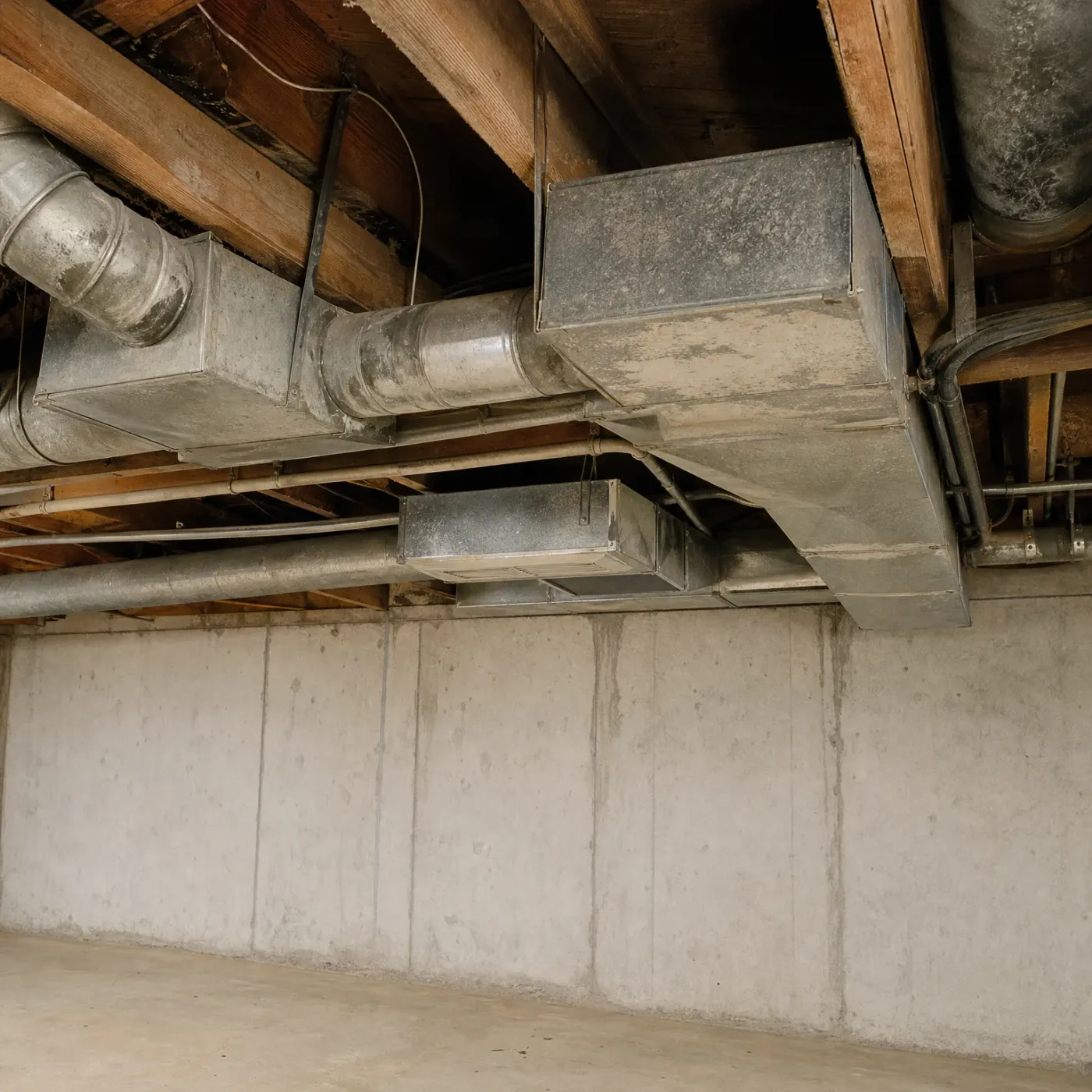
Basement ceiling with galvanized sheet metal ductwork, round pipes and rectangular plenums running between wooden joists above a bare concrete foundation wall and floor.
Before you get your ductwork cleaning
Empty basement room with bare concrete walls and floor, and an exposed wood-joist ceiling carrying sheet-metal ductwork, insulated pipes, and recessed lights.
After you get your ductwork cleaning
An empty unfinished basement with concrete floor and walls, exposed wood joists, steel beams and support posts, galvanized ductwork and pipes, and a single bare bulb light.

Ductwork that's keeping up

The sheet-metal trunk and flexible runs here move air cleanly between joists, with no buildup dragging on the system. Nothing visible on the duct surfaces or the beams around them. This is what a system looks like when dust isn't collecting faster than a filter can manage it.

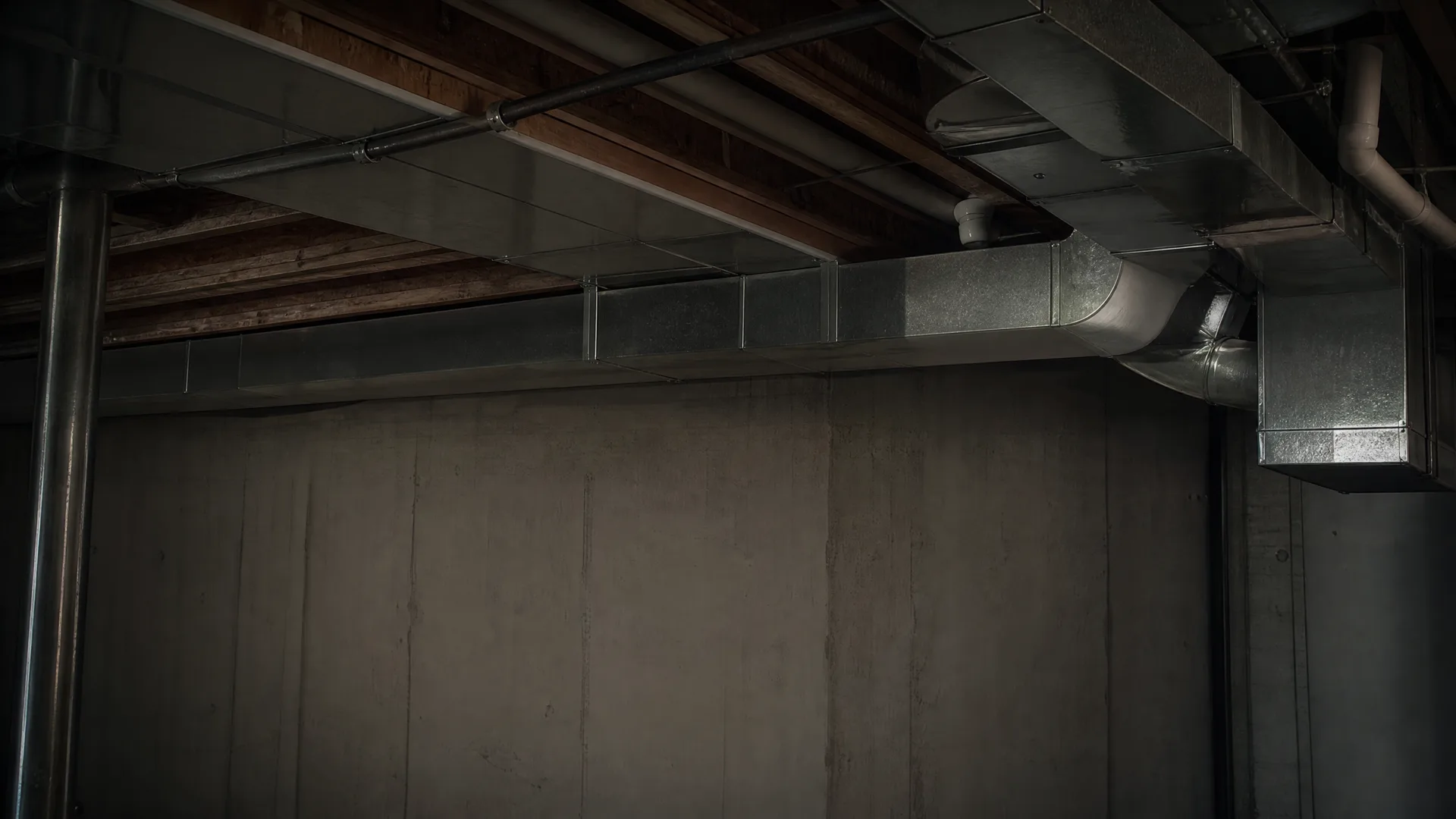
Empty basement with bare concrete walls and floor, with galvanized sheet-metal HVAC ducts, a round duct elbow, and pipes running along the wooden joists of the ceiling.

Ductwork past due

Dark staining has built up along the duct surfaces and spread onto the wood joists above them. That staining is a sign moisture and fine debris have been sitting there a while, not passing through and out the vents like they should. A contractor can tell you whether a cleaning will clear it.

Half the homes here were built by 1990

If your house went up before 1990, its ductwork has had thirty years or more to collect dust and pet hair along the inside walls. Homes built since then have had less time for that buildup to settle in.

ACS 2020-2024

What it comes down to

  • Dust back on your furniture within a day or two, a musty smell at startup, and heavier buildup near the supply vents all point the same way.
  • Ductwork that has gone years without a cleaning holds onto dust and pet hair that a new filter never touches.
  • A heat pump running most of the year keeps stirring that loose material out through the supply vents and into your rooms.
  • A cleaning reaches the duct walls directly, something a filter change was never built to do.
  • Once the ducts are cleared, the heat pump has less loose material to push out every time it cycles on.
  • Sending the form is the last step on your end; finding a contractor to take it from here is not.

Dust that resettles fast, a musty smell when the heat pump starts, buildup worse near certain vents. These are not separate problems. They come from the same cause: years of dust and pet hair packed along the inside walls of your ductwork, loose enough that every time the system cycles, some of it rides the airflow straight into your rooms. A filter in good shape still misses it, because the filter was never positioned to clean the duct walls themselves. Only a cleaning reaches that material directly.

Once it's gone, the difference shows up fast. The heat pump is still running the same hours it always has, September through June most years in Snohomish County, but it has less loose material left to push out through the supply vents. Dust stops building back up within a day or two of wiping it down. The smell at startup goes away. None of this means the system needs less maintenance going forward, just that the backlog sitting in the ducts has been cleared out.

If what's been described here matches what you're seeing in your own house, that's worth acting on rather than watching. The part that takes effort, finding a contractor who does this work and getting them scheduled, isn't something you have to sort out on your own. Once the form is sent, that search is off your plate. Someone else takes it from there.

Dimly lit basement interior with galvanized sheet-metal ductwork and round pipes running along wooden floor joists above a bare concrete wall.

Find a duct system cleaning pro in Snohomish County

Send the form and the duct cleaning stops sitting on your list.

Duct and vent cleaningDucts or ventsSnohomish County, WA
Step 1 of 2

What ZIP code is the job in?