Mini Split Installation in Bremerton, WA
Tell us about the house, and a licensed contractor who covers Kitsap County will get in touch.
Tell us about the job
It takes about a minute.
Ten months of heating a year, not much cooling
Bremerton needs heat from September through June. That is 10 months out of the year the mini-split is working, with winter nights averaging 35°F from December through February. Summer here stays mild, averaging 74°F in the afternoon, so the system barely has to run in cooling mode at all.
That means the heating side of the unit does almost all the work, year after year. A mini-split installed here needs to hold up to nearly constant use through fall, winter, and spring, not just cover a few cold snaps. Any new system also has to meet the federal minimum for split-system heat pumps, 14.3 SEER2 for cooling and 7.5 HSPF2 for heating, so that baseline is covered no matter which model goes in.
- 10 months
- September through June, your system heats
- 35°F
- the average winter night it heats against
- 74°F
- the average summer afternoon it cools against
Washington requires contractors to register with the state.
That registration puts a contractor's business on file with the Department of Labor and Industries. There is no trade exam behind it, so it tells you the business is on record, not that the state checked their skill.
For a mini-split install, the record that matters here comes from the local building office. In most cities and counties in Kitsap, this installation needs a permit and an inspection once the work is done. That inspection is what checks the job was done right, not the registration.
Source: Washington State Legislature
- Is a mini split worth it?
- For a Bremerton home, yes, especially if you're heating with electric resistance now. Winters here run from September through June, with average lows around 35°F, so you're paying to heat the house most of the year. A mini-split moves heat instead of generating it with resistance coils, which costs less to run over that many months. It can also cool the house on the occasional warm day, using the same equipment instead of a separate window unit.
- How many rooms can a mini split cover?
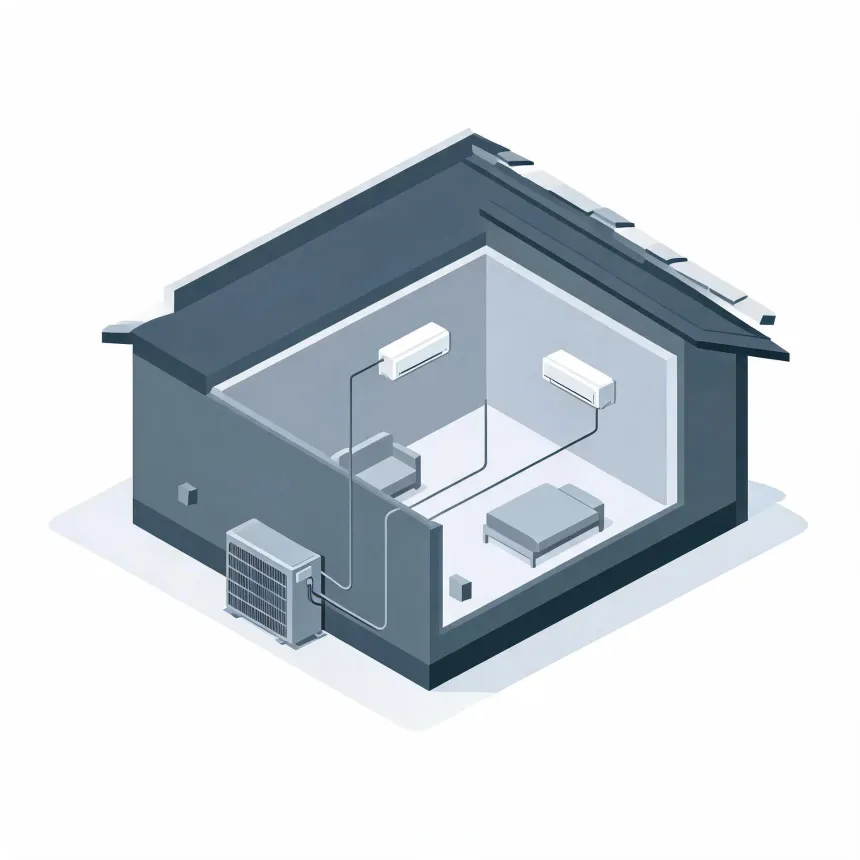
- A single outdoor unit can run one indoor head or several, depending on the system. Single-zone systems cover one room or open area. Multi-zone systems split the output across several indoor heads, each with its own thermostat, so you can heat or cool different rooms to different temperatures at the same time. How many zones make sense for a given house depends on the layout and the size of the rooms, which is something a contractor will work out by looking at the space.
- Can a mini split heat a whole house?
- It can, if it's sized and placed for that. A multi-zone system with indoor heads in the main rooms can cover a whole house the same way a central system would, just without ducts. That matters more here than in milder places, since winter lows average around 35°F for months at a stretch, and the system has to be sized to keep up on the coldest nights, not just the mild ones. A contractor can work out the right number of zones and capacity for the house.