Mini Split Installation in Seattle, WA
Tell us about the house, and a licensed contractor who covers King County will get in touch.
Tell us about the job
It takes about a minute.
Your mini-split works ten months a year here
Seattle winter nights average 32°F from December through February, and summer afternoons only reach 70°F. That is not a demanding cold and it is not a demanding heat. It is a long stretch of mild weather that asks a heat pump to run from September through June, ten months of the year, doing most of its work in that middle range rather than at extremes.
A new mini-split installed here has to be sized for that long, moderate season, not for a handful of brutal days. Any unit manufactured now has to clear the federal minimum for a split-system heat pump, 14.3 SEER2 for cooling and 7.5 HSPF2 for heating. With more than half of homes here heating with electricity, the unit doing that job well for ten months matters more than what it does on the coldest night.
- 10 months
- September through June, your system heats
- 32°F
- the average winter night it heats against
- 70°F
- the average summer afternoon it cools against
Washington requires contractors to register with the state.
That registration means the contractor's business is on file with the Department of Labor and Industries. It does not mean anyone tested their work. There is no trade exam behind it, so the number on file tells you the business is registered, not that the state checked what they know.
For a mini-split installation, the protection comes from elsewhere. In most cities and counties here, installing a mini-split needs a permit from the local building office, with an inspection once the work is done. That inspection is what checks the installation itself, since the state registration does not.
Source: Washington State Legislature
- Is a mini split worth it?
- For most Seattle homes, yes. Homes here need heat from September through June, and a mini split handles that whole stretch with one system. It runs on electricity, which is how most homes here already heat. A contractor can look at your house and tell you whether one zone covers your needs or whether you'd want more.
- How many rooms can a mini split cover?
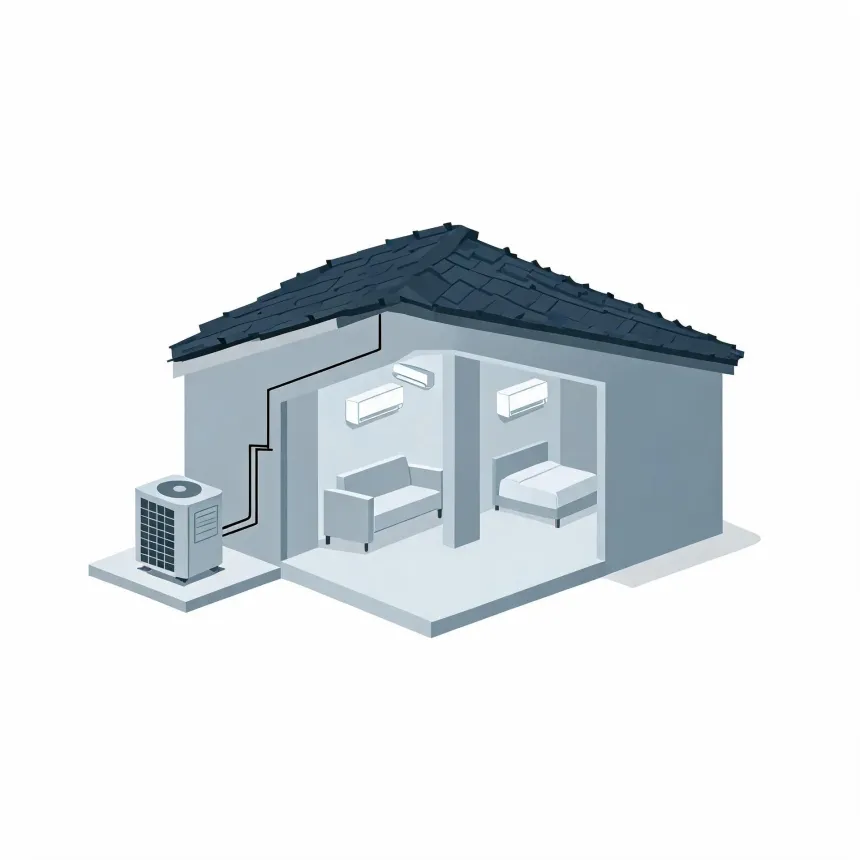
- A single outdoor unit can run more than one indoor head. One zone heats and cools one room or open area well. If you need several rooms covered separately, a multi-zone system with one outdoor unit and several indoor heads is the usual answer. A contractor will size the system to the rooms you want covered and how they're laid out.
- Can a mini split heat a whole house?
- It can, if it's sized and placed for that. A multi-zone mini split with an indoor head in each main room can heat an entire house the same way a furnace does, and it holds up through Seattle winters, where nights average 32°F December through February. Whether one outdoor unit covers your whole house or you need a larger system depends on the size of the house and how it's laid out, so a contractor will need to look at the specifics before sizing it.