Mini Split Installation in Kennewick, WA
A new system here will heat from October through May and cool from June through August every year. Tell us about the house, and a licensed contractor who covers Benton County will get in touch.
Tell us about the job
It takes about a minute.
Kennewick asks a mini-split to work most of the year
A mini-split here spends 11 months a year heating or cooling the house. Winter nights average 28°F from December through February, and summer afternoons average 86°F. That is a long stretch of real work on both sides of the system, not just a few mild weeks in spring and fall.
Most homes here heat with electricity, so the heat pump side carries real weight all winter, not just the cooling side in summer. Any new unit has to meet the federal minimum for split-system heat pumps, 14.3 SEER2 for cooling and 7.5 HSPF2 for heating. Washington also saw storms knock out power to 23% of households for at least a day in 2024, which is worth keeping in mind for a system you will depend on through a long heating season.
- 8 months
- October through May, your system heats
- 3 months
- June through August, it cools
- 28°F
- the average winter night it heats against
- 86°F
- the average summer afternoon it cools against
NOAA nClimDiv, 1991–2020 normals
Washington requires contractors to register with the state.
Registration means the contractor's business is on file with the Department of Labor and Industries. Nobody tested them on how to size a system or braze a line set. It is a record that the business exists, not a mark that the work will be done well.
For a mini-split, the part that checks the installation is the permit. In most cities and counties, putting one in needs a permit from the local building office and an inspection once the work is done, and that inspection is what confirms the unit was mounted, wired and connected the way it should be. That inspection, not the registration, is what stands between this reader and a bad install.
Source: Washington State Legislature
- Is a mini split worth it?
- For most homes it comes down to what you're heating or cooling and how. A mini split moves heat instead of burning fuel or using resistance coils, so it works well for a room addition, a garage, or a house that needs help beyond what the main system can reach. Down to freezing and below, which happens on plenty of nights here from December through February, a mini split still keeps drawing heat from outside air. A contractor can look at your house and tell you whether one unit, or a small multi-zone setup, makes sense for what you're trying to fix.
- How many rooms can a mini split cover?
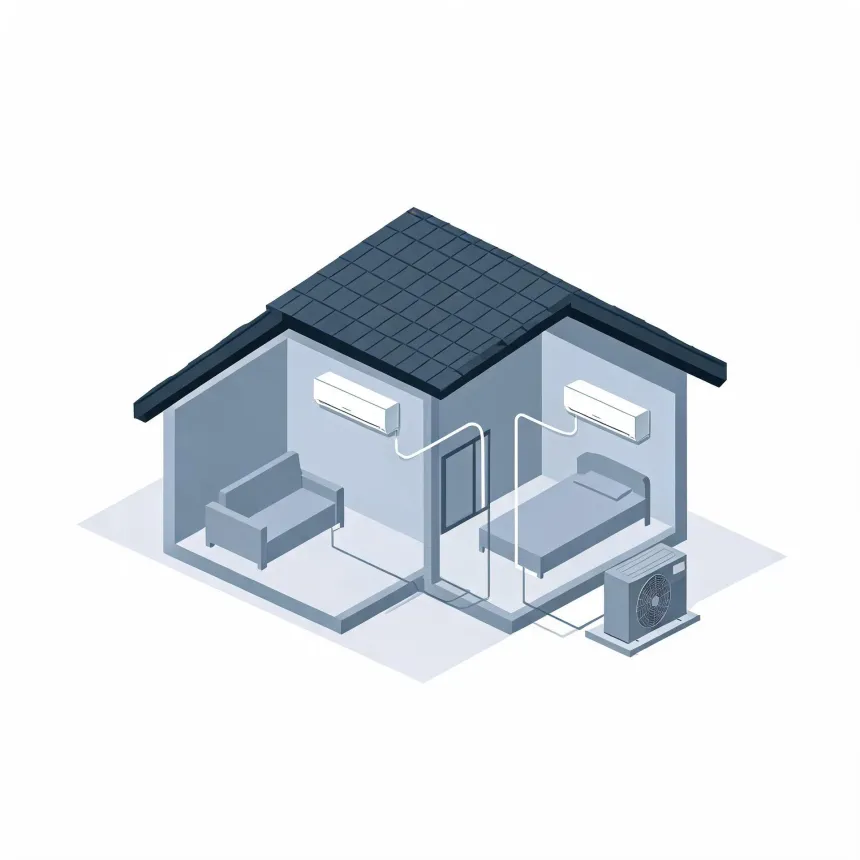
- A single-zone system heats and cools one room or one open area well. If you need to cover several rooms, a multi-zone system connects one outdoor unit to multiple indoor heads, and each head runs on its own thermostat. How many zones one outdoor unit can support depends on the equipment, so a contractor will size that to your house and the rooms you want covered.
- Can a mini split heat a whole house?
- A multi-zone mini split can heat a whole house if it's sized and placed for that, with enough indoor units to cover the rooms you use. Winter nights here average 28°F from December through February, so the system has to be sized for that cold, not just for a mild afternoon. A contractor can work out whether whole-house coverage means one larger multi-zone setup or a mini split working alongside the heating you already have.