Mini Split Installation in Walla Walla, WA
A new system here will heat from October through May and cool from July through August every year. Tell us about the house, and a licensed contractor who covers Walla Walla County will get in touch.
Tell us about the job
It takes about a minute.
What a mini-split has to handle in Walla Walla County
Your mini-split works ten months a year here. Heat from October through May, cooling in July and August, and little time off between. On winter nights averaging 29°F it has to carry the heat side of that stretch for eight months straight, then switch over and hold through summer afternoons near 86°F.
57.5% of homes here heat with electricity, so a heat pump doing its job through those cold months matters to more than a few of your neighbors. Any new unit installed since January 1, 2023 has to meet 14.3 SEER2 for cooling and 7.5 HSPF2 for heating, the federal minimum for this kind of system. The county has also seen 67 winter storms and 37 damaging wind events over the past ten years, and enough homes across Washington lose power for a day or more that it is worth asking how the system you choose comes back on once the power does.
- 8 months
- October through May, your system heats
- 2 months
- July through August, it cools
- 29°F
- the average winter night it heats against
- 86°F
- the average summer afternoon it cools against
NOAA nClimDiv, 1991–2020 normals
Washington requires contractors to register with the state.
Registration means the contractor's business is on file with the state. There is no trade exam behind it, and nobody at L&I has tested this contractor's work.
For a mini-split installation, the check that matters here is local. In most cities and counties this job needs a permit from the building office and an inspection once the work is done, and that inspection is what catches a bad connection. Washington's registration is a record that the business exists, nothing more.
Source: Washington State Legislature
- Is a mini split worth it?
- For most homes it comes down to what you're heating or cooling and how the space is set up. A mini split heats and cools without ducts, so it works well for a room addition, a garage, or a house that relies on window units and space heaters now. Walla Walla winters drop to an average low of 29°F, so the unit installed has to be sized and rated for real cold, not just mild days. A contractor can look at the specific rooms and tell you whether a mini split covers the need or whether something else makes more sense.
- How many rooms can a mini split cover?
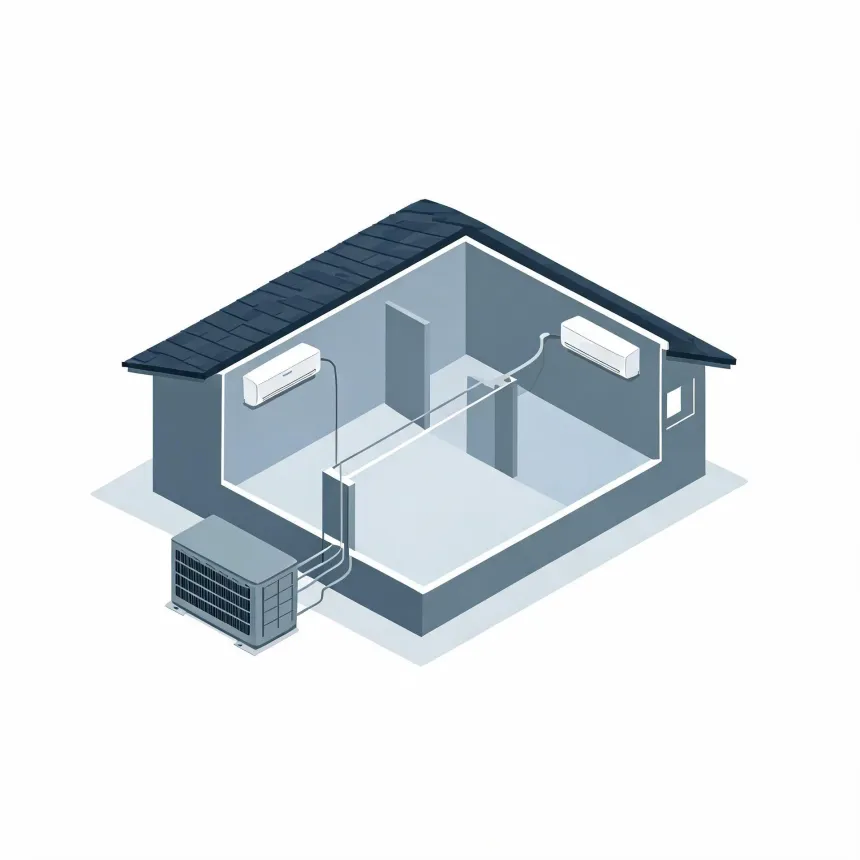
- A single outdoor unit can run one indoor head or several, depending on the system. Single-zone systems cover one room or one open area. Multi-zone systems connect several indoor heads to one outdoor unit, each one controlling its own room. The right count depends on the size of the rooms and how much heating and cooling each one needs, which is something a contractor works out room by room.
- Can a mini split heat a whole house?
- It can, if enough indoor heads are installed to reach every room and the system is sized for the coldest nights. Walla Walla homes need heat from October through May, eight months of the year, with winter lows averaging 29°F, so the heat pump has to be rated to keep working at those temperatures. A house with an open layout is easier to cover with fewer heads than one with many closed-off rooms. A contractor can walk the house and say how many indoor units it takes to heat all of it.