Why your house is so dusty in Seattle, WA

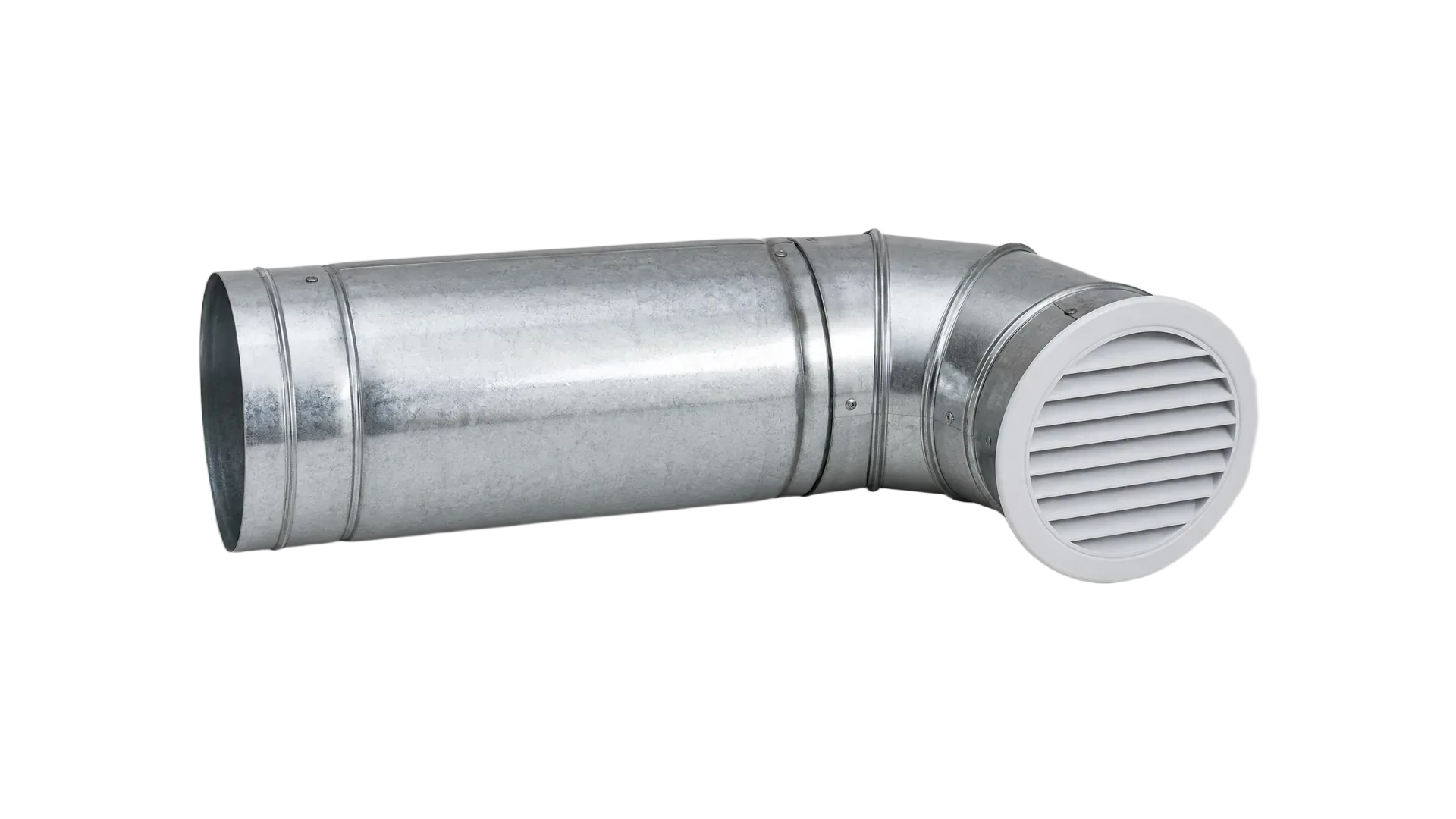
A galvanized steel round duct with a 90-degree elbow and a white louvered vent cover on one end, shown against a plain gray background.
Hand it off

Why is my house so dusty in Seattle?

You dust the shelves on Saturday and by the following weekend everything has a gray film again. It's not just the shelves either. You notice it on the TV screen, on top of the fridge, along the baseboards. You've checked that the windows are shut, so it doesn't feel like it should be coming from outside. Something in the house itself seems to be generating it, faster than seems normal.

Your duct system is likely circulating it

Most homes in and around Seattle heat with electricity, often through a heat pump or electric furnace that pushes air through the same duct system all year. Every time it runs, that air picks up dust sitting in the ducts and drops more of it in every room it reaches. If the filter is old, loose-fitting, or too fine a mesh clogged shut, it stops catching that dust and starts blowing more of it past itself. Duct leaks do the same thing in a different way, pulling in dust from the attic or crawl space and carrying it straight into your living room. The more the system runs, the more dust you see.

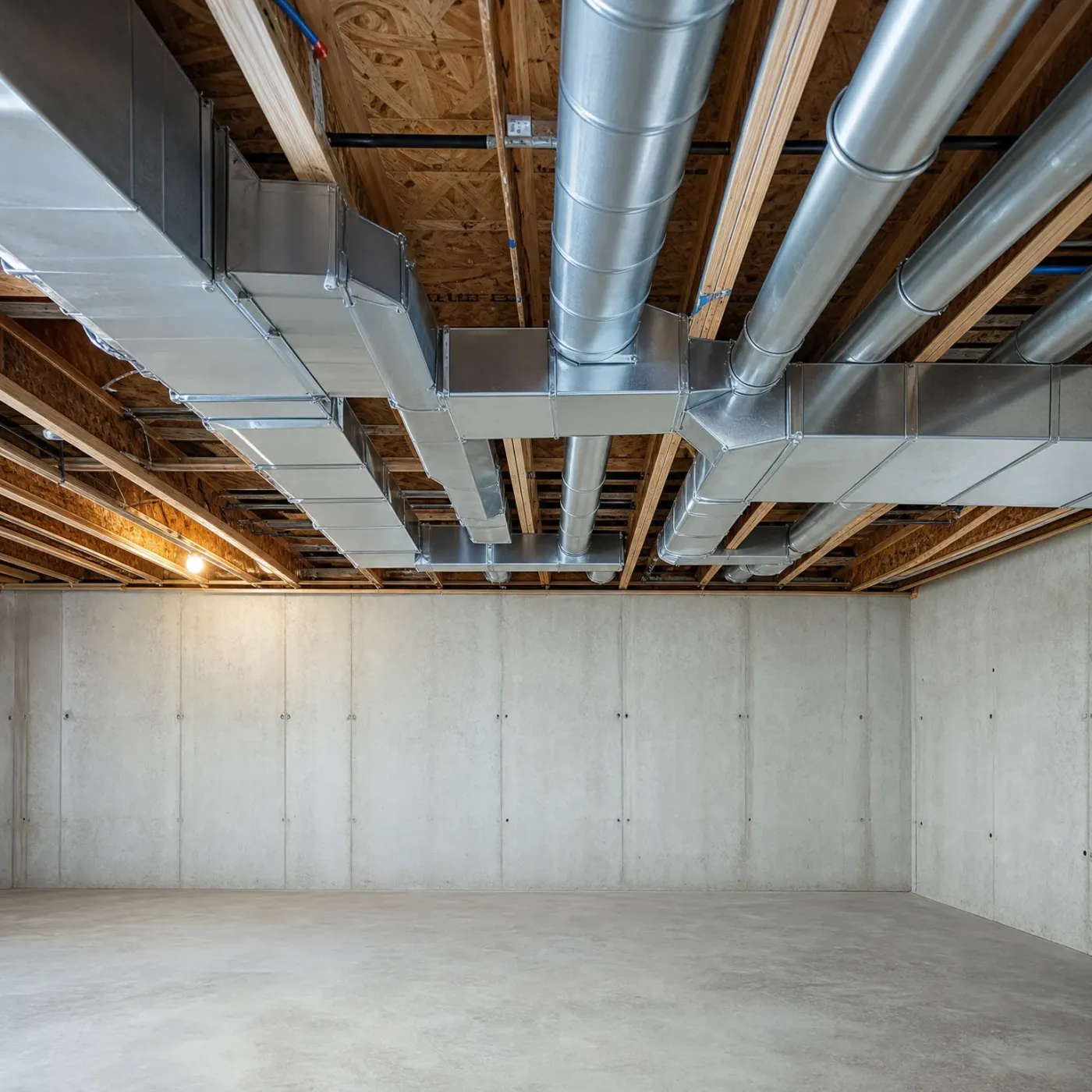
Empty concrete-walled basement room with bare floor and an exposed wood-joist ceiling carrying galvanized rectangular and round sheet-metal ducts, black pipes, and wiring.

Clean, sealed ductwork

Metal trunk and branch lines free of gaps, joints wrapped tight, surfaces clear. Air moves through without picking up extra dust along the way. What the filter catches is close to what's actually floating in your rooms, and the house holds a steady, lighter layer of dust week to week.
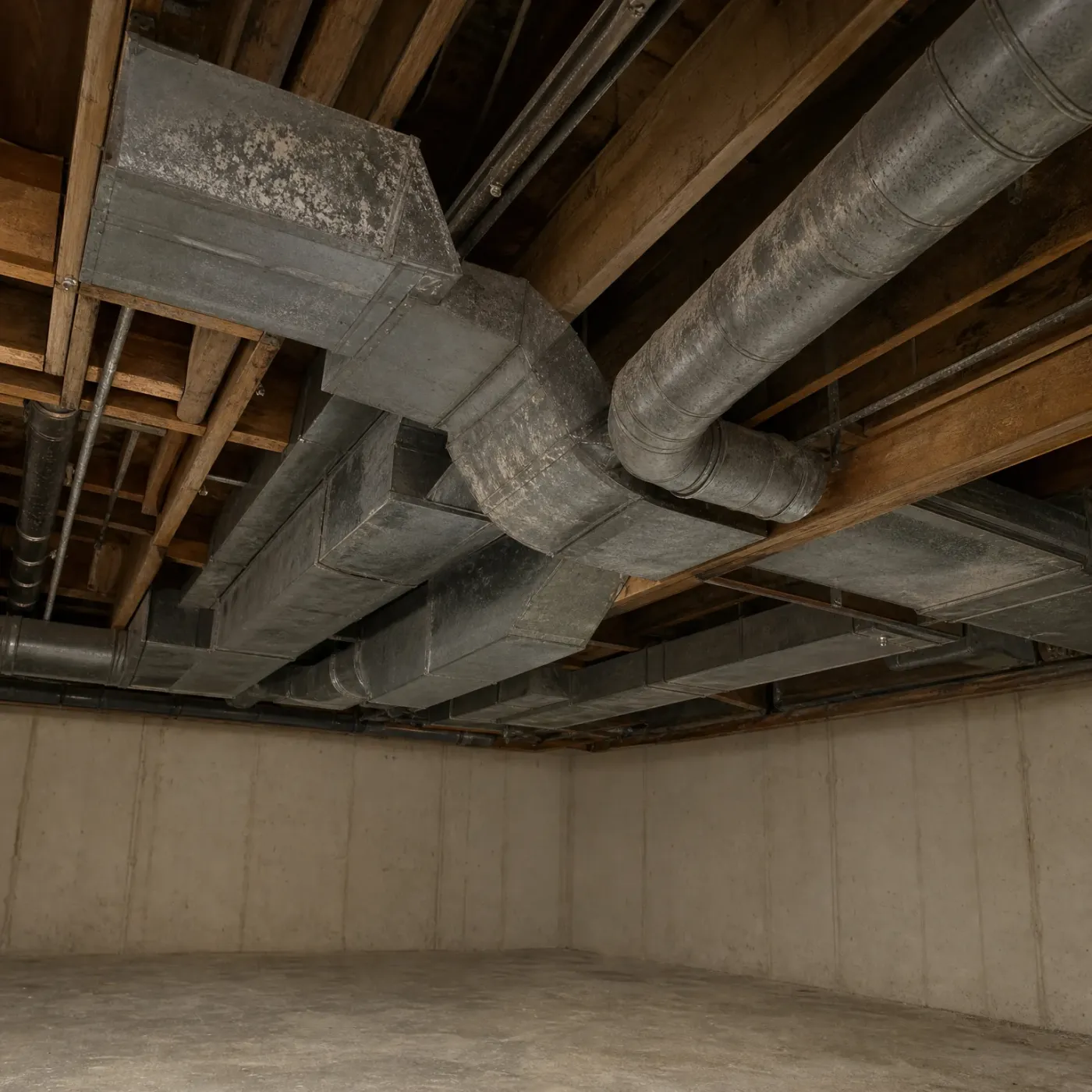

Empty concrete-walled basement room with exposed wooden joists and galvanized rectangular and round ductwork plus pipes running across the ceiling.

Ductwork feeding the dust

Oxidized metal, loose joints, seams that have opened up over the years. Every pass through the system pulls in dust sitting inside the ducts and pushes it back into your rooms. You can wipe the shelves clean and the ductwork just resupplies them by the next day the system runs.

Why does dust keep building up in a King County house?

  • Half the homes here were built by 1983

    Half the homes in King County were built in 1983 or earlier, and the ducts under the floor or in the attic are usually the ones that came with the house. Older runs are more likely to have loose joints that pull in attic or crawlspace dust as air moves through.

  • Heat runs September through June

    Heat runs here from September through June, about ten months out of twelve. That's ten months of air getting pulled through the ducts and pushed back into your rooms, so whatever the system is picking up along the way has a lot of time to show up on your shelves.

  • Power here costs 15.52 cents per kilowatt-hour

    Electricity in King County runs 15.52 cents per kilowatt-hour, close to the national average. A duct system that's dirty makes the blower work harder to push air through, which shows up as runtime on a bill that's already not cheap to begin with.

ACS 2020-2024 · NOAA nClimDiv 1991-2020 · EIA-861 2025

A smiling man in a green sweater stands at a kitchen counter with a dark mug, with an open-plan dining area and large windows behind him.
A smiling man in a dark green sweatshirt sits at a kitchen island with a gray mug, with cabinets, plants, and a dining area near large windows behind him.
A smiling bearded man in a green sweater sits at a white marble kitchen island with a mug, potted plant and bowl of fruit, in a bright white interior with open shelving and an arched doorway.
A smiling man in a gray long-sleeved shirt stands in a kitchen looking to the side, with open shelves of dishes, a white mug on the counter, a potted plant, and a view through a doorway into a living room.

Duct Dust or Everyday Dust

Dusty ducts

  • Loose joints and seams let the ducts pull in air from crawlspaces and attics, and that air carries dust straight into your rooms.
  • A duct liner that's breaking down sheds its own fibers into the airflow, so cleaning the house does nothing about the source.
  • Dust settles inside the trunk line and branch runs, and every time the system kicks on, some of it gets carried back out.
  • A return that's leaky or poorly sealed draws in insulation particles and attic dust before the air ever reaches the filter.
  • Registers and the first few feet of duct near them tend to hold the heaviest buildup, since that's where airflow slows down.

Everyday dust

  • Skin cells, pet dander and fabric fibers settle on surfaces no matter how clean the ductwork is.
  • Opening windows on a warm day brings in pollen and outdoor dust that has nothing to do with your heating system.
  • A dry furnace filter that's overdue for a change lets more of this everyday dust pass through instead of catching it.
  • Carpets and upholstery hold onto dust and release it back into the air every time someone walks by or sits down.
  • Dust from cooking, candles or a fireplace settles on nearby surfaces and isn't something duct cleaning touches.
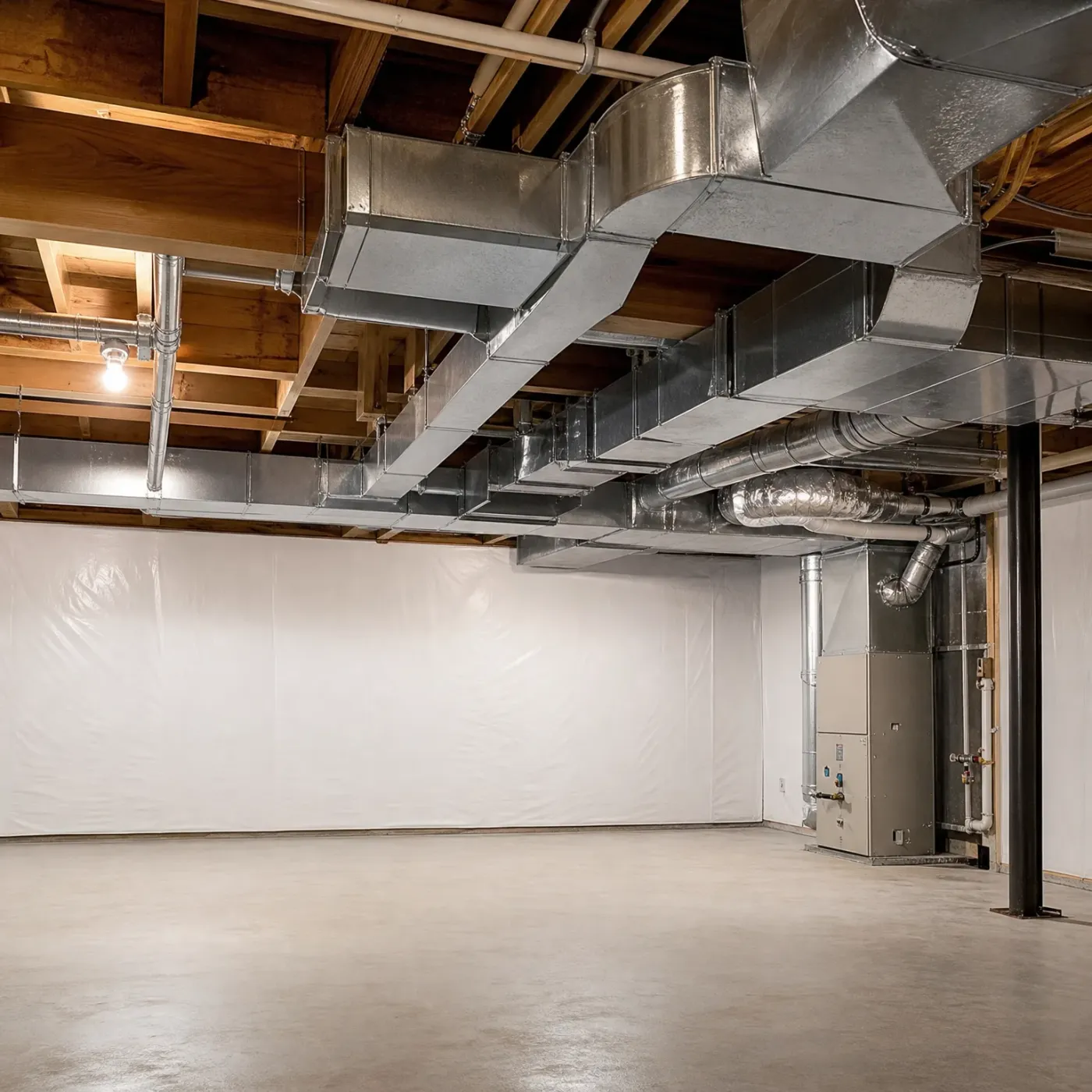
Empty basement with bare concrete floor, white plastic sheeting over one wall, exposed wood joists, galvanized sheet-metal ductwork and pipes overhead, and a furnace unit with a steel support column at right.
Sealed joints keep the air moving through the ducts clean, so the dust in your rooms stays close to what the filter is actually catching.
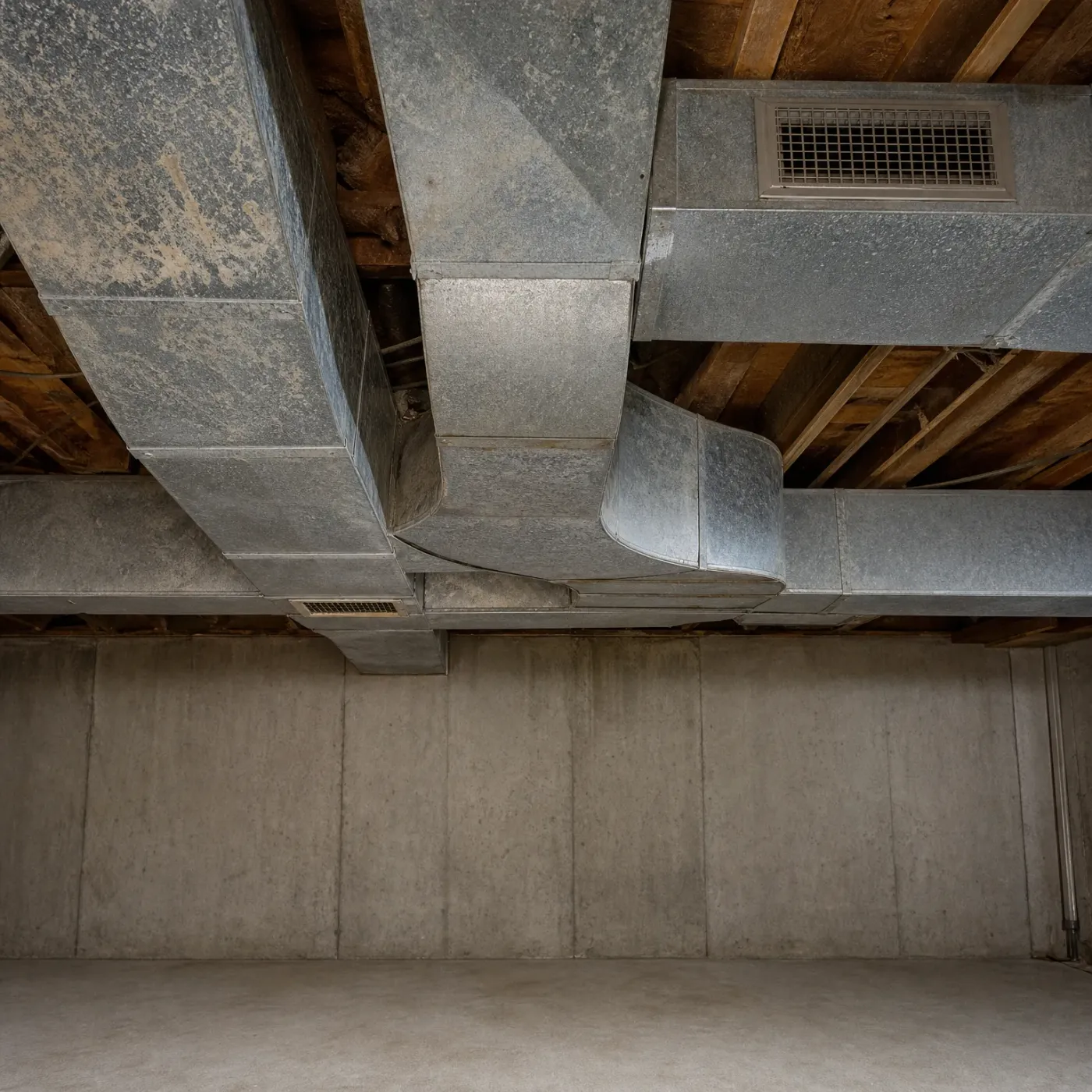
Galvanized sheet metal HVAC ducts with vent grilles run along a wooden floor joist ceiling above bare concrete walls and floor in an unfinished basement.
Seams that have opened at the joists pull air straight from the crawlspace, feeding dust into every room the duct serves.

Are you cleaning more and still losing?

You run the vacuum more than you used to and the house still looks like it needs it. The air feels heavier in rooms where the heat runs most. You might notice a musty smell near the vents, or find that allergies act up indoors as much as out. Check the return grille. If the filter behind it is gray within a few weeks of a fresh one, the ducts are pulling in more than they should. Left alone, that same air is what your household breathes all winter, and a furnace working to push air through dirty ducts tends to run longer to do the same job.

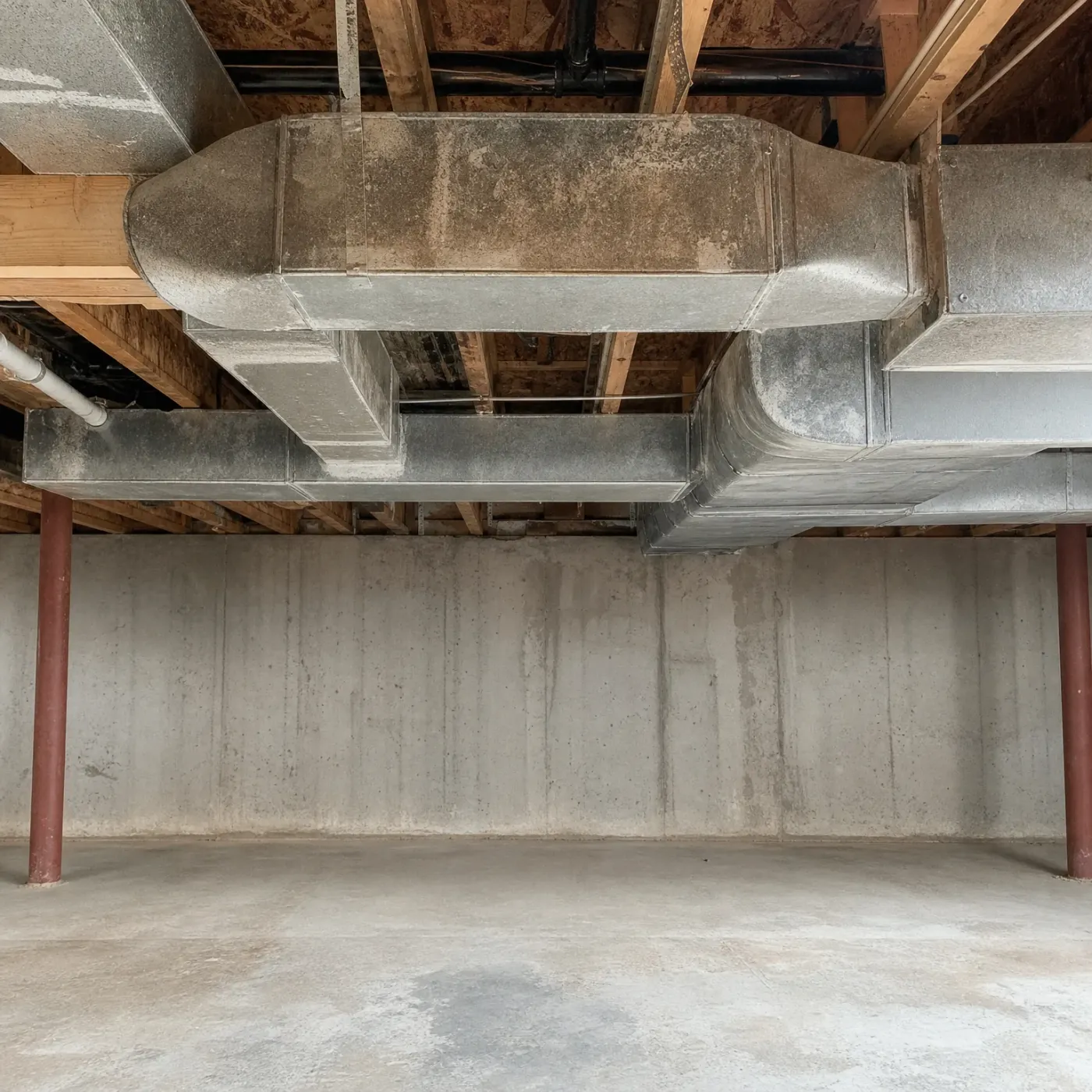
Unfinished basement with bare concrete walls and floor, galvanized sheet-metal HVAC ducts running beneath wooden floor joists, and two red steel support columns.
Before you get your ductwork cleaning
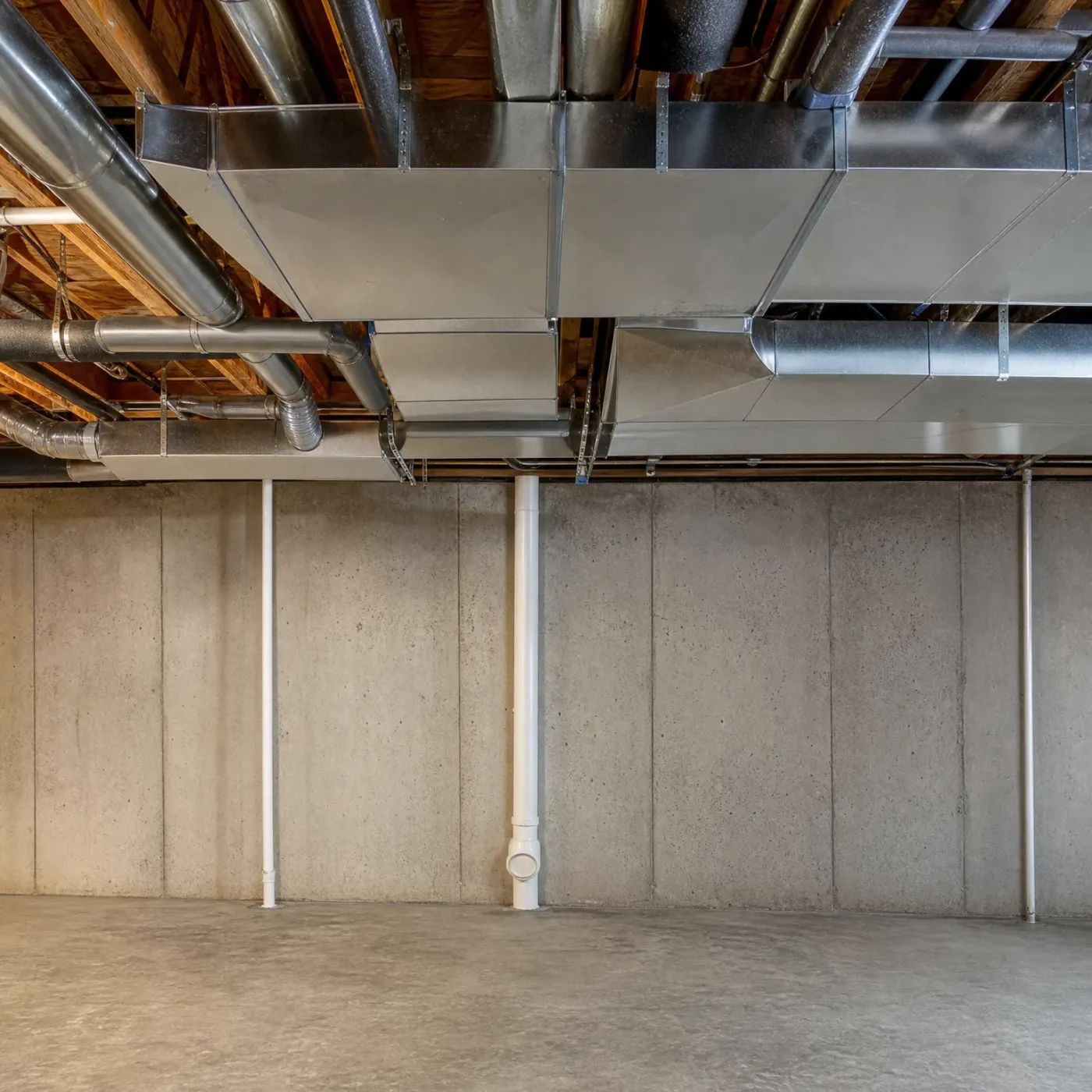
Unfinished basement with poured concrete walls, a bare concrete floor, white PVC pipes running down the wall, and exposed sheet-metal HVAC ductwork beneath wood floor joists.
After you get your ductwork cleaning

Half the homes here were built by 1983

If your house went up before 1983, there's a decent chance the ducts underneath or in the attic are original too. Decades of joints shifting and liner breaking down give dust a way into your rooms that no amount of cleaning the house itself will fix.

ACS 2020-2024

A dim room corner with a dark grey sofa and cushion, a wooden side table holding a ceramic vase and a small potted plant, a linen curtain beside a bright window, and a wall vent near the ceiling.

The sun's out early, the kind of spring morning that shows up bright after a wet King County winter. Light cuts across the living room and lands right on the ceiling vent, and you can see it now in a way you couldn't under gray skies: a soft gray ring of dust around the grille, and a fine layer settled on the TV stand and the arm of the couch underneath it. You wipe the stand down, but you already know the vent's still pushing the same air. A duct tech who works this kind of house all over King County could tell you in a few minutes whether that's a dirty duct or something looser in the line.

It's off your list after this

The pro who gets in touch is licensed in Washington and works in King County.

No fee to send it, and nothing to sign.

How the air actually moves

  • Air moves through your ducts as a loop, pulled through the return and pushed back out the supply side.
  • The blower turns on far more than your thermostat clicks, since the fan often runs during fan-only cycles too.
  • Every pass through a leaky joint or a crumbling liner adds a little more dust to the air before it reaches your rooms.
  • The filter only catches what passes through it, so air that sneaks in past a loose joint downstream of the filter skips that step entirely.
  • Dust that settles inside the ducts between cycles gets stirred up and redistributed each time the blower kicks back on.
  • A return line pulling air from a dusty crawlspace or attic feeds that dust into the system on every single cycle.

Your duct system is a loop, not a one-way trip. Air gets pulled in through the return, crosses the blower, and gets pushed back out through the supply vents into your rooms. It does this constantly. The blower isn't only running when your furnace or AC is actively heating or cooling. A lot of systems run the fan on its own schedule too, moving air through the house even when the temperature hasn't called for anything. So the loop runs more often than most people realize.

Every trip through that loop is a chance to pick up dust it shouldn't have. If a joint has worked loose or the liner inside the duct has started to break down, that's an opening. Air passing through there picks up particles it didn't have a few feet back. The filter is supposed to be the one place in the loop that pulls dust out, but it only catches what actually passes through it. Air that enters the system through a gap downstream of the filter bypasses it completely and goes straight into your rooms.

Dust also settles out inside the ducts between cycles, the way it settles everywhere else. When the blower kicks back on, that settled dust gets stirred up again and carried along with the rest of the airflow. And if the return is pulling from a crawlspace or attic that's dusty to begin with, that dust gets fed into the system on every cycle, not just once.

A bearded man in a navy t-shirt sits on a beige sofa, laughing while looking toward a laptop screen visible in the lower foreground, with a houseplant, shelves, and a framed picture behind him.
A bearded man in a plaid flannel shirt stands indoors looking out a condensation-covered window at a snowy landscape, with a speckled mug on the sill and kitchen shelves behind him.

Duct cleaning every 3 to 5 years

Regular cleaning keeps pace with normal buildup. Dust stays manageable, the filter does most of the work, and you're not chasing a film that comes back within days.

Send my request

Ducts never cleaned

Dust, pet hair, and debris build up year after year with nothing removing it. Every cycle pushes more of it into your rooms, no matter how often you dust the shelves.

Send my request

The dust coming back week after week isn't about how often you clean. It's about what's moving air through your house. Loose joints, a breaking-down liner, gaps at the joists, any of these turn your ductwork into a source instead of a delivery system, and no amount of dusting fixes a problem that starts behind the walls and above the ceiling. A contractor who works on King County duct systems all year, in homes built the same decades as yours, knows where these runs tend to fail and what to check first. You'll be matched with one licensed local contractor for this, not a handful of companies competing for the job, so you're dealing with someone who can actually look at your ducts and tell you what's going on, not a pile of callbacks to sort through. Once the ducts are sealed and clear, the dust you're fighting now stops renewing itself, and cleaning the house starts working the way it's supposed to.

A single-story white stucco house with dark roof, stone-clad entry tower and three dark garage doors, lit from within at dusk, with a curved concrete driveway and dark mulch beds with boulders and bare young trees in the foreground under an orange and blue sunset sky.

Ductwork Cleaning

Send one request and you're done looking

Duct and vent cleaningDucts or ventsKing County, WA
Step 1 of 2

What ZIP code is the job in?

  • A gray upholstered sofa arm with a cream knit fringed throw sits beside a wooden side table holding a stack of books, a shallow wooden bowl, and a ceramic vase of leafy branches, on a wood floor near a window.
    • Get matched with a pro who works on ducts in King County.
    • Your request goes to a King County pro who takes ductwork jobs.
  • A living room corner with a cream upholstered sofa and cushion beside a wooden side table holding a ceramic vase of olive branches and a small dark bowl, with a framed landscape painting on the gray wall and a linen curtain at the window.
    • One request and the duct cleaning stops waiting on you.
    • Once you send the form, finding a pro is off your list.
  • A wood-framed armchair with a beige cushion and knitted throw sits beside a round wooden side table holding a ceramic mug, with a potted green plant near a window in the corner and a framed picture on the wall.
    • Skip searching for someone who cleans ducts in King County.
    • Skip calling around for someone who cleans ducts.
  • Interior corner with beadboard wainscoting, a gray cabinet with wood countertop holding a vase of greenery below a window, and a potted leafy plant in a woven basket on a wood floor with a fringed jute rug.
    • Your duct cleaning request goes to one local pro.
    • Your request goes to one pro, not a list of companies.