

A few degrees of pressure change
Closing even two or three vents raises the pressure inside the ducts enough to strain seams and joints that were never built to hold it back.
Send the form, and lining up the air conditioner tune-up stops being yours to chase.
You keep a few rooms shut up in summer, figuring it saves the AC some work and cools the rooms you actually use faster. Before you keep doing it, or start, it's worth knowing whether closing those vents actually helps your system or just moves the problem somewhere else you can't see.
Your air conditioner is built to move a set amount of air through the whole duct system. Close off vents in a few rooms and that air has nowhere to go. Pressure builds in the ducts, and the system has to push against it, which makes the blower work harder than it was designed to. Over time that strain can crack ducts or wear down the blower motor. It also throws off the airflow balance, so rooms you didn't close off may cool slower than before. In a Washington summer, with warm but not especially humid air, your AC is already sized to handle the heat without extra resistance in the ducts. Leaving vents open lets it run the way it was built to.




The blower in your air handler is set to move a certain amount of air every minute, and that doesn't change based on how many vents are open. Shut a few, and the air still gets pushed out, it just has fewer places to go. Most of it ends up forcing its way into the ductwork at higher pressure than the system was built for, and that pressure finds the weak points. Seams, joints, the places where sections of duct meet. Some of the air you paid to cool is now leaking into your attic or crawlspace instead of your living room. Meanwhile the blower motor is pushing against more resistance than it was designed for, running harder for less result. Inside the air handler, the evaporator coil depends on a steady pull of air across it to stay above freezing. Cut that airflow enough, with vents closed or a dirty filter, and the coil ices over. Once that happens, it stops cooling the air moving past it, so the rooms you did leave open stop getting cold air too.


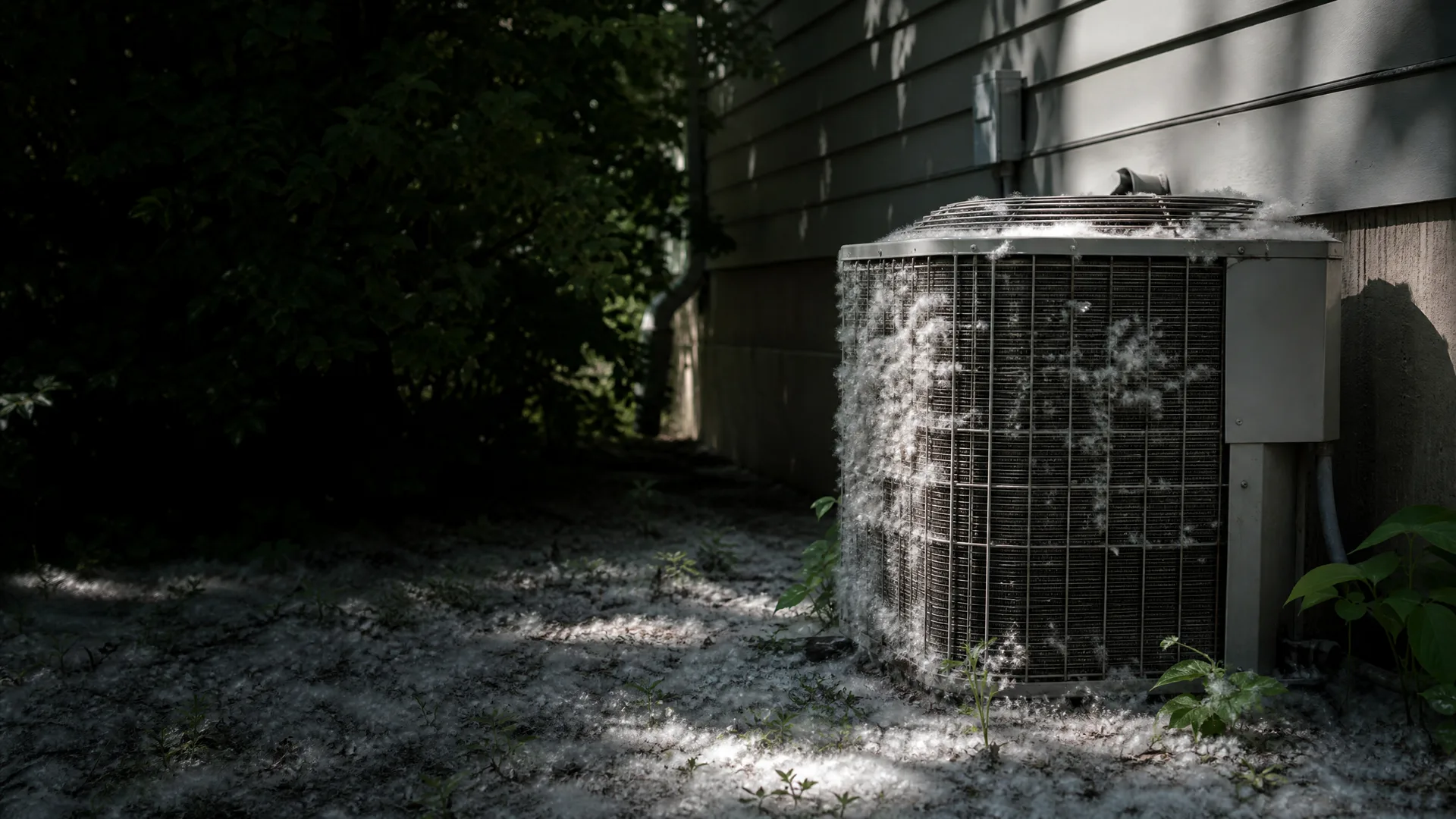
You're out pulling weeds along the side yard in May, the kind of day that's warm but not sticky, and you walk past the condenser and stop. The fins are packed white with cottonwood fluff, thick enough that you can't see metal underneath it anymore. You think about the three vents you shut in the back bedrooms last week to help the unit along, and you look at that clogged coil and wonder if it's working twice as hard for a different reason entirely. You brush a hand across it and the fluff doesn't budge. It's been building since the trees let go, and you hadn't noticed until now.
A licensed local pro takes the request for your air conditioner tune-up.
It costs nothing to send, and you don't have to hire anyone.
The blower only knows one job: push a certain volume of air through the ducts every minute. Shut a vent and that air doesn't disappear, it backs up into the trunk line looking for somewhere to go. Pressure builds. Ductwork is sealed with mastic or tape at the joints, not welded, and those seams are the weak points. Under enough pressure, cooled air finds its way out through them and into the attic or crawlspace instead of your living room. Meanwhile the evaporator coil, the part inside the air handler that actually cools the air, needs a steady volume moving across it to stay at the right temperature. Choke the return air down enough and the coil can drop below freezing and start icing over, which cuts cooling further and can lead to water damage once it thaws. The blower motor feels this too. Pushing against higher resistance means it draws more amps than it was built to handle on a normal day, and that extra strain wears down the bearings faster. None of this shows up from closing one or two vents in rooms you don't use. It shows up when a third of the house or more gets shut off, because that's enough to change the pressure across the whole system. The rooms you closed off don't even benefit much, since the air that would normally pull moisture out through the vent never gets the chance.


Closing even two or three vents raises the pressure inside the ducts enough to strain seams and joints that were never built to hold it back.
Less airflow across the evaporator coil lets it drop below freezing, and a frozen coil stops cooling the house at all until it thaws.
Walk through the house with the vents shut in a few rooms and you'll likely find the open ones aren't cooling the way they used to. The air coming out feels weaker, and the room you closed off to save effort ends up warm and stale anyway, since heat still moves through the walls and the closed door. You might hear the system running longer to hit the same temperature on the thermostat, which in a state where power is cheap might not hit your bill hard, but it still means the equipment is working more than it should. Left that way long enough, the strain shows up as a coil that ices over or a system that needs attention sooner than it otherwise would have.


Power here runs 13.17 cents a kilowatt-hour, cheap next to most of the country. That changes the math on closing vents. The whole point of shutting rooms off is trimming what the AC costs to run, but when electricity is already this cheap, straining the ducts to save a little isn't worth what it risks.
EIA-861 2025 statewide residential average
Closing vents doesn't help your AC in Washington. It makes the blower work against pressure it wasn't built for, strains duct seams, and leaves the coil running colder than it should while the rooms you kept open cool slower than before. Leave the vents open and let maintenance do the job of keeping the system running the way it was designed to. A technician who works on these systems all summer, in homes built around the same electric heat and the same mild air you've got, knows which seams tend to give first and which coils are already running colder than they should. You'll get matched with one local contractor for this, not a handful of companies competing for your call. Once you send the request, the search is off your plate. Someone local takes it from there, and you go back to spending your evening on something other than troubleshooting ductwork.





Only one pro gets your request, so you hear from one company.
There's no charge for the request.