





Washington HVAC Help

Why your AC vents are sweating in Washington

RepairCentral ACWashington
Step 1 of 2

What ZIP code is the job in?

Wet vents mean the air coming out is colder than the air around it, so moisture in the room is landing on cool metal and beading up, the same way a cold glass sweats on the counter. Usually that means the air isn't moving the way it should. A clogged filter, a blocked return, or a duct that's come loose can all slow the airflow across the evaporator coil, and when airflow drops, the coil and the air behind it get colder than they're supposed to. A closed vent or two somewhere in the house can do it too. Washington summers aren't humid, so when you see this happening here, it usually points to something inside the system rather than the air outside. Left alone, that moisture can soak into drywall or insulation around the vent, so it's worth having a contractor look at the airflow and the coil before it causes damage you can't just wipe up.

An outdoor air conditioner condenser unit on a concrete pad beside a house wall, with a gray electrical disconnect box and conduit above it and grass in the foreground.

Why airflow controls the condensation

A supply vent moves cold air out and off into the room fast, so the metal around it never gets much colder than the air blowing past it. Cut that airflow, with a clogged filter or a duct that's partly blocked, and the air sitting at the vent stays in contact with the metal longer. The metal gets colder than it should, closer to the air temperature inside the duct, and that's cold enough to pull moisture out of the room air and onto the vent cover.

A gray outdoor air conditioner condenser unit on a concrete pad beside a house with horizontal lap siding, surrounded by white gravel and a lawn, with a white wall at left.

Where the moisture actually comes from

The water at your vents isn't leaking from anywhere in the duct. It's humidity already in your house, the same moisture in the air you breathe, condensing on a surface that's dropped below the dew point. Washington summers don't carry much humidity to begin with, which is why this usually shows up as a few damp vents rather than water dripping steadily. A contractor checking this will look at airflow and duct insulation first, since the moisture itself isn't the problem to chase.

Why is the metal around my vent cold enough to sweat?

Why is the metal around my vent cold enough to sweat?

Because it's sitting right in the path of the coldest air your system makes

The air coming off the evaporator coil is the coldest point in the whole system, and that vent is the last thing it touches before it reaches the room. If the air is moving well, it sweeps past the metal and out into the space before much heat can transfer into it. If airflow is weak, that cold air sits longer against the vent, duct, and register, pulling the metal down toward the dew point of the room air around it. Washington homes don't carry the same heavy, humid air other regions do, but any home with enough moisture indoors, from cooking, showers, or just people breathing, can see that metal get cold enough to collect it.

A gray outdoor air conditioner condenser unit on a concrete pad beside a house with horizontal lap siding, with a wall-mounted disconnect box and conduit at left and a green shrub and mulch bed at right.
A system like this one, pulling air through clean and clear, keeps the vent close to room temperature instead of coil-cold.
An outdoor air conditioner condenser unit on a concrete pad beside a house with horizontal lap siding, with a conduit running to a gray electrical disconnect box on the wall.
Here, the vent stays wet because something upstream is choking the airflow and letting the metal run as cold as the coil itself.
  1. Warm, humid room air gets pulled into the return grille.

  2. Air passes across the evaporator coil and drops in temperature fast.

  3. A clogged filter or blocked duct slows that airflow down.

  4. Starved coil airflow lets the coil and vent metal run colder.

What are you seeing around your vents right now

Look for a ring of water on the ceiling or wall around the vent, or drops that run down and leave a stain. Touch the metal grille itself and it may feel cold, almost wet to the hand. Some homeowners notice a musty smell first, before they ever see the water. If this has been going on a while, check the drywall around the vent for soft spots or a brownish stain spreading outward. That's the moisture soaking in rather than evaporating off. Left alone, it can swell the drywall, feed mold behind the wall where you can't see it, and eventually mean more than a repair bill for your AC.

A gray outdoor air conditioning condenser unit on a concrete pad beside a house with horizontal lap siding, with a wall-mounted disconnect box and conduit, and shrubs to the left.

Airflow moving the way it should

This condenser sits clean on its pad, the disconnect box and conduit in plain view, nothing blocking the sides. Air moves through it the way the system was built to move it, so the coil inside never has to work harder than it should to cool your home.


An outdoor air conditioning condenser unit on a concrete pad beside a house with horizontal siding and a concrete foundation, with dry brown leaves on the ground to either side.

A unit that's been neglected

Leaves have piled up against this one, and the grime on the cabinet suggests airflow through the coil has been restricted for a while. A unit choked like this runs its coil colder than it should, and that cold often shows up as sweating vents inside the house.

Leave the Sweating Alone or Fix the Airflow

Leave it alone

  • The sweating keeps showing up every time the system runs long and the house stays humid, so the drywall or ceiling stays wet in that same spot.
  • Water sitting on drywall or a wood ceiling long enough softens the material and the stain spreads past where the vent is.
  • A filter that's choking airflow now keeps choking it, and the coil behind it runs colder and iced over more easily as the restriction stays in place.
  • You're left guessing whether it's the filter, a blocked duct run, or low airflow at the coil, with no way to know without someone opening it up.
  • Electric heat in winter won't touch this problem, so it sits untouched from one summer to the next, worse each time the humidity climbs.

Get it looked at

  • A local contractor who services this equipment every summer can trace the airflow problem back to its source instead of you guessing at filters and ducts on your own.
  • One contractor means one visit and one explanation of what's going on, not the same story told over and over to different companies.
  • Someone who works on these systems through a Washington summer knows which restriction is common here and checks that first.
  • Fixing the airflow stops the coil and vents from running coil-cold, so the sweating stops instead of getting wiped up again next week.
  • A licensed contractor can confirm whether it's the filter, the ductwork, or something at the coil itself, and address the actual cause rather than the symptom.
An outdoor air conditioning condenser unit on a concrete pad beside a house with light vinyl siding, an electrical disconnect box and conduit on the wall, bare shrubs and mulch to the right, and a concrete walkway in the foreground.
Before you get your air conditioner repair
An outdoor air conditioner condenser unit on a concrete pad beside a house with beige horizontal siding and a stone-veneer base, with refrigerant lines running to a gray wall-mounted electrical box, surrounded by dark mulch, a flowering shrub and an evergreen on the left.
After you get your air conditioner repair

No phone calls to make

Your request stays with one local pro.

Asking costs nothing, and the choice to hire stays yours.

A two-story house with gray and light gray siding, white-trimmed windows and a white front door, flanked by deciduous trees, with a partly browned lawn in front under a clear blue sky.

Washington summers don't feel heavy the way they do elsewhere, and the numbers back that up. Averaged across homes here, the dew point runs 53°F through June, July and August, according to NOAA climate data. That's dry air by national standards. But your air conditioner still pulls moisture out of whatever air it does move, and if airflow across the coil is weak, the coil runs colder than it needs to even with dry air outside. That's why a vent can sweat here even on a day that doesn't feel muggy at all. The dryness of the air outside isn't what decides it. What's moving through your ducts right now is.

NASA POWER T2MDEW county cells weighted by homes

A gray-haired man in a dark sweater sits on a light gray sofa in a living room, looking toward a sunlit window with trees outside.
A gray-haired man in a dark blue sweater sits on a light gray sofa in a sunlit living room, looking off to the side, with a potted plant, shelving unit, and large glass doors behind him.
A bearded man with graying hair in a dark green sweater sits on a sofa in a living room, looking off to the side, with a sliding glass door and a dim kitchen doorway behind him.
A gray-haired man in a dark knit sweater sits on a light gray sofa in a living room, looking toward a sunlit window, with houseplants, a lamp, and framed art in the background.

What's actually causing the wet vent

  • Low refrigerant charge drops the coil temperature well below the usual 40 degrees it should run at.
  • A dirty coil acts like a blocked duct, starving airflow across the metal even with a clean filter.
  • A blower motor running slow or on the wrong speed tap moves less air than the coil needs.
  • Insulation that has slipped or gone missing where a duct meets a vent lets cold metal touch warm room air directly.
  • A duct run sized too small for the room chokes airflow at that one vent even when the rest of the house is fine.
  • An oversized system that cools the room fast and shuts off often never gets the chance to pull enough air across the coil.

The airflow problem showing up at your vent usually traces back to one of a handful of things, and most of them have nothing to do with the vent itself. Refrigerant charge is a common one. A system low on charge runs its coil colder than the 40 degrees it's built for, and that extra cold reaches all the way out to the metal grille in the room. A dirty coil does something similar from the other direction. Dust and grime across the coil fins block air the same way a clogged filter does, even when the filter you can see and change is spotless. The blower matters too. If it's running on the wrong speed tap, or the motor has worn down and slowed, it's not pulling enough air across the coil to keep things balanced, and the coil runs colder than it should to compensate. Sometimes the fix isn't the system at all. Insulation around the ductwork can slip or fall away right where it meets the vent boot, and once that happens, cold metal is touching warm room air directly with nothing in between. A duct sized too small for the room will choke flow at that one vent no matter how well the rest of the house performs. And a system that's oversized for the house cools the room fast, shuts off, and never runs long enough to move the volume of air the coil actually needs. Any one of these can produce the same wet ring on your ceiling.

Power costs 13.17 cents per kilowatt-hour statewide

At 13.17 cents per kilowatt-hour, running your blower longer than it needs to because of a clogged filter or weak airflow adds up slowly on your bill. Fixing the airflow problem behind the sweating vent also stops the system from working harder than it should.

EIA-861 2025 statewide residential average

An outdoor air conditioner condenser unit beside a light-colored lap-sided house with an electrical disconnect box on the wall, surrounded by shrubs and lawn in low evening light.

The light's going gold over the fence line, that long August evening slant. You're out back checking the hose when you notice it: the condenser isn't making its usual sound. You walk over and the fan blades are still, dead still, while the unit just hums. Inside, the house has been running warm for an hour and you figured it was just catching up. Now you're crouched by the pad, watching for the fan to kick back on, and it doesn't. Somewhere past the window, you know the vents are already sweating again, same ring of damp on the ceiling you wiped down last week.

A closed dark laptop and a ceramic mug of coffee on a wooden dining table, with wooden chairs, a dark kitchen cabinet with cutting boards and a potted plant, and a leafy plant by a window in the background.

A sweating vent means airflow, not luck

Everything above comes down to one thing: your vent is sweating because the air crossing that coil isn't moving the way the system needs it to, and the metal is running as cold as the coil itself instead of warming back up before it reaches the room. That's a mechanical problem with a mechanical fix, not something that clears up on its own. The longer it runs, the longer that spot on your ceiling or wall stays wet.

Finding someone who actually works on this, rather than guessing at it over the phone, is the part that takes the time. You'd normally be looking up contractors, calling a few, describing the same cold vent and wet ceiling to each one, then waiting on quotes to compare. A licensed contractor working near you who sees this same airflow problem every summer can look at your coil, your filter, and your ducts and tell you which one is choking the system. You deal with one contractor, not a round of callbacks.

A living room corner with a beige sofa and cushion, a round wooden coffee table holding a pale ceramic vase of eucalyptus stems and a wooden bowl, and a curtained window with a potted plant above a latticed radiator cover in the background.
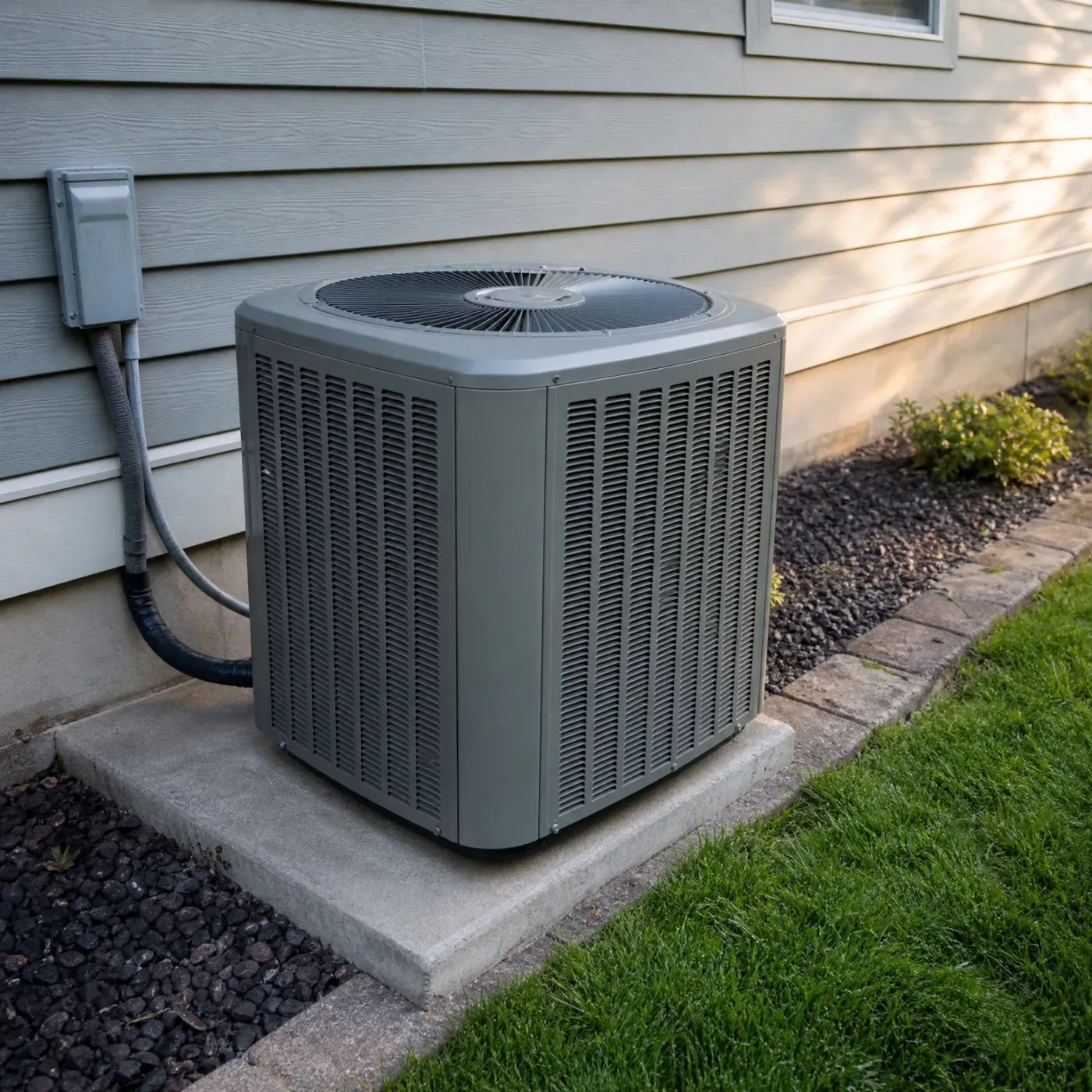
A gray outdoor air conditioning condenser unit on a concrete pad beside a house with horizontal lap siding, with a wall-mounted disconnect box and conduit, lava rock mulch, a shrub, and grass nearby.

One form, no calling around

Find a licensed air conditioner pro

Your request goes to one pro, not a list of companies.

No fee to send it, and nothing to sign.