






Musty smell from vents in Seattle, WA

Answer a few questions instead of calling shop after shop.

Start one form

A musty smell from your vents usually means moisture sitting somewhere in the duct system, not mold growing where you can see it. Seattle's damp air gets pulled into the ducts along with everything else, and if there's standing water in the drain pan, dust packed into the coil, or a section of duct that never quite dries out, it grows mildew and pushes that smell through the house every time the system runs. A dirty filter makes it worse, since it stops catching dust and lets more of it settle in the ducts. The smell tends to show up most when you first turn the heat on after it's been off for a while, as air moves through a system that's been sitting damp and closed up. It is not something that airs out on its own. Until the moisture and buildup are cleared from the ducts themselves, the smell comes back every time the blower kicks on.

Why does the musty smell keep coming back here?

  • Half the homes here were built by 1983

    If your house went up before 1983, the ducts have had decades to pick up dust, gaps and old insulation that hold moisture and feed that smell.

  • Heat runs September through June

    Heat runs here from September through June, so the system is pushing air through those ducts most of the year, moving the smell into every room.

  • Power here costs 15.52 cents per kilowatt-hour

    At 15.52 cents per kilowatt-hour, a system working harder because of dirty ducts or a clogged coil adds up over ten months of regular use.

ACS 2020-2024 · NOAA nClimDiv 1991-2020 · EIA-861 2025

Where the smell actually starts

  • Musty air usually starts at the evaporator coil, where condensation sits on the fins between cooling cycles.
  • A drain pan that doesn't drain all the way will hold water for days and give off that same smell.
  • Dust and skin cells inside the ducts turn into a food source for mold once moisture is sitting there.
  • The smell often gets stronger right when the system kicks on, as trapped air in the ducts gets pushed into the room.
  • A dirty filter slows airflow across the coil, so it stays wet longer instead of drying between cycles.
  • Flexible duct runs with low spots or sags collect condensation that straight metal duct would just drain away.

The coil is the usual starting point. It's cold most of the time your system runs, so moisture from the air lands on the fins and sits there between cycles. Some of that water drips down into the drain pan and leaves through a condensate line. If that line is slow or partly blocked, water backs up and sits in the pan instead of leaving the system, and standing water gives off that musty smell on its own before mold ever enters the picture. Airflow matters here too. A filter clogged with dust slows the air moving across the coil, so the coil takes longer to dry out between cycles and stays wet more of the time. Once there's dust sitting on a damp coil or inside the duct runs, it becomes something mold can actually feed on, and that's when the smell turns from occasional to constant. Duct shape plays a part as well. Straight metal duct sheds condensation and lets it drain. Flexible duct that sags or dips holds a small pool of water at the low point, and that water sits until it evaporates or someone finds it. You'll usually notice the smell most right when the system starts up, because that's when air that's been sitting in the ducts gets pushed into the room all at once.

Unfinished basement with bare concrete floor and walls, exposed wood joists, metal ductwork, a furnace unit, steel support posts, and a small window.
Clean ducts move air without adding anything to it, so the basement smells like concrete and nothing else.
Empty basement with bare concrete walls and floor beneath an exposed wood-joist ceiling carrying galvanized sheet-metal ductwork, round ducts and pipes.
Dust lining the duct walls and a spiral section holding moisture give the musty smell a place to live and grow.
A woman in a beige V-neck sweater laughs while seated at a white marble counter with a glass of white wine, with a living room containing a gray sectional sofa, lamp, and dark windows behind her.
A woman with long dark hair in a cream sweater laughs while seated at a light stone counter with a glass of red wine, with a blurred dining table and living room behind her.
A woman in a dark green sweater laughs while seated at a marble kitchen island with a glass of red wine, with open shelving, cabinets and a living room visible behind her.
A smiling woman with dark shoulder-length hair in a cream V-neck sweater sits at a marble counter with a glass of red wine, with a kitchen and softly lit living room behind her.

Describe it once

The pro who gets in touch is licensed in Washington and works in King County.

Sending the form costs nothing.

Why the smell fades, then returns

Running the fan or a few open windows can clear the smell out for a day or two, but it comes back because nothing dried out the source. If the coil stays damp between cycles, or the drain pan never empties all the way, that moisture is there again the next time the system runs. The smell isn't new air picking up an odor once. It's the same wet spot getting disturbed and settled on repeat, which is why opening a window helps for an evening and nothing more.


What a duct inspection actually checks

A contractor looking into this isn't just sniffing at your vents. They're checking the drain pan and the line it empties through, looking at the coil for standing condensation, and running a camera or light into duct sections to see where dust has built up enough to hold moisture. Heat pumps here run most of the year, so the coil sees a lot of cycles, and a pan that's slightly out of level or a line with a partial clog is often where the smell is actually coming from.

A smiling man with dark wavy hair and a short beard, wearing a navy crewneck sweater, sits at a candlelit dinner table with a bowl of food, wine glass and a lamp and framed art behind him.
A woman with wavy brown hair sits on a beige couch with her eyes closed and a slight smile, a knit blanket over her lap and a closed dark-covered book resting on it, with a lit lamp and plant in the dim background.
Unfinished basement with bare concrete walls and floor, exposed wood joists, and galvanized sheet-metal HVAC ductwork and pipes running across the ceiling.

Ducts doing their job

This is what a dry system looks like. Sheet metal ducts run clean between the joists, next to the copper and PVC lines, with no standing water on the concrete below. Air moves through without picking up anything on the way.

Basement ceiling with galvanized sheet-metal ductwork, wooden joists and subfloor, black and white pipes, above a concrete wall and floor.

Ducts holding moisture

Here the branch junction sits low among the drain pipes, right where condensation collects and takes longer to clear. Dust settles in that joint and stays wet longer than the straight runs around it, and that's the kind of spot a musty smell comes from.

Clear the Smell or Live With It

Clean and dry

  • A duct cleaning clears out the dust and buildup that hold moisture, so there's nothing left for the smell to feed on.
  • A contractor checking the job can confirm the drain pan empties fully and isn't leaving standing water behind.
  • Once the coil and pan are clear, running the fan or opening a window actually finishes the job instead of just masking it for a day.
  • You stop guessing at air fresheners and filter swaps that never touch where the smell actually starts.
  • A local contractor who works on duct systems through King County's wet winters knows which sections tend to hold water and checks those first.

Leave it as is

  • The smell keeps fading and returning because the moisture source in the ducts never actually dries out.
  • Dust sitting against damp duct walls keeps building, giving the smell more to grow on each month heat runs.
  • A drain pan that never fully empties stays wet year after year without anyone checking it.
  • You keep spending evenings running the fan or cracking windows for temporary relief instead of solving it once.
  • Without someone looking at the actual ductwork, there's no way to know if the smell is isolated or spreading through more of the system.
Empty basement room with bare concrete walls and floor, exposed wooden floor joists overhead, large galvanized sheet-metal ducts with a vent grille, colored pipes, and a single lit bulb.
Before you get your ductwork cleaning
Empty unfinished basement with bare concrete floor, insulated walls with vapor barrier between wood studs, exposed wood joists, galvanized sheet-metal ductwork, a recessed light, and a steel support column.
After you get your ductwork cleaning

Left alone

The smell keeps coming back each time you run the heat, and the dust and moisture feeding it keep building inside the ducts year after year.

Fill out one form

Cleaned out

A contractor clears the dust and standing moisture from the system and checks the drain pan, so there's nothing left in there to smell.

Fill out one form

Half the homes here were built by 1983

If your house dates to 1983 or earlier, which is true for half the homes in King County, its ducts have had that much longer to collect the dust and old insulation that hold moisture. Newer homes aren't immune, but older ductwork gives a musty smell more places to settle in.

ACS 2020-2024

  1. Moisture settles on the evaporator coil between cooling cycles

  2. A slow or clogged drain pan lets that water sit for days

  3. Standing water and dust on duct walls start to smell musty

  4. Running the blower pushes that smell through every vent in the house

A closed silver laptop and a light ceramic mug of dark coffee sit on a wooden table, with a window showing a sunset at left and a kitchen counter with a cutting board and potted plant in the background.

The smell has a source, and it can be found

A musty smell from your vents means moisture is sitting somewhere in the duct system, usually at the coil or the drain pan, and dust in the ducts is feeding on it. That's the whole story. It isn't mold spreading through your house, and it isn't something wrong with the air itself. Once a contractor finds where the water is sitting and clears the dust lining the ducts, there's nothing left for the smell to come back to.

Finding that out on your own means calling around to duct cleaning companies, describing the smell to each one, and trying to judge who actually knows what they're looking at from a phone quote. A contractor who works on duct systems around Seattle every winter has seen this exact problem in homes like yours and knows where to check first. One visit, one assessment, and you know what's actually going on in your ducts instead of guessing from the smell alone.

A dark ceramic vase holding a leafy green branch sits on a round wooden table, with a blurred cushioned wooden armchair, woven basket, window and shelving with pottery in the background.
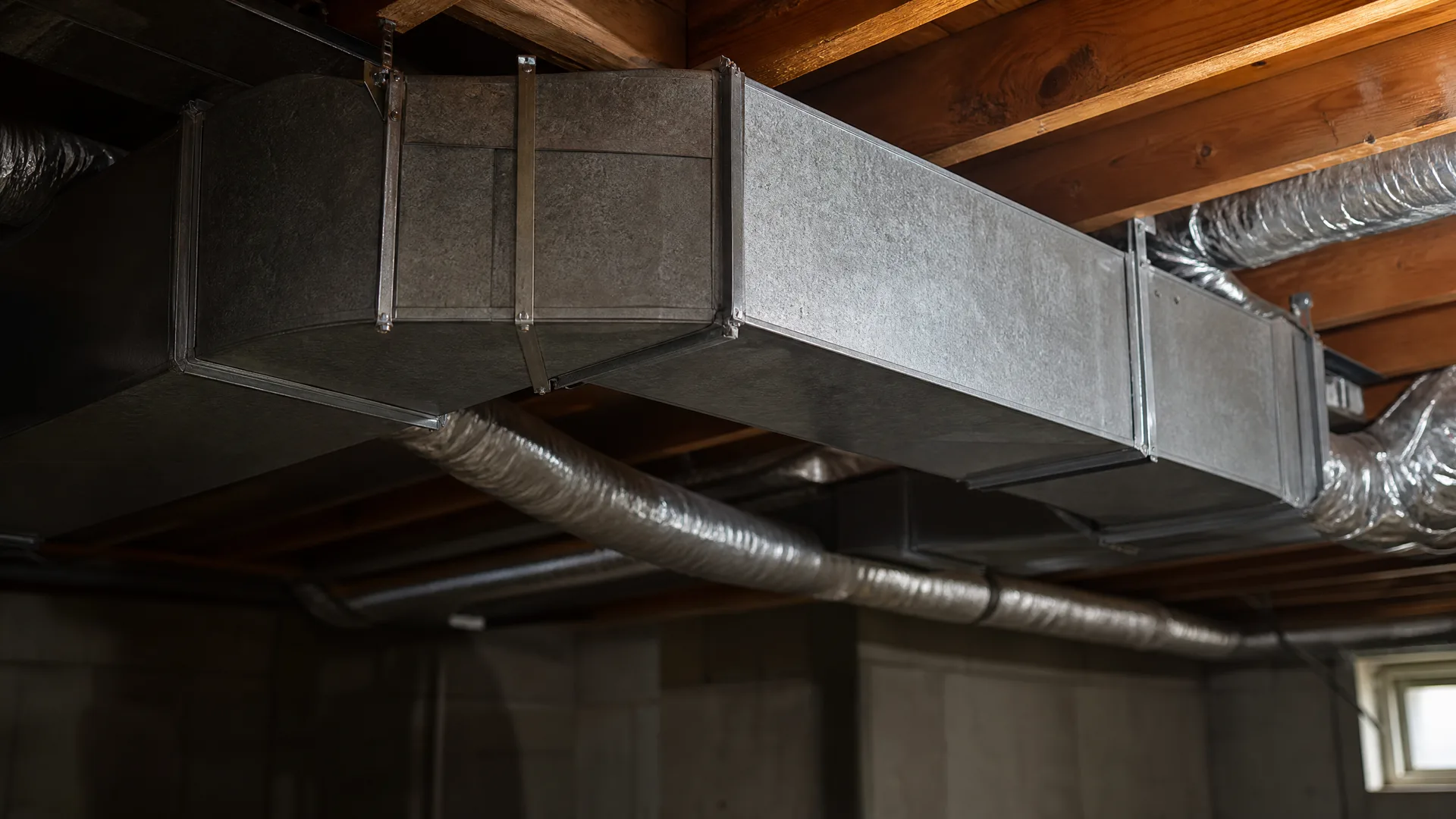
Rectangular sheet-metal HVAC trunk ducting and insulated flexible ducts running along wooden floor joists in an unfinished basement ceiling above concrete block walls.

No phone calls to make

Duct and vent cleaningDucts or ventsKing County, WA
Step 1 of 2

What ZIP code is the job in?